

AI Polaroid Booth FAQ: Speed, Paper & Cost


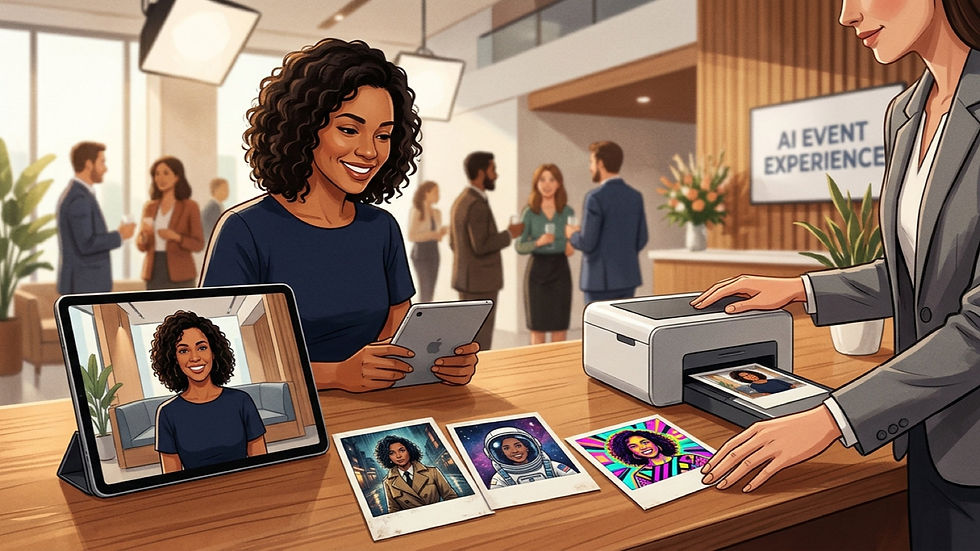
AI polaroid booth FAQ: before booking, ask what is actually printed, how the complete guest journey is timed, and which costs are included. A retro white border does not establish that the output uses genuine Polaroid film. Approve a physical sample and a written operating scope, not just a screen preview.
For a corporate event, start with the PONS.ai AI photo booth experience and request a demonstration against your brief. This FAQ answers practical production questions; the AI polaroid booth event print guide explains the broader format choice.
AI polaroid booth FAQ: what should the quote specify?
Ask for the printer model, exact finished dimensions, media type, included copies, approved artwork and operating hours. Separate image generation from printing and staffing. A software licence alone does not confirm that equipment, replenishment or an attendant is included.
For Singapore corporate-event booth enquiries, send the venue, date, attendance pattern and desired takeaway with your request. Ask whether the supplier can demonstrate your campaign treatment on the proposed paper. Confirm event-specific availability rather than assuming local stock or a fixed setup time.
Is the output real Polaroid film or a retro-style print?
It depends on the contracted format. Genuine instant film and a digital photo printed with a retro frame are different products. An AI-styled image can look like a vintage portrait without becoming an instant-film photograph.
Format | What to verify | Buyer acceptance check |
|---|---|---|
Genuine instant film | Compatible camera, film and handling | See the actual film output |
Digital photo with retro frame | Printer, paper size and crop | Approve the finished border and image |
AI-styled portrait printed on photo media | Transformation, layout and print pipeline | Test one complete capture-to-handover journey |
Use precise wording in event invitations and the supplier brief. Treat Polaroid as a product brand, not a generic guarantee about the paper inside every booth.
How fast can guests receive their prints?
There is no defensible universal speed for the whole experience. Consent, positioning, capture, generation, approval, printing and handover all take time. A printer specification describes one stage, not guaranteed guests served per hour.
PONS.ai's published Sandbox VR AI Gamer Postcards case study describes approximately ten-second image processing for a Hong Kong digital activation. It does not establish physical printing speed or a capacity promise for your event.
For a concrete hardware reference, DNP lists approximately 8.3 seconds for a 4 × 6-inch print on its DS620A professional printer. That is a manufacturer specification, not a PONS.ai equipment commitment, independent test or complete-session time.
Ask the supplier to time the exact configuration with realistic guests. Include a retake, a second copy and a media change in the rehearsal. Agree what happens when several people finish together. Place collection away from capture where the venue layout allows, so a print enquiry does not stop the next guest's photo.
Which paper should we choose?
Choose media compatible with the confirmed printer and the intended finish. Ask whether the proposed system uses dye-sublimation media, another digital printing process or genuine instant film. These are not interchangeable consumables.
Ask the supplier to record a media-change and restart test. Check the first print after replenishment, not only the perfect sample prepared beforehand. Keep a signed sample beside the operator so unexpected colour or crop changes can be spotted during service.
Approve a sample under the event's lighting. Look at skin tones, shadow detail, small lettering and the white border. Confirm whether the quoted dimensions describe the complete sheet or the usable image area. If guests will keep the picture in a sleeve or display stand, test that fit too. Specify who supplies spares and who handles loading; do not assume ordinary office paper will work.
Can we customise the portrait and border separately?
Yes, these can be separate design decisions, but the supplier must confirm the proposed implementation. Request approval of both the AI visual treatment and the fixed print layout. A flattering transformation can still fail if a logo is cropped or the artwork leaves insufficient room for the image.
PONS.ai's Sandbox VR example shows a themed digital output; it is evidence of a branded creative approach, not proof that every style or print configuration is included. Ask for a representative test before signoff. Keep original logos intact and confirm who owns the approved assets and what later campaign reuse is permitted.
What affects the price?
Scope determines the quote: equipment, staffing, transport, installation access, operating hours, media, print quantities, creative work and support. Confirm taxes, overtime, replacement media, retries and extra copies explicitly. A lower software fee may exclude most of the physical operation.
Comparable all-inclusive pricing is not published here because a matched, dated supplier scope has not been verified. PONS.ai pricing should be confirmed for the actual brief. Ask whether billing follows generated images, printed sheets, sessions or hours. Those units are different, especially when one approved portrait produces several copies.
What should a supplier demonstrate before we book?
Request one end-to-end acceptance test using the actual printer, layout and delivery method. Review recognisability, crop, colour, readable branding and handover. Ask how unsuccessful generations, accidental duplicate print requests and interruptions are handled.
For a San Francisco event booth request, include venue access and operating requirements in that same brief. This is an enquiry route, not a claim of a local deployment. For Saudi buyers, request event-specific delivery confirmation and Arabic/English artwork checks through the Riyadh AI photo booth enquiry page; do not infer local staffing from software availability.
Can we collect guest details and reuse their portraits?
Only according to the permissions and arrangements established for the event. Separate participation consent, image delivery, marketing follow-up and promotional reuse. Ask about storage, deletion, access controls and any third parties involved. A guest accepting a souvenir is not automatically permission for an advertising campaign.
Author Kelvin Tang's practical recommendation is to finish with one written acceptance checklist: output format, physical sample, complete journey, included copies, responsible operator, rights and contingency plan. Send that checklist with the date and venue when requesting a demo. It makes proposals easier to compare without inventing throughput or ROI promises.
Book a demo with PONS.ai


Comments