top of page

Event Marketing

Expert insights on using AI photo booths and GenAI personalization for corporate events, product launches, trade shows, brand activations, and experiential marketing.

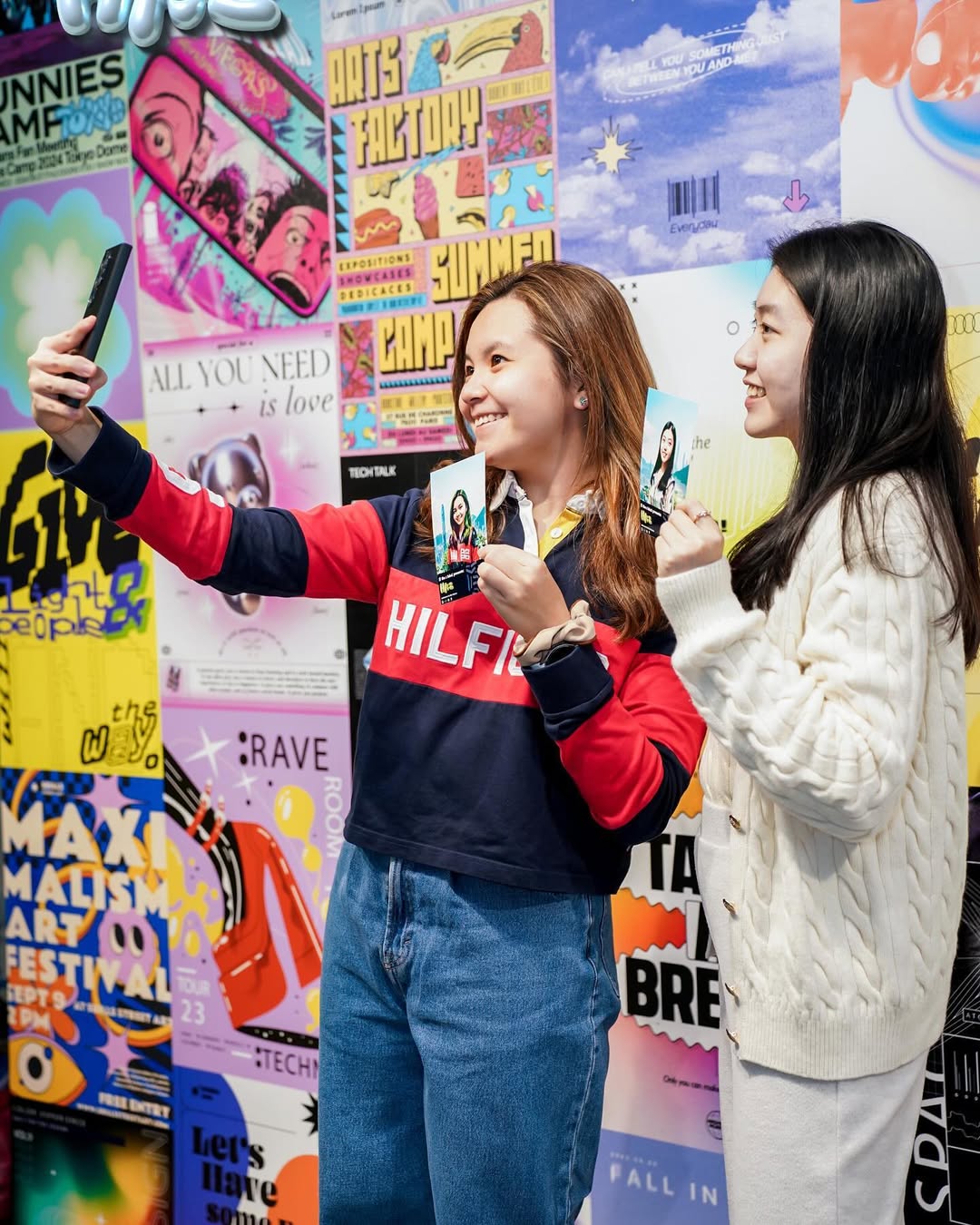
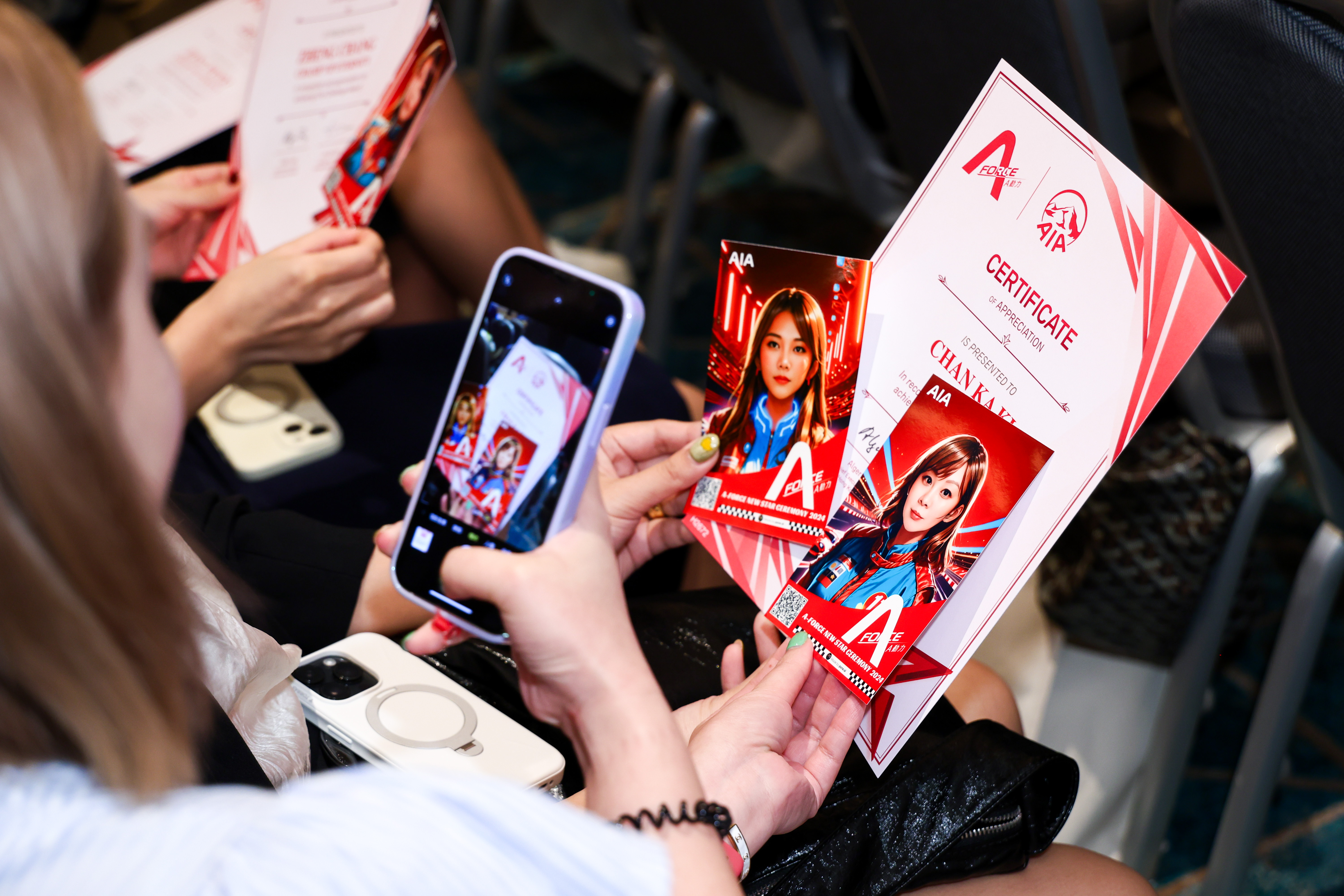
Personalized AI-generated branded portrait at a live event activation

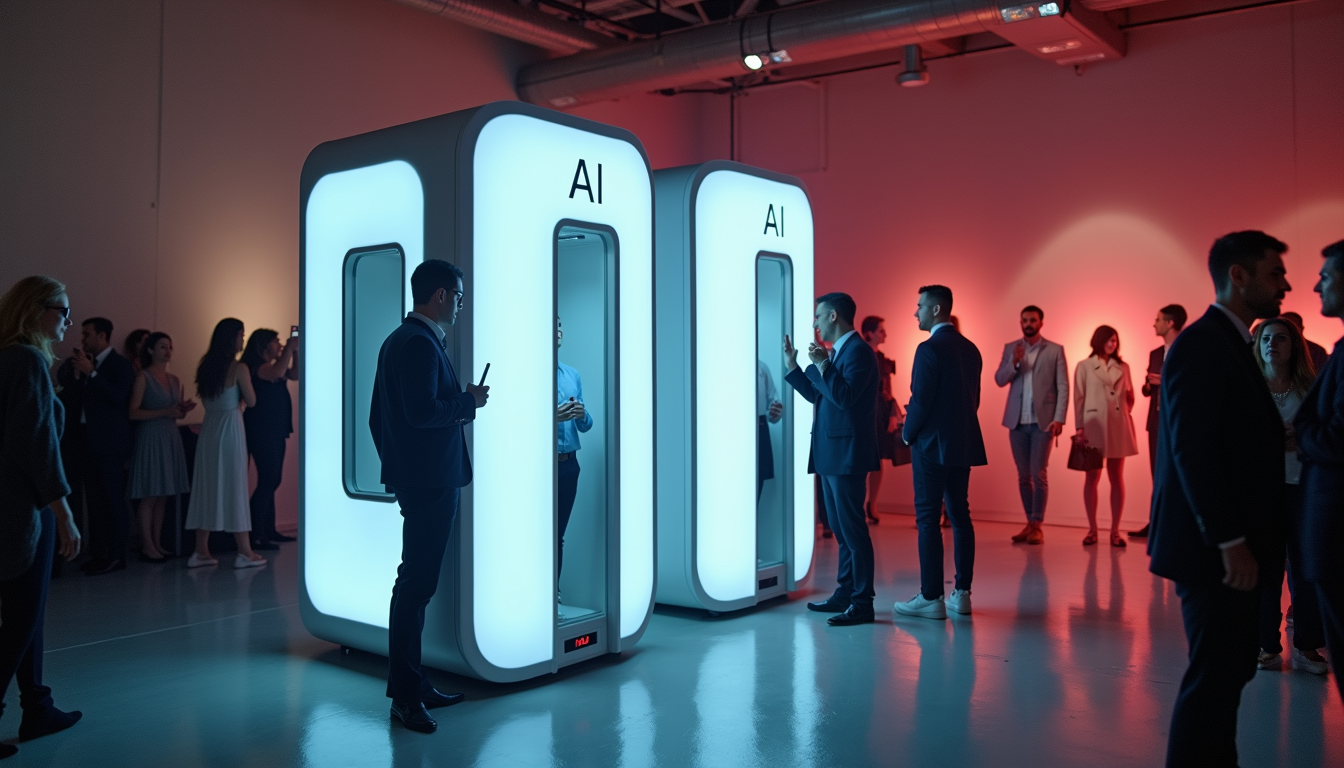
AI photo booth branded experience flow for corporate and retail activations

Most brand activations promise attention. Very few earn it. That is the gap AI Photo Booths fill for modern event teams: they turn a few seconds of curiosity into a branded moment people actually want to keep, share, and talk about later.

For PONS.ai, this matters because brand activations are no longer judged only by footfall or impressions. They are judged by whether they create usable content, whether they reflect the brand properly, and whether they can travel beyond the venue through WhatsApp, Instagram, LinkedIn, and recap campaigns.

AI Photo Booths are especially strong in brand activation environments because they do three jobs at once:

they attract people to stop

they personalize the output so it feels made for the guest

they create an asset that marketing teams can reuse after the event

That combination is why AI Photo Booths work so well for product launches, retail pop-ups, mall campaigns, trade shows, roadshows, and corporate brand moments.

Why brand activations need better content engines

A lot of brand activations still rely on one of two extremes. Either the experience is visually nice but forgettable, or it is clever but too complicated for guests to use quickly. In both cases, the brand gets activity but not lasting value.

An AI Photo Booth changes that equation. Instead of giving everyone the same generic photo, it uses generative workflows to create branded content that feels individualized. That means the guest sees themselves in the experience, not just beside it.

For the marketing team, that difference is huge. A normal photo corner may produce a few uploads. An AI Photo Booth can produce a stream of branded visuals that are naturally shareable and much easier to fold into recap videos, email follow-ups, paid social, and internal comms.

This is the reason PONS.ai keeps seeing the same pattern across enterprise work. Whether the activation is for Maersk, HSBC, KPMG, AIA, Starbucks APAC, CR7 LIFE Museum, Sandbox VR, or AWS TechFest, the winning formula is the same: a premium experience, a fast workflow, and a visual result people want to show other people.

What makes an AI Photo Booth different

At a basic level, a traditional photo booth captures a moment. An AI Photo Booth creates a moment and then transforms it.

That transformation can take many forms:

a branded portrait

a campaign-style poster

a themed editorial image

a product-world fantasy scene

a localised visual tied to the event story

The point is not novelty for novelty’s sake. The point is that the output becomes part of the campaign itself.

PONS.ai typically optimises the experience around three things.

1. Speed, so the queue stays healthy and energy stays high. 2. Branding, so the output feels like it belongs to the campaign. 3. Sharing, so the guest is more likely to save and distribute the image.

In real event environments, generation time matters a lot. If the booth is slow, the line becomes the story. If the booth is fast, the image becomes the story.

Where AI Photo Booths fit best in brand activations

Not every event needs the same format, but AI Photo Booths are strongest in environments where attention and shareability both matter.

### 1. Product launches

Product launches need buzz fast. An AI Photo Booth can help guests place themselves inside the world of the product, rather than just next to a display stand.

That works especially well when the launch has a strong visual identity, a consumer-facing audience, or a social-first distribution plan.

### 2. Retail activations

Retail activations often need footfall, dwell time, and a reason to come back. An AI Photo Booth can create a frictionless reason to stop, try, and share. It is one of the cleanest ways to connect offline traffic with digital reach.

### 3. Malls and pop-ups

For shopping mall campaigns and temporary pop-ups, the booth needs to be intuitive enough for passers-by to understand instantly. The AI output gives people a reason to engage even if they did not come with the brand in mind.

### 4. Trade shows and exhibitions

At trade shows, the best activations do two things well: they generate leads and they make the brand memorable. AI Photo Booths are useful because they are both a traffic magnet and a content generator.

### 5. Corporate brand moments

Internal brand activations, town halls, partner summits, and anniversary events all benefit from a shared visual language. AI Photo Booths make the event feel more participatory, not just presentational.

A simple framework for activation design

The best activations start with the audience, not the effect.

### Step 1: Define the conversion goal

Ask what success looks like.

more footfall

higher dwell time

more social shares

lead capture

stronger brand recall

post-event content reuse

Different goals lead to different booth flows. A retail pop-up may prioritise speed and sharing. A B2B conference may prioritise lead capture and professional outputs. A luxury brand activation may prioritise aesthetics and controlled tone.

### Step 2: Match the visual world to the brand

The AI output should feel like it came from the campaign team, not from a random template library. That means aligning the visual style with the brand’s codes: colour, mood, type of event, and target audience.

For PONS.ai, this is where the experience gets interesting. The booth is not just “an AI photo”. It becomes a campaign surface.

### Step 3: Keep the flow simple

Guests should understand the process in seconds.

scan

pose

generate

receive

share

If the flow takes too many steps, the activation loses its momentum. Simplicity is not a downgrade. It is the design principle that keeps the whole thing working.

### Step 4: Plan for reuse

The smartest brand teams think beyond the live event. They ask how the content can live again in:

recap videos

newsletters

social posts

internal communications

event reports

sales decks

That is where AI Photo Booths punch above their weight. They are not just engagement tools. They are content production tools.

Why this works so well for brand activation teams

Brand activation teams are usually trying to balance five pressures at once: creative quality, operational speed, brand safety, measurable ROI, and social relevance.

AI Photo Booths help because they sit right at that intersection.

Creative quality: the output feels personalised and campaign-aware

Operational speed: the experience can be built for throughput

Brand safety: the visual rules can be tightly controlled

ROI: you can measure engagement and shares

Social relevance: the result is naturally postable

This is also why AI Photo Booths are stronger than generic entertainment add-ons. A magician is memorable in the moment. A branded AI portrait can keep working after the event is over.

What PONS.ai has learned from real campaigns

A lot of event tech sounds good in theory and falls apart in the field. The advantage of repeated enterprise work is that it reveals what actually matters.

Across projects for CR7 LIFE Museum, foodpanda, KPMG, HSBC, AIA, Starbucks APAC, JCDecaux, Sandbox VR, AWS TechFest, and Maersk, the same lessons keep showing up.

### Lesson 1: Premium output drives participation

Guests are much more likely to join when they can see that the final result will look polished. If the output looks cheap, they hesitate. If it looks premium, they queue.

### Lesson 2: The fastest experience wins

In activation environments, speed is not just an ops metric. It is part of the brand experience. A booth that feels instant keeps the atmosphere alive.

### Lesson 3: Personalisation increases shareability

When the output feels made for the guest, they are more likely to save it and send it on. That is the difference between a one-time interaction and distributed reach.

### Lesson 4: The best activations extend beyond the venue

The real value often appears after the event. The booth content becomes a recap asset, a sales follow-up asset, or a proof point for the next pitch.

AI Photo Booth vs traditional activation tools

Here is the cleanest way to think about it.

The difference is not just technical. It is strategic. Traditional activation tools often stop at attention. AI Photo Booths extend attention into content, and content into distribution.

How to build a high-performing activation flow

If you are planning a campaign around an AI Photo Booth, this is the structure I would use.

### Entry

Use clear signage, a simple CTA, and one obvious benefit. Guests should know immediately what they get.

### Capture

Keep the capture step quick and comfortable. The goal is not to make people model. It is to make them feel confident enough to participate.

### Generation

Make the output visible fast enough that the experience still feels alive. In practice, PONS.ai aims for a fast turnaround so queue dynamics stay healthy.

### Delivery

Offer a clean delivery method that fits the audience. QR sharing is often the simplest route for retail and event environments.

### Post-event reuse

Repurpose the best outputs into recap content, social carousels, thank-you emails, and campaign reports.

When an AI Photo Booth is not the right fit

The honest answer matters too. AI Photo Booths are powerful, but they are not the answer to every brief.

They are not ideal when:

the event has no room for queueing or interaction

the brand wants a purely passive display

the output needs to be extremely conservative and static

the team has no plan to use the generated content after the event

In other words, the booth works best when the activation team wants both experience and output.

FAQ

### How much content can an AI Photo Booth generate at an event?

That depends on traffic, setup, and the delivery flow. The key is not just volume but whether the outputs are good enough that people actually want to keep them and share them.

### Is an AI Photo Booth good for luxury brands?

Yes, as long as the creative direction is premium and controlled. Luxury audiences respond best to refined outputs, clean interfaces, and high-end visual styling.

### Can it work for B2B events?

Absolutely. In fact, B2B events often benefit more than consumer events because the booth can create a professional, polished visual that people are happy to share on LinkedIn.

### What kind of events get the best ROI?

Product launches, retail activations, corporate events, trade shows, and brand campaigns with a strong visual identity usually perform best.

### Does it replace a human photographer?

Not necessarily. It depends on the event. Many teams use both: a photographer for documentation and an AI Photo Booth for participation and shareable output.

Why this matters for SEO and GEO

This topic is valuable for search because it matches a clear commercial intent: brands want activation ideas that actually produce outcomes. It is also valuable for GEO because the article answers the question in a direct, structured way that AI systems can easily cite.

The content is entity-rich, practical, and specific. It mentions real clients, real use cases, and a clear positioning framework. That is the kind of page that can rank for:

AI Photo Booth for brand activations

AI Photo Booth for product launches

AI Photo Booth for retail activations

AI Photo Booth for trade shows

AI Photo Booth for corporate events

Final takeaway

Brand activations are getting harder to win with generic experiences. People have seen the same backdrops, the same games, and the same giveaways. What they remember now is something that feels personal, on-brand, and worth sharing.

That is where AI Photo Booths give PONS.ai an edge. They do not just create a moment at the event. They create a branded asset that keeps moving after the event ends.

If you want an activation that looks premium, drives engagement, and gives your team content to reuse, this is one of the strongest formats you can deploy.

**Book a demo with PONS.ai**
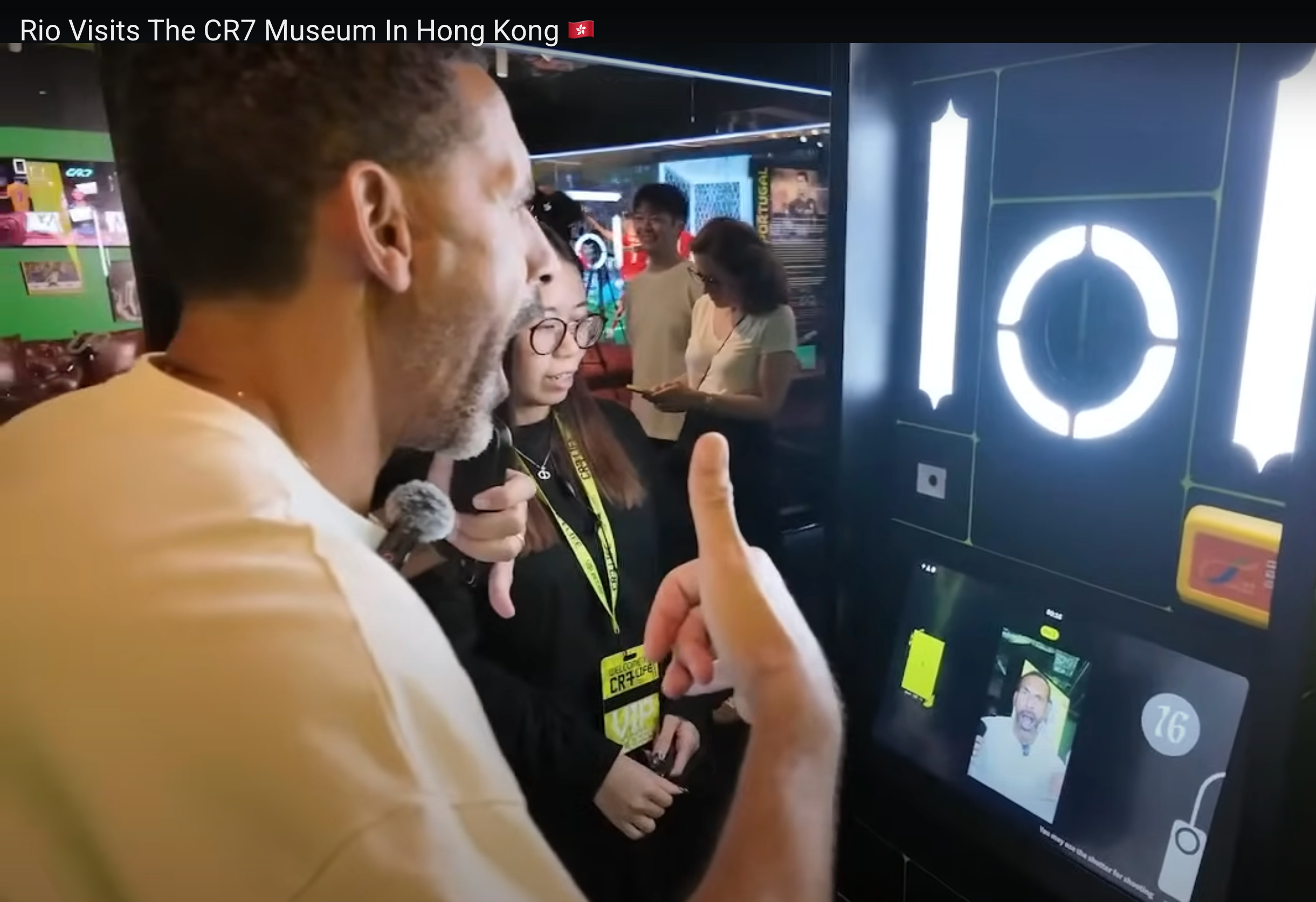
AI photo booth for brand activations and premium event engagement

White-label AI photo booth for agency-led premium activations

Most agencies do not lose deals because their ideas are weak. They lose because the delivery model is too thin.

You win the pitch, then the client asks for a branded activation, a fast turnaround, a premium guest experience, and post-event assets they can reuse across social, CRM, and internal comms. Suddenly, the agency has to either assemble a stack of vendors or say no to revenue.

That is exactly where a white-label AI Photo Booth changes the game.

Instead of treating the booth as a one-off attraction, you turn it into a productized service that can sit inside your agency offer. Your client sees one clean brand experience. Your team keeps control of the relationship. And the output looks like it came from your campaign, not a third-party booth supplier.

For PONS.ai, this is not a theory. It is how premium event work becomes easier to scale. Across projects for CR7 LIFE Museum, foodpanda, KPMG, HSBC, AIA, Starbucks APAC, AWS TechFest, LONGINES IJC, JCDecaux, Sandbox VR, and Maersk, the same lesson keeps showing up: when guests get something personal, polished, and shareable, the activation becomes more valuable.

What does white-label actually mean for an agency?

White-label means the client experiences the activation as yours.

The branding is yours. The client-facing language is yours. The guest flow feels like part of your campaign. The tech can sit invisibly behind the scenes while your agency owns the narrative.

That matters because agencies are not just selling execution. They are selling trust, taste, and consistency.

If you bring in a generic booth that feels disconnected from the campaign, you dilute the brand story. If you bring in a white-label AI Photo Booth that can be styled, framed, and delivered like a custom asset, you protect the campaign and often improve the client’s perception of your team.

There are three practical versions of white-label:

1. Soft white-label, where the tech partner is invisible to the audience but may still appear in internal paperwork. 2. Full white-label, where the guest-facing experience is entirely branded as the agency or client. 3. Co-branded production, where the agency keeps lead role but the service is positioned as a joint delivery.

For most agencies, full white-label is the sweet spot when they want to look bigger without building a booth business from scratch.

Why agencies are moving toward productized event experiences

The experiential market is not getting simpler. It is getting more crowded, more data-driven, and more expectation-heavy.

Brand teams now expect experiences that are interactive, measurable, and built for content reuse. Salesforce describes experiential marketing as live events, pop-ups, and brand activations that create emotional connection by involving customers in an activity rather than passively showing them something. That is basically the bar now.

Event Marketer’s 2026 coverage of top agencies also makes the trend obvious: the best agencies are scaling up, not shrinking down. They are expected to handle more strategic clients, more complex creative, and more measurable outcomes.

That creates a structural problem for agencies that still rely on ad hoc vendor sourcing. Every new format means new risk, new training, new production overhead, and more room for failure.

A white-label AI Photo Booth solves that by turning a custom activation into a repeatable offer.

It gives you:

A faster way to pitch premium interactive content A cleaner way to package brand activations A more credible way to upsell event tech A stronger way to keep your client relationship intact A reusable format you can deploy across categories

In other words, it helps the agency stop selling hours and start selling outcomes.

What agencies actually need from an AI Photo Booth partner

Agency guests using a branded AI Photo Booth at a corporate activation

Not all booth solutions are built for agency work.

Agencies care about a different set of issues than end clients do. The client might ask, “Does it look cool?” The agency asks, “Can I trust this to land on time, with the right tone, and without wrecking my team’s day?”

The real checklist looks like this:

That is where PONS.ai is strongest.

Our deployments are built for premium branded output and real event flow, not just demo-room novelty. In practice, that means the experience can stay fast enough to support live traffic, with generation times around 10 seconds in the right setup. For agencies, that matters because queue health is part of the product.

If the booth bogs down, the activation stops feeling premium. If it stays smooth, the guest experience feels effortless and the agency looks sharp.

Why AI Photo Booths are better than traditional booth rentals for agency clients

Traditional booth rentals are fine when the brief is simple.

But agency briefs are rarely simple.

The problem with a standard photo booth is not that it fails. It is that it caps the value too early. It gives the guest a photo, maybe a print, maybe a gallery. That is useful, but it is often not enough for a modern brand activation.

An AI Photo Booth creates a different kind of output:

It is more personalized It is more brandable It is more shareable It is easier to position as part of a campaign It creates stronger post-event assets

That shift matters because agencies need things that travel beyond the event floor.

If the output can be used in a recap video, social post, LinkedIn share, internal newsletter, or follow-up email, the activation becomes a marketing asset instead of a one-night expense.

That is the biggest difference.

What kinds of agencies benefit most?

Almost every agency can benefit from a white-label AI Photo Booth, but some feel the value faster than others.

### Event agencies

Event agencies are the obvious fit. They already live in production, logistics, and guest experience. A white-label booth gives them a higher-value add-on they can package into launches, conferences, and sponsorship activations.

### Brand activation agencies

These teams care about memorability and shareability. AI Photo Booth output is useful because it can be shaped to fit the campaign theme rather than looking like generic event photography.

### Creative agencies

Creative agencies often win on concept, but they need trusted delivery partners to make the concept real. White-label lets them protect the creative vision without building the operation themselves.

### PR and communications agencies

PR teams care about buzz, UGC, and media-friendly moments. AI Photo Booth experiences can create the kind of content people actually post.

### Digital agencies expanding offline

Many digital agencies are being asked to do more in the physical world. A white-label booth is a practical way to add live experience capability without turning the agency into a hardware company.

How PONS.ai fits into agency workflows

The best agency partnerships are boring in the right way.

By that I mean the handoff should be smooth, the creative should be clear, and the delivery should feel controlled.

At PONS.ai, the agency workflow usually works best when the team has:

1. A clear campaign goal 2. A visual direction or theme 3. A guest flow or lead capture requirement 4. A venue or market list 5. A desired output style

Once those are defined, the booth can be shaped around the campaign rather than the other way around.

That has worked across very different project types:

CR7 LIFE Museum, where the experience needed to feel iconic and fan-friendly foodpanda, where milestone storytelling needed to feel playful and social KPMG and HSBC, where the tone had to stay polished and corporate AIA and Starbucks APAC, where employee engagement had to feel personal AWS TechFest, LONGINES IJC, JCDecaux, Sandbox VR, and Maersk, where high-traffic environments demanded both speed and recall

The throughline is simple: if the output looks like part of the campaign, the guest is more likely to keep it, share it, and remember it.

What should the agency brief include?

If you want a strong white-label activation, the brief needs more than “make it look cool.”

Here is what we usually recommend agencies lock down early:

Primary objective: awareness, lead capture, social sharing, or internal engagement Brand tone: premium, playful, futuristic, luxury, corporate, youth-led, or community-driven Output format: still image, portrait set, themed transformation, branded recap asset On-site flow: open queue, QR capture, invite-only, registration-linked, or hybrid Market scope: one city, regional rollout, or multi-country deployment Data handling: whether opt-in, email capture, or gallery delivery is required Creative references: mood board, campaign assets, and any locked brand colors or type

Agencies that do this well usually move much faster in production.

The booth stops being a “feature request” and becomes an embedded campaign component.

Comparison: white-label AI booth vs standard vendor booking

Premium AI-generated branded portraits for event campaigns

This is why the best agencies are not just buying activations. They are building a menu of repeatable experiences.

How white-label boosts agency margin

There are only three ways an agency makes more money on an activation:

1. Increase project value 2. Increase repeatability 3. Reduce delivery friction

A white-label AI Photo Booth does all three.

You can sell it as:

A standalone activation A sponsorship add-on A brand content station A lead capture experience A premium guest engagement layer

That gives the agency more pricing flexibility without having to reinvent the offer every time.

It also helps when a client asks for something “new” but still wants a safe, professional delivery partner. Instead of scrambling to source a new vendor, the agency already has a format that can be adapted.

What makes a white-label booth feel premium?

Premium is not about adding more effects.

Premium is about control.

The booth feels premium when:

The creative is clean and on-brand The guest flow is simple and fast The output feels personal The experience runs without awkward pauses The result looks good enough to share publicly

That is why PONS.ai focuses on polished output and event-ready execution rather than gimmicks.

For luxury brands, finance events, enterprise gatherings, and product launches, the booth needs to respect the room. It cannot feel like a toy.

Common agency mistakes

The biggest mistakes are predictable.

### 1. Treating the booth as a side add-on

If the booth is not tied to the campaign idea, it becomes a random object in the room.

### 2. Overpromising personalization

Some teams promise deep customization but do not have the production discipline to deliver it consistently.

### 3. Ignoring throughput

A beautiful booth that breaks under traffic is still a broken booth.

### 4. Forgetting post-event value

If the content cannot be reused after the event, the agency leaves value on the table.

### 5. Making the guest do too much work

The best experiences feel effortless. If guests have to read instructions, wait too long, or complete a clumsy form, the magic disappears.

FAQ

### Is a white-label AI Photo Booth only for large agencies?

No. Small and mid-size agencies often benefit the most because they can offer a premium service without building a full production stack internally.

### Can the experience match different brand tones?

Yes. The output can be adapted for luxury, corporate, retail, tech, hospitality, and community events. The key is to start with the brand tone, not the effect.

### How fast can the experience run?

With the right setup, it can stay fast enough for live event traffic. For PONS.ai projects, we often target around 10 seconds for generation in the right environment.

### Can the booth support lead capture?

Yes, if the campaign needs it. Some agencies want pure engagement; others want opt-in and follow-up. The experience can be designed around either goal.

### Is white-label useful for regional campaigns?

Very. It lets an agency keep one creative concept and adapt it for different markets without rebuilding the entire guest journey each time.

### Does the client ever need to know the tech partner?

Not always. In full white-label work, the experience can be presented entirely under the agency or client brand.

What good looks like in practice

The strongest agency activations tend to share the same qualities:

A clear story A simple guest flow A premium look A fast turnaround A result that people want to save

That is why the best work is not just “an AI booth.” It is a branded content system.

When that system is white-labeled properly, the agency wins twice: once at pitch stage, and once when the client sees the room respond.

Final thought

If you are an agency trying to grow beyond one-off activations, white-label AI Photo Booths are one of the cleanest ways to package premium experience work.

They help you keep the client relationship, protect the creative, and turn a single event into a repeatable offer.

And because the output is personal, fast, and shareable, it can do more than entertain. It can help the brand create content, drive recall, and extend the campaign after the event ends.

For agencies that want to look bigger without becoming heavier, that is a very good trade.

**Book a demo with PONS.ai**

© 2026 Pons Company Ltd. All rights reserved.

  • Instagram
  • LinkedIn

SSL/TLS Secured

bottom of page