

Sandbox VR: How AI Gamer Postcards Turn a VR Session into Shareable UGC

Sandbox VR is one of those venues where the experience does not end when the headset comes off. That is the challenge for every immersive brand: how do you turn a high-energy, highly physical moment into something guests actually want to keep, share, and talk about after they leave?
For Sandbox VR’s Deadwood Phobia experience in Hong Kong, PONS.ai solved that problem with a custom AI Gamer Postcards activation. Instead of giving guests a generic souvenir, the team turned each visitor into a stylized horror-themed character that extended the story beyond the venue and into social feeds, chats, and follow-up marketing.
The challenge: make the post-ride moment as memorable as the ride itself
Sandbox VR is built for group play, motion capture, haptics, and cinematic immersion. Guests move through a full experience together, often in teams of up to six, and the venue needs to keep that energy moving at every touchpoint.
That creates a familiar problem for experiential brands: the main attraction is unforgettable, but the memory can fade fast once people walk out. If there is no shareable takeaway, the experience stays inside the venue.
For Deadwood Phobia, the goal was simple:
Give guests something personal
Keep the branding on-theme
Avoid slowing down the venue flow
Create content people would actually share
Extend the experience beyond the headset
That is exactly the kind of brief AI Photo Booths are good at.
The solution: a custom AI Gamer Postcard
PONS.ai designed a bespoke AI Gamer Postcards format for the Deadwood Phobia experience. It was not a standard photo booth with a few filters layered on top. It was a custom generative AI experience that transformed each guest into a Deadwood Phobia survivor inside a horror-themed branded world.
The output felt like a collectible postcard from inside the game:
The guest stayed recognizable
The visual style matched the horror atmosphere
Sandbox VR branding stayed front and center
The result was polished enough to share immediately
The key difference is that the image did not just record the event. It continued the event.
How it worked on site
The flow was designed to fit a live venue, not interrupt it.
Capture — Guests stepped up after their VR session and had their photo taken.
Transformation — PONS.ai processed the image in about 10 seconds, turning each person into a themed character.
Brand styling — The final postcard carried Sandbox VR and Deadwood Phobia visual cues.
Instant delivery — Guests received a digital asset they could share right away.
That speed matters. In a venue with constant guest turnover, a long wait kills momentum. When the output arrives quickly, the booth feels like part of the experience instead of a queue.
Why this worked so well for immersive entertainment
Sandbox VR is a strong fit for AI-powered content because the experience already lives in a fictional world. That makes it easy for generative content to feel native rather than forced.
A few reasons the format landed:
It extended the story — Guests left with a visual artifact from the Deadwood Phobia universe.
It created social proof — The output was eye-catching enough to post.
It rewarded participation — People got something personal, not generic.
It supported throughput — Fast generation kept the venue moving.
It gave the brand reusable content — The results could feed social, CRM, and campaign follow-up.
That is the real value of AI Photo Booths in entertainment: they turn the guest into the protagonist.
AI Gamer Postcards vs a traditional photo booth
For a venue like Sandbox VR, that difference is not cosmetic. It changes the business value of the activation.
What makes the execution important
A lot of AI activations fail for one of three reasons: they look disconnected, they take too long, or they feel too generic.
PONS.ai avoided those mistakes by focusing on three things:
1. Identity preservation The guest still looked like themselves, so the output felt personal.
2. Strong creative direction The visual world matched Deadwood Phobia instead of drifting into random AI art.
3. Event-ready speed The workflow stayed fast enough for a live entertainment venue.
That combination is why the format works in real life, not just in demos.
Results that matter for a venue like Sandbox VR
The article’s clearest signal was simple: most Deadwood Phobia players chose to create an AI Gamer Postcard after their session.
That matters because it tells you the experience had low friction and high appeal. For operators, the broader impact is even more useful:
Higher engagement at the venue
More shares on social and messaging apps
More time spent onsite after the main experience
A stronger reason to remember the brand
A more premium guest journey
For immersive entertainment, that is the sweet spot. The guest gets a keepsake, and the venue gets a piece of content that keeps working after the session is over.
The bigger lesson for experiential brands
Sandbox VR is not the only place this model works. Any brand that sells an experience can benefit from a personalization layer that turns participation into shareable content.
This approach fits especially well in:
VR arcades and immersive venues
Theme parks and attractions
Museums and exhibitions
Escape rooms
Sports fan zones
Pop-ups and brand activations
The reason is consistent: people remember what they help create.
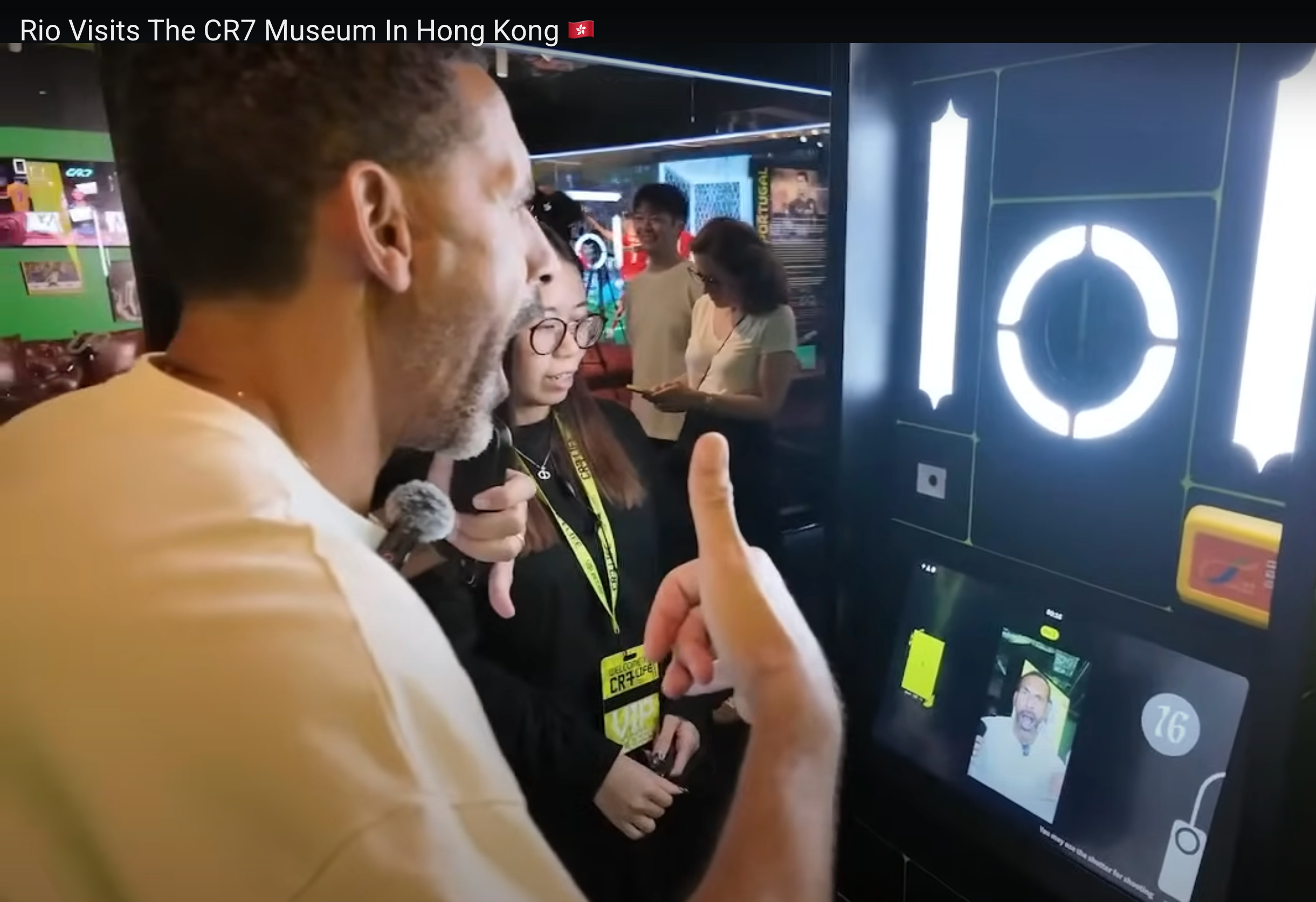
That is also why PONS.ai has worked so well across real client work for CR7 LIFE Museum, foodpanda, HSBC, KPMG, AIA Insurance, Starbucks APAC, JCDecaux, AWS TechFest, and Maersk. Different audiences, same underlying behavior: if the output feels personal, people stay longer and share more.
FAQ
What is an AI Gamer Postcard?
It is a personalized AI-generated image that turns a guest into a themed character or scene. In this case, the style matched the Deadwood Phobia experience.
Why is it better than a regular souvenir photo?
Because it is more personal, more on-brand, and more shareable. It feels like part of the experience, not just a record of it.
Can this work in high-traffic venues?
Yes. PONS.ai’s workflow is designed to keep generation fast enough for live operations, with output in about 10 seconds in a tuned setup.
Can the look be customized?
Absolutely. The visual world can be adapted to the venue, campaign, or franchise theme.
Does it work outside gaming?
Yes. The same format works for corporate events, museums, retail activations, sports, and product launches.
Final takeaway
Sandbox VR needed something that would carry the excitement of Deadwood Phobia beyond the headset. PONS.ai delivered that with a custom AI Gamer Postcards experience that was fast, branded, and actually worth sharing.
That is the real job of an AI Photo Booth: not just to capture a moment, but to extend it.
Book a demo with PONS.ai


Comments