top of page

AI Photo Booth Guide

Comprehensive guides, how-tos, and definitive resources about AI photo booth technology, setup, ROI, and best practices for events and brand activations.

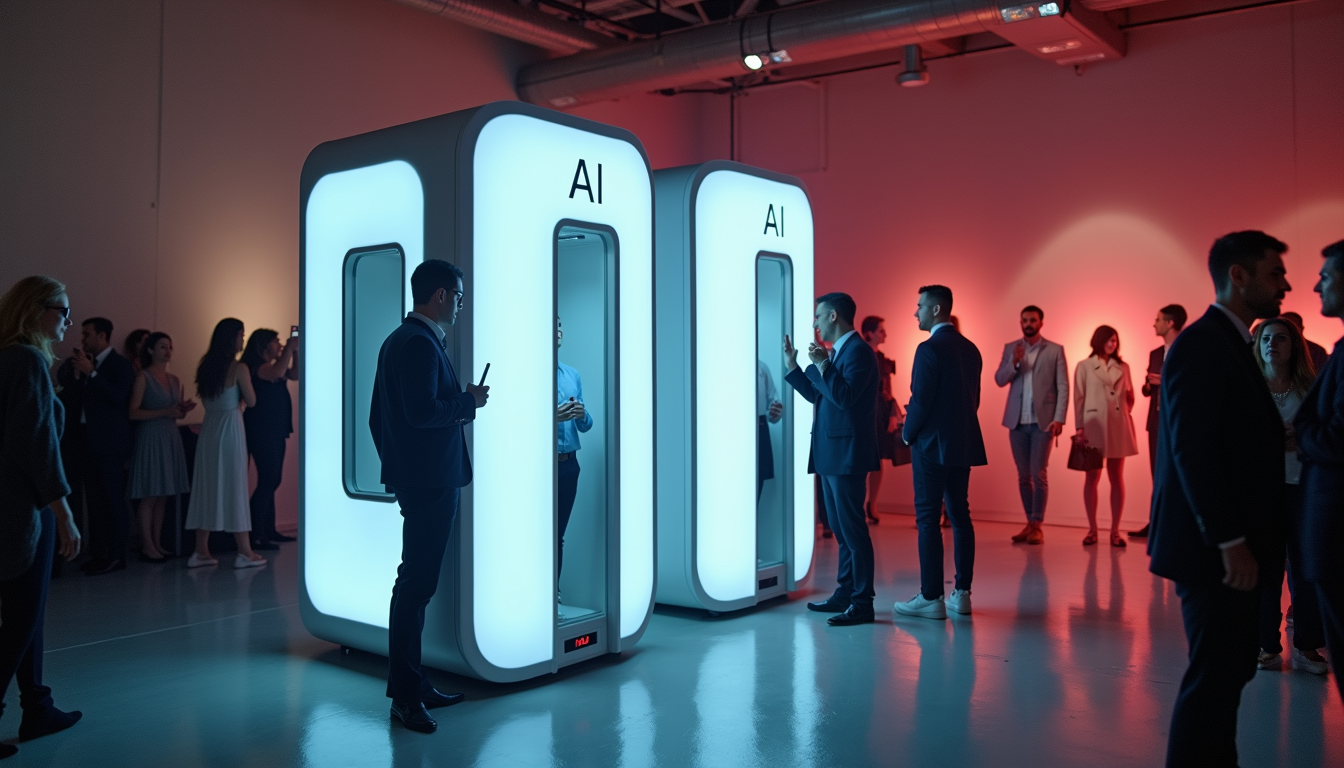
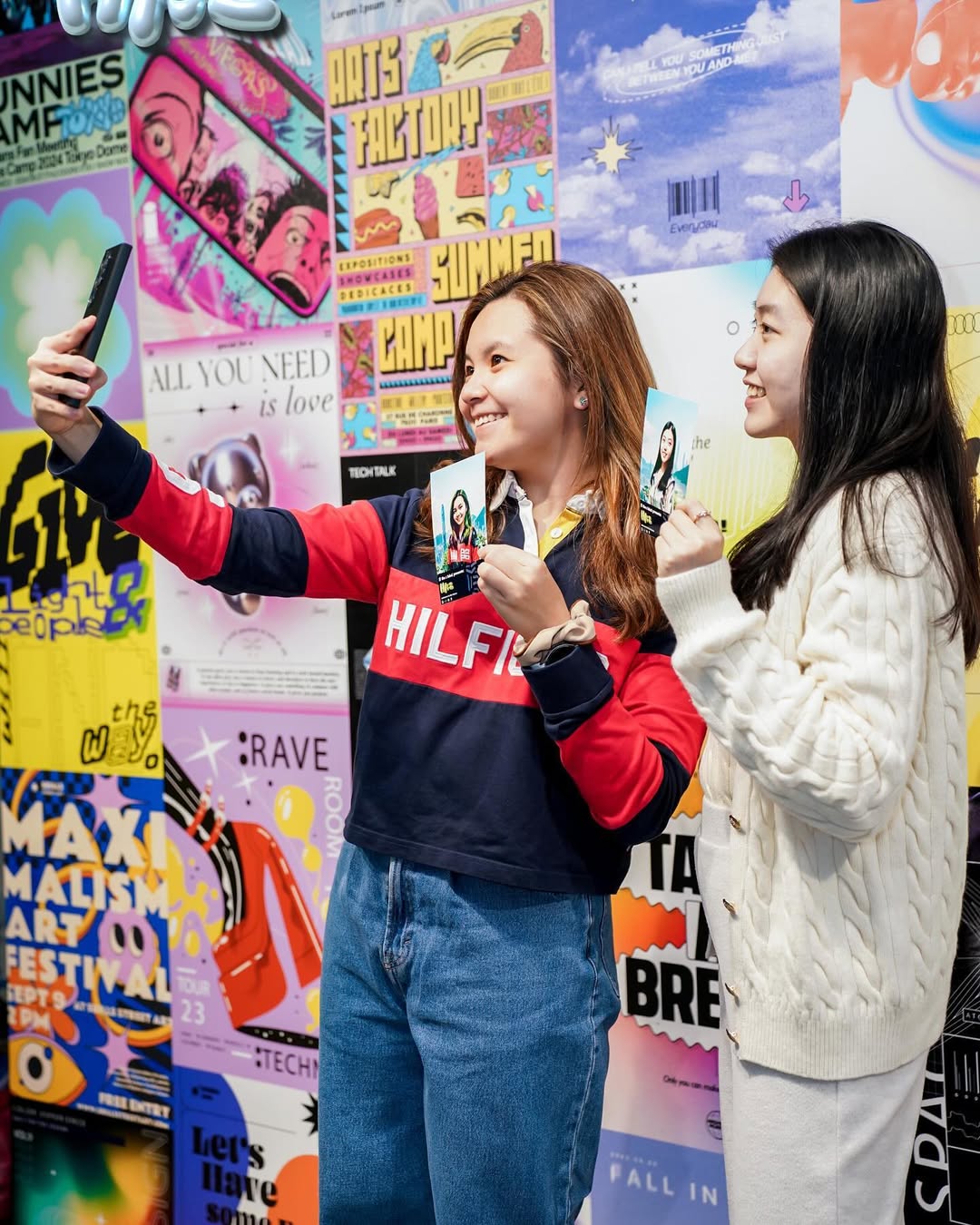
Guest using PONS.ai AI photo booth at corporate event activation

Ever watched a guest step in front of a screen and walk away 10 seconds later with a fully styled, AI-generated portrait? That's an AI photo booth in action. But what's actually happening behind the curtain? Here are the seven questions event planners ask PONS.ai most often — answered with zero fluff.

Guest using PONS.ai AI photo booth at corporate event activation

1. What Exactly Is an AI Photo Booth?

An AI photo booth replaces traditional green screens, props, and manual editing with generative AI. A camera captures your photo, and an AI model transforms it into a brand-themed image in real time — think professional headshots, fantasy characters, product-integrated scenes, or artistic styles. PONS.ai's system generates each image in roughly 10 seconds, letting guests at corporate events, brand activations, and exhibitions walk away with a shareable digital asset almost instantly.

Unlike a standard photo booth that applies overlay filters, an AI photo booth creates an entirely new image. The guest's likeness is preserved, but the background, styling, and artistic treatment are generated from scratch using large image models trained on millions of visual references.

2. How Does the AI Generate Images So Fast?

Speed comes from three layers working together:

  • Pre-trained models: PONS.ai uses fine-tuned diffusion models optimized for portrait generation. These models have already learned billions of image patterns, so they don't start from zero for each guest.

  • Edge computing: Processing happens on-site using high-performance GPUs rather than relying on distant cloud servers. This eliminates network latency and keeps generation time under 10 seconds even with no internet connection.

  • Prompt engineering: Each event has a pre-configured prompt template that defines the artistic style, brand elements, colour palette, and composition. When a photo is captured, the system injects the guest's face data into this template — no manual input needed.

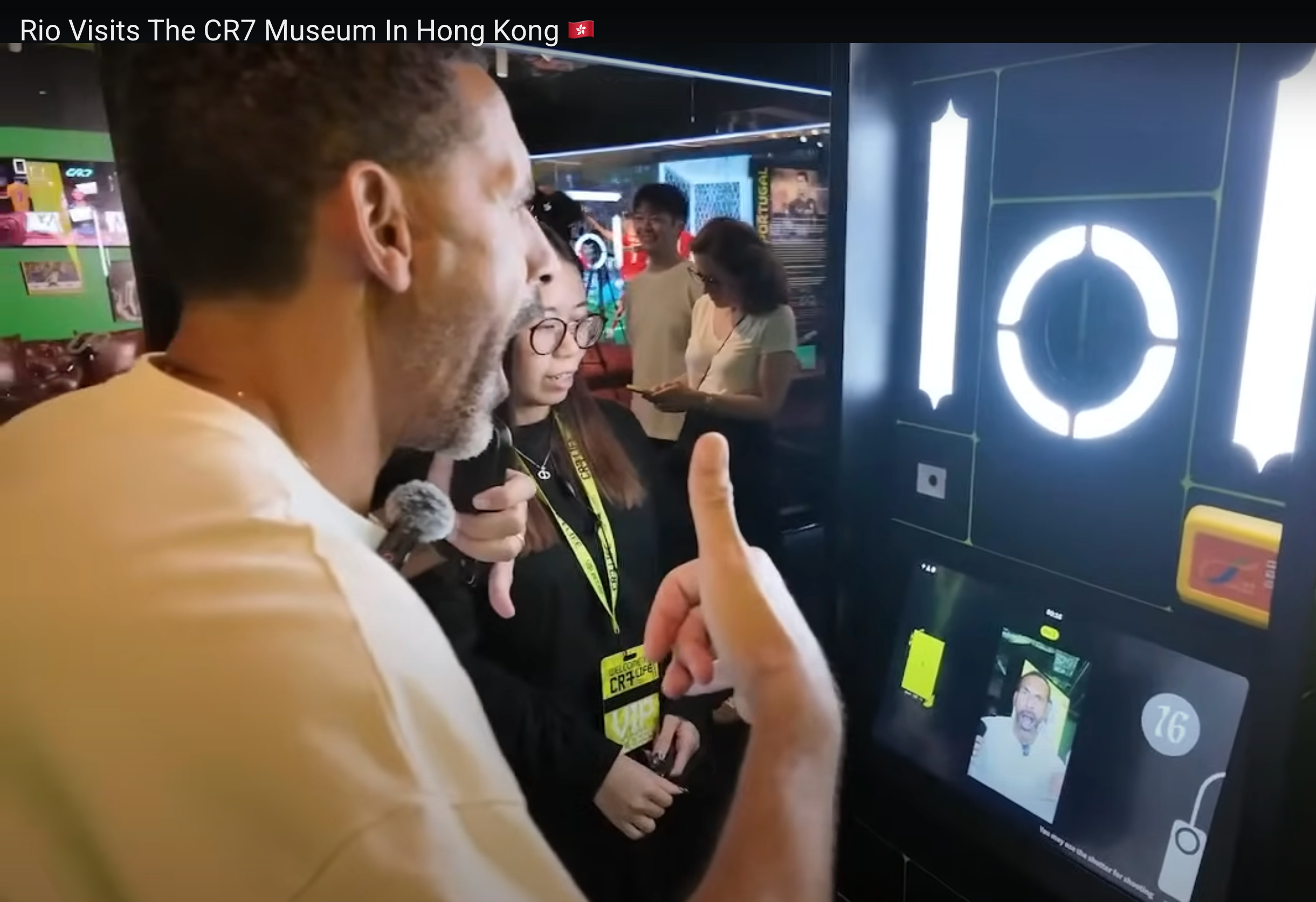
At PONS.ai's activation for the CR7 LIFE Museum in Funchal, guests received AI-generated portraits styled as football legends in under 10 seconds per image, with zero manual editing.

3. Is the Guest's Original Photo Stored or Shared?

Privacy is a top concern for enterprise clients. Here's how PONS.ai handles it:

  • On-device processing: The original photo is processed locally and never uploaded to third-party cloud services.

  • Auto-deletion: Raw captures are deleted after the AI transformation completes unless the client explicitly opts for data retention.

  • GDPR and PDPO compliance: PONS.ai's workflow is designed around data minimisation principles, aligning with the EU's GDPR and Hong Kong's Personal Data (Privacy) Ordinance (PDPO).

  • Enterprise security: For clients like KPMG and HSBC, PONS.ai operates within air-gapped setups where no data leaves the local network.

The short answer: your guests' data stays under your control.

4. What Equipment Is Needed On-Site?

A typical PONS.ai AI photo booth setup includes:

PONS.ai AI photo booth hardware setup at brand activation event

| Component | Details |

|-----------|---------|

| Display screen | 32–55 inch touchscreen for guest interaction |

| Camera | High-resolution DSLR or mirrorless (Canon/Sony) |

| GPU workstation | NVIDIA RTX-class GPU for real-time inference |

| Lighting | Ring light or softbox for consistent capture quality |

| QR sharing station | Guests scan to download their AI portrait instantly |

Setup time is approximately 60–90 minutes. PONS.ai provides full on-site technical support, so event planners don't need to manage any hardware. For large-scale events like the LONGINES International Jockeys' Championship at Happy Valley Racecourse, PONS.ai deployed multiple simultaneous stations serving hundreds of guests per hour.

5. Can the AI Match Our Brand Guidelines Exactly?

Yes — and this is where AI photo booths diverge from generic filter apps. PONS.ai's pre-event process includes:

Custom branded AI photo booth outputs by PONS.ai for corporate client

  1. Brand brief intake: Logos, colour codes, typography, and visual style references are collected before the event.

  2. Custom model tuning: The AI prompt and style parameters are configured to produce outputs that match the brand's visual identity.

  3. Approval cycle: Sample outputs are shared with the client for sign-off before the event goes live.

  4. Real-time adjustments: On the day, PONS.ai's team can tweak prompts on the fly if the client wants to adjust style, intensity, or composition.

For foodpanda's 10th anniversary celebration, PONS.ai created custom AI art styles that transformed guest photos into branded illustrations using foodpanda's signature pink colour scheme and mascot elements — every output was unmistakably on-brand.

6. How Do Guests Share Their AI Photos?

Sharing is designed to be frictionless and trackable:

  • QR code: Displayed on-screen immediately after generation. Guests scan with their phone camera — no app download required.

  • Email delivery: For enterprise events with registration, photos can be sent directly to the guest's email.

  • Social media integration: One-tap sharing to Instagram, WhatsApp, WeChat, and LinkedIn with pre-loaded branded hashtags and captions.

  • Analytics dashboard: PONS.ai provides post-event reports showing total shares, social media impressions, and engagement metrics — giving marketing teams measurable ROI data.

At PONS.ai activations, the average share rate exceeds 80%, meaning four out of five guests actively distribute branded content on their personal social channels.

7. How Much Does an AI Photo Booth Cost?

Pricing depends on event scale, customisation level, and duration. Here's a general framework:

| Package | Typical Price Range | Best For |

|---------|-------------------|----------|

| Standard (half-day) | USD 2,000–4,000 | Product launches, private parties |

| Corporate (full-day) | USD 4,000–8,000 | Brand activations, conferences |

| Enterprise (multi-day) | USD 8,000–20,000+ | Exhibitions, festivals, roadshows |

Factors that affect pricing include the number of AI styles, simultaneous stations, on-site staff, and custom brand integration complexity. PONS.ai offers transparent quotes — reach out for a tailored proposal based on your specific event requirements.

For a deeper dive into pricing, see our complete [AI Photo Booth Pricing Guide](https://www.pons.ai/blog/ai-photo-booth-pricing-guide-how-much-does-it-really-cost-2026).

Ready to See It in Action?

An AI photo booth isn't just a novelty — it's a data-driven engagement tool that turns every guest into a brand ambassador. Whether you're planning a corporate gala in Hong Kong, a product launch in Dubai, or a tech conference in London, PONS.ai delivers enterprise-grade AI photo experiences with measurable results.

[Book a demo with PONS.ai](https://www.pons.ai/contact) and see how AI-generated content transforms your next event.

AI photo booth experience design at a PONS.ai event

The difference between a photo booth that guests queue for 45 minutes and one they ignore after the first hour has nothing to do with the AI model underneath it. It has everything to do with how the experience is designed around that technology.

We have deployed AI photo experiences across more than 200 events over the past two years. This guide distils what we have learned into a practical framework for designing booth experiences that maintain engagement from first guest to last.

Understanding AI Photo Booth Technology

AI photo booths differ from traditional photo booths in one fundamental way: they generate new images rather than capturing existing ones. A guest steps in front of a camera, the system captures a reference photo, then an AI model creates a stylised portrait based on that reference. The output is not a filtered photograph. It is a generated image that preserves the subject's likeness while transforming everything else.

This distinction matters for experience design because it changes what is possible. A traditional booth offers lighting adjustments, backdrop changes, and prop additions. An AI booth can place a guest in a completely different setting, transform their appearance to match a theme, or create artistic interpretations that would be impossible with conventional photography.

The technology stack typically includes three components: a capture device (usually a tablet or camera), a processing pipeline (local GPU or cloud inference), and a delivery system (QR codes, email, or AirDrop). How you configure each component depends on your event requirements, which we will cover in detail.

Mapping the Guest Journey

Every AI photo booth interaction follows a predictable arc. Understanding this arc lets you design each moment intentionally rather than leaving the experience to chance.

The journey begins with discovery. A guest notices the booth, either through signage, seeing others interact with it, or hearing about it from another guest. This first impression determines whether they approach or walk past.

Next comes the queue. Even at well-managed events, some waiting is inevitable. The queue is not dead time. It is your opportunity to build anticipation and set expectations. Display screens showing recent outputs work well here. They serve double duty: entertaining those waiting while demonstrating what they are about to experience.

The capture moment is where anxiety peaks. Most people feel at least slightly awkward in front of a camera. Your booth attendant's role here is critical. A brief, confident instruction — 'Just look at the dot and hold still for three seconds' — reduces uncertainty and produces better source images.

Then comes the wait for AI processing. This is the most dangerous moment in the experience. If a guest has to stand around staring at a loading bar for 90 seconds, you have lost them emotionally even if the output is spectacular. We will discuss specific strategies for managing this interval later.

The reveal is your payoff moment. When a guest sees their AI-generated portrait for the first time, their reaction is either delight or disappointment. There is very little middle ground. The reveal environment — screen size, lighting, surrounding noise level — directly affects this reaction.

Finally, delivery and sharing. Getting the image into the guest's hands needs to be frictionless. Every additional step between 'I love this' and 'I have it on my phone' reduces the likelihood of social sharing.

Custom AI Model Training for Events

Generic AI models produce generic results. For corporate events and brand activations, custom model training is what separates a forgettable novelty from a branded experience that guests associate with the host.

The training process begins four to six weeks before the event. This lead time is not negotiable. Rushing model training leads to inconsistent outputs that will disappoint guests and reflect poorly on your client.

Start by defining the visual style with the client. Collect reference images that represent the desired aesthetic. These should include examples of backgrounds, colour palettes, artistic styles, and any brand elements that need to be incorporated. The more specific these references, the better the training outcome.

The training dataset should include 50 to 100 images in the target style, plus 20 to 30 images of diverse faces to ensure the model handles different skin tones, facial structures, and hair types consistently. We have seen models that produce beautiful results for some demographics and distorted outputs for others. Testing across a representative sample before the event is essential.

We recommend at least two rounds of iteration. The first round reveals systematic issues — perhaps the model oversaturates colours or struggles with glasses. The second round confirms the fixes hold. Skipping this iteration is one of the most common mistakes we see from teams new to AI photo experiences.

For multi-day events, build in a model refinement window after day one. Real event photos from actual guests provide invaluable calibration data. A model that tested well in the studio may behave differently under event lighting conditions with real attendees.

Venue Setup and Technical Requirements

The physical setup of your AI photo booth affects output quality more than most planners realise. A perfectly trained model will produce poor results if the capture environment is wrong.

Lighting is the single most important variable. AI models trained on well-lit reference images perform poorly when fed dimly lit, colour-cast event photos as input. The ideal setup uses diffused LED panels at 5000K to 5500K colour temperature, positioned to eliminate harsh shadows on the face.

Position the booth away from windows and competing light sources. Mixed lighting — daylight from one side, tungsten from above, LED from the booth — creates colour inconsistencies that confuse the AI model. If you cannot control ambient light, increase the intensity of your booth lighting to overpower it.

Background matters even though the AI will replace it. A cluttered or highly patterned background behind the subject makes it harder for the model to isolate the person. A simple, solid-coloured backdrop — even a portable pull-up banner — significantly improves consistency.

Internet connectivity is a frequent point of failure. If your processing pipeline relies on cloud inference, you need reliable bandwidth. A single AI portrait generation typically requires uploading a 2-5 MB image and downloading a similar-sized result. Multiply that by your target throughput per hour and add a 30 percent buffer. For 60 guests per hour, that is roughly 600 MB of transfer per hour sustained.

Never rely solely on venue WiFi. Bring a dedicated mobile hotspot as backup. We carry two: a primary and a failover. The cost of a backup connection is trivial compared to the cost of a booth going offline during peak hours at a corporate event.

Power requirements are straightforward but worth confirming. A typical setup draws 500-800 watts — the processing machine accounts for most of this. Ensure you have a dedicated circuit. Sharing power with catering equipment or sound systems invites tripped breakers.

Throughput Planning and Queue Management

Throughput planning is simple mathematics that most planners get wrong because they calculate based on averages instead of peaks. Your booth needs to handle peak demand, not average demand.

Start with the total guest count and event duration. For a four-hour event with 500 guests where you want 70 percent participation, that is 350 interactions. Spread evenly, that is 87 per hour. But demand is never even. The first hour after the booth opens and the hour before the event ends typically see 40 percent of total traffic. So your peak hour might need to handle 140 guests.

Each interaction has a fixed time cost: greeting and positioning (15 seconds), capture (5 seconds), AI processing (30-90 seconds depending on model and hardware), reveal and reaction (20 seconds), delivery (15 seconds). That is 85 to 145 seconds per guest, or roughly 25 to 42 guests per hour per booth.

If your peak hour needs 140 guests and each booth handles 35 per hour, you need four booths running simultaneously. This is where many events fall short. They budget for one booth and end up with 45-minute queue times that drive guests away.

Queue management techniques that work well include digital queue systems where guests scan a QR code to join a virtual queue and receive a notification when it is their turn. This frees them to enjoy the rest of the event rather than standing in line. For events where this is not feasible, a display showing estimated wait time manages expectations and reduces frustration.

Another effective strategy is the parallel processing model. While one guest is being captured, the previous guest's image is still processing. A third station handles delivery of completed images. This pipeline approach can increase effective throughput by 40 to 60 percent compared to a serial workflow.

Managing the Processing Wait

The 30 to 90 seconds of AI processing time is the experience's biggest vulnerability. Left unmanaged, it kills momentum. Here are strategies that work.

Progress animations that tell a story work better than spinning wheels. Show the AI 'thinking' through visual stages: 'Analysing your features', 'Generating your portrait', 'Adding final details'. Each stage can have its own animation. The total time feels shorter because the guest's attention is engaged.

The walk-away-and-collect model separates capture from delivery entirely. After capture, guests scan a QR code and receive their image via text or email within minutes. This eliminates the awkward standing-around-waiting problem entirely. The tradeoff is that you lose the immediate reveal moment, which is a significant engagement driver.

A hybrid approach works well for longer processing times. Show a quick preview — a lower-resolution version generated in 10 seconds — while the full-quality version processes. The guest gets their immediate reaction moment with the preview, then receives the polished version later.

For events with processing times under 30 seconds, a simple countdown timer with engaging visuals is sufficient. The key is that the guest must always know something is happening and approximately how long it will take.

Style Selection and Theme Design

Offering multiple style options increases engagement but introduces a decision point that slows throughput. The sweet spot is three to four styles. Fewer than three feels limiting; more than four causes decision paralysis and significantly increases average interaction time.

Name your styles with evocative labels rather than technical descriptions. 'Midnight Gala' resonates more than 'Dark Background with Gold Accents'. 'Pop Art Icon' is more engaging than 'High Contrast Colourful Style'. The name sets an expectation and builds excitement.

Display sample outputs for each style at the selection point. These samples should show diverse subjects so every guest can envision themselves in the style. Using only one demographic in your samples sends an unintentional message about who the experience is designed for.

For brand activations, at least one style should directly incorporate brand elements — colours, logos, mascots, or campaign themes. The others can be more broadly appealing. This gives guests a choice while ensuring brand presence in a significant portion of the generated content.

Seasonal and cultural sensitivity matters. A Halloween-themed style at a Q4 corporate event might delight one audience and alienate another. Know your audience demographics and plan accordingly.

Staffing and Operations

The booth attendant is the single largest factor in guest satisfaction, more important than the AI model quality or the physical setup. A great attendant with a mediocre model outperforms a mediocre attendant with a perfect model every time.

Attendants need to be comfortable with technology but their primary skill is people management. They need to read the energy of each guest — some want detailed explanation, others want to get in and out quickly. They need to manage disappointed reactions gracefully when the AI output does not meet expectations.

Brief your attendants on common failure modes. What should they say when the AI produces a distorted face? When the processing takes longer than usual? When a guest wants to redo their photo? Having prepared responses for these situations keeps the experience smooth.

For events longer than four hours, plan for staff rotation. Booth attending is more mentally taxing than it appears. Fatigue leads to less enthusiastic interactions, which directly reduces guest satisfaction. A 90-minute rotation with 30-minute breaks maintains energy levels.

A technical operator should be on site but does not need to be at the booth. Their role is monitoring the processing pipeline, handling errors, and performing any necessary adjustments. They can manage multiple booths remotely from a backstage area.

Delivery Systems and Social Sharing

Image delivery is the last step of the booth experience and the first step of your post-event content strategy. How you handle it determines whether the images stay on guest phones or reach their social networks.

QR codes are the fastest delivery method. The guest scans a code displayed on screen and the image downloads directly to their phone. No app installation, no email input, no friction. The entire process takes under 10 seconds.

For data collection purposes, you might want to gate delivery behind an email input. Be transparent about this. Guests who feel tricked into providing their email will associate that negative feeling with the brand. A simple 'Enter your email and we will send you a high-res version plus two bonus styles' provides genuine value in exchange for the data.

AirDrop works well for Apple-heavy audiences but excludes Android users. It is best used as a secondary option alongside QR codes. SMS delivery via a short code is reliable across platforms but adds cost per message.

To encourage social sharing, embed a subtle branded watermark or frame on the image. Keep it tasteful — a small logo in the corner, not a banner across the bottom. The image should be something the guest genuinely wants to share, not something that feels like an advertisement.

Pre-populate sharing text if possible. When a guest taps share from the delivery page, having a suggested caption with the event hashtag and brand handle ready to go increases social posting rates by roughly 25 percent based on our data.

Post-Event Content and UGC Strategy

The AI photo booth generates content that has value well beyond the event itself. A structured post-event content strategy extracts maximum return from your investment.

Immediately after the event, compile the best outputs into a highlight gallery. Share this on social media within 24 hours while the event is still fresh in attendees' minds. Tag guests who shared their images (with permission) to amplify reach.

Follow up emails with a gallery link drive additional sharing. Guests who did not share immediately often share when reminded with a curated gallery. Include social sharing buttons and pre-written captions in the email.

The aggregate data from the booth is valuable for the client's marketing team. Total participation rate, style preferences, peak usage times, and social sharing metrics all inform future event planning. Package this data into a post-event report.

For ongoing campaigns, the generated content can be repurposed (with guest consent) for case studies, social proof, and future event marketing. A single booth activation can generate content that serves the brand for months.

Troubleshooting Common Issues

Even with thorough preparation, issues arise. Here are the most common problems and how to handle them.

Inconsistent face rendering is the most reported issue. It usually stems from poor lighting or the guest wearing accessories that confuse the model — large hats, reflective glasses, or face paint. Have a protocol for these situations. Asking a guest to briefly remove their glasses for the capture is better than delivering a distorted result.

Processing failures happen. The AI service might timeout, return an error, or produce a clearly broken image. Your system should detect these automatically and retry. If the retry fails, the attendant should offer an immediate redo with an apology. Never deliver a known-bad result — it is worse than acknowledging a technical hiccup.

Network drops during cloud processing can leave the guest without their image. Implement local caching of the source photo so processing can be retried when connectivity resumes. For mission-critical events, local GPU processing eliminates network dependency entirely, though at higher hardware cost.

Guest dissatisfaction with the AI output is inevitable for a small percentage of interactions. Some people simply do not like how AI renders their face. Train attendants to offer a redo with a different style as the first response. If the guest is still unhappy, having a standard photo mode as a fallback preserves the positive experience.

Budget Planning and ROI

AI photo booth costs vary significantly based on customisation level, event duration, and number of stations. Understanding the cost structure helps you plan realistic budgets and set appropriate expectations with clients.

Fixed costs include the model training (if custom), hardware setup, and staff. Variable costs include cloud processing fees (typically USD 0.02-0.10 per generation), delivery costs (SMS fees, email platform), and connectivity. For a standard four-hour event with one booth and a custom model, expect a total cost in the range of USD 3,000 to 8,000 depending on your market.

ROI measurement should go beyond the event itself. Track social media impressions generated by shared images, email addresses collected, and engagement metrics on follow-up communications. A well-executed AI photo booth activation consistently delivers cost-per-impression rates that outperform traditional event marketing channels.

For premium events, the booth often pays for itself through the content it generates. A single activation producing 300 unique images that get shared across social media can generate more impressions than a five-figure digital advertising campaign.

When proposing AI photo booth services to clients, frame the investment around three value pillars: guest experience enhancement, content generation, and data collection. Each pillar has measurable outcomes that justify the cost.

The AI photo booth landscape is evolving rapidly. Staying current with technology developments while maintaining focus on the fundamentals of experience design is what separates exceptional activations from forgettable ones. The technology will continue to improve — processing times will decrease, output quality will increase, and new capabilities will emerge. But the principles of guest journey design, throughput management, and post-event strategy remain constant.

Focus on the experience. Get that right, and the technology serves its purpose.

The AI photo booth has fundamentally changed how people experience photography at events. What was once a novelty at tech expos in 2021 is now a mainstream activation tool used by global brands, luxury retailers, museums, and event planners across six countries. Whether you are planning a corporate summit in Hong Kong, a product launch in Dubai, or a wedding reception in New York, an AI photo booth delivers something no traditional setup can: a hyper-personalized, generative image that transforms a simple selfie into a piece of shareable digital art.

At PONS.ai, we created the AI photo booth product category in 2021 and have since generated millions of photos for over 50 global brands. This guide draws on our direct experience as the market pioneer to explain exactly what an AI photo booth is, how the technology works, what it costs, and why it has become the most requested activation format in the events industry. If you are evaluating AI photo booth software for an upcoming event, comparing vendors, or simply trying to understand the technology, this is the definitive resource.

AI photo booth generated portrait example by PONS.ai

What Is an AI Photo Booth?

An AI photo booth is an interactive installation that uses generative artificial intelligence to transform a guest's photo into a stylized, brand-customized image in real time. Unlike a traditional photo booth that captures and prints a standard photograph, an AI photo booth takes a selfie as input and generates an entirely new image, placing the guest into a creative scene, artistic style, or branded environment that would be impossible to produce with conventional photography.

The core technology relies on diffusion-based AI models, including architectures like Stable Diffusion and proprietary fine-tuned systems, that have been trained to generate photorealistic or stylized imagery. When a guest steps up to an AI photo booth, they take a quick photo. Within approximately 10 seconds, the AI processes that selfie and produces a finished image that maintains the guest's likeness while reimagining everything else: the background, the art style, the clothing, the setting, or even the entire composition.

Founded in 2021, PONS.ai introduced the first commercial AI photo booth product in 2021, before generative AI entered mainstream public awareness. Since then, we have refined the technology through thousands of live deployments, building proprietary AI photo booth software that handles everything from face detection and style transfer to print queue management and real-time analytics.

The result is not a filter. It is not an overlay. It is a fully generated image that feels personal, surprising, and worth sharing, which is precisely why brands have adopted it at scale.

How Does an AI Photo Booth Work?

Understanding how an AI photo booth works is straightforward when you break the process into three stages. Every activation PONS.ai deploys follows this core pipeline, though the underlying technology is significantly more sophisticated than it appears to the guest.

Guest using PONS.ai AI photo booth kiosk at live event

Step 1: Capture — The Guest Takes a Selfie

The experience begins when a guest approaches the AI photo booth station. This can be a freestanding kiosk, a tablet mounted on a branded stand, or even a large-format touchscreen embedded in an event installation. The guest taps a button, the camera captures a high-resolution selfie, and the image is immediately sent to the AI processing engine. The entire capture step takes under three seconds.

PONS.ai's software handles critical pre-processing at this stage: face detection to ensure the subject is properly framed, lighting normalization to compensate for uneven event lighting, and multi-face recognition for group shots. These steps happen invisibly but are essential for consistent output quality across thousands of photos at a single event.

Step 2: Generate — AI Transforms the Photo

This is where the technology delivers its impact. The captured selfie is processed through a generative AI model that has been pre-configured with a specific style, theme, or branded template. The AI preserves the guest's facial features and likeness while generating an entirely new image around them.

For example, at a Starbucks activation, the AI might place the guest into a whimsical illustration of a coffee garden. At a CASETiFY product launch, it could render them in the brand's signature graphic style, holding a custom phone case. At the CR7 LIFE Museum in Funchal, guests are transformed into dynamic sports portraits alongside visual references to Cristiano Ronaldo's career.

The generation step takes approximately 10 seconds. PONS.ai's proprietary AI photo booth software manages GPU allocation, queue handling, and output quality control during this phase, ensuring that even at peak throughput (hundreds of guests per hour), every image meets a consistent quality standard.

Step 3: Share and Print — The Guest Gets Their Image

Once the AI-generated image is ready, the guest can instantly share it via QR code to their phone, post it directly to social media, receive it through email or messaging platforms, or print it on-site as a physical keepsake. PONS.ai's platform supports all of these distribution channels simultaneously, and every shared image can be branded with the client's logo, event hashtag, or campaign URL.

The share step is where measurable marketing value is created. Each AI-generated image that a guest posts to Instagram, WhatsApp, or LinkedIn becomes an organic brand impression. Our analytics dashboard tracks shares, scans, prints, and engagement in real time, giving event organizers and brand teams immediate visibility into activation performance.

AI Photo Booth vs Traditional Photo Booth

One of the most common questions we receive at PONS.ai is how an AI photo booth compares to a traditional photo booth. The differences are significant and affect everything from guest engagement to brand ROI. The following comparison breaks down the key distinctions.

Output type: Traditional booths produce standard photographs with props and backgrounds. AI photo booths generate fully AI-created, stylized images.

Personalization: Traditional booths are limited to physical props and static backdrops. AI photo booths offer unlimited styles, themes, and branded scenes.

Generation time: Traditional booths are instant. AI photo booths take approximately 10 seconds for AI processing.

Guest engagement: Traditional booths offer moderate engagement with a familiar format. AI photo booths deliver high engagement through novelty, surprise, and shareability.

Brand customization: Traditional booths use logo overlays and printed frames. AI photo booths enable full scene generation aligned with brand identity.

Data and analytics: Traditional booths provide basic photo counts. AI photo booths offer real-time analytics including shares, engagement, and demographics.

Cost range: Traditional booths cost $500–$2,000 per event. AI photo booths range from $2,000–$15,000+ depending on customization and scale.

The fundamental difference is this: a traditional photo booth records a moment, while an AI photo booth creates one. For brands investing in experiential marketing, the AI photo booth delivers dramatically higher engagement rates, social sharing volumes, and post-event content value.

AI Photo Booth for Events: Use Cases Across Industries

The AI photo booth for events has proven versatile across a wide range of industries and activation formats. Below are the primary use cases where PONS.ai has deployed AI photo booth experiences, with real examples from our client portfolio.

Corporate Events and Conferences

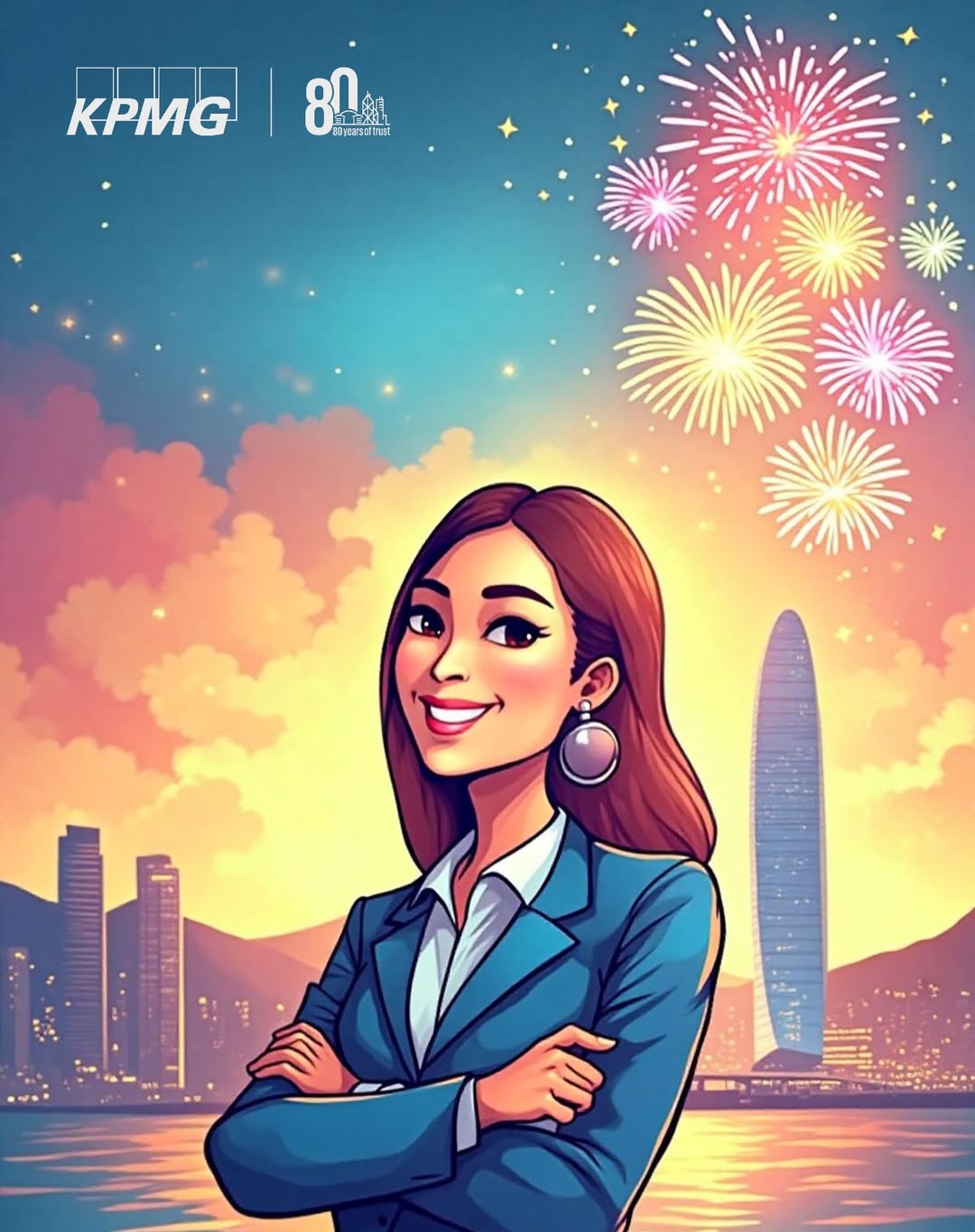
Large-scale corporate events demand activations that are both engaging and on-brand. PONS.ai has deployed AI photo booths for clients like KPMG and HSBC at annual conferences, leadership summits, and client appreciation events. The AI generates portraits in styles that reflect the company's brand guidelines, such as a futuristic cityscape for a fintech firm or a nature-inspired theme for a sustainability summit. Guests leave with a branded image they actually want to share, turning attendees into brand ambassadors.

Product Launches

Product launches require maximum social media impact in a compressed time window. When CASETiFY launched a new collection, PONS.ai's AI photo booth generated images that incorporated the product's design language, producing shareable content that organically promoted the new line. Each guest received an image that felt like a campaign asset, not a souvenir snapshot.

Trade Shows and Exhibitions

At trade shows, booth traffic is everything. An AI photo booth draws crowds, creates dwell time, and generates qualified leads through data capture at the share step. PONS.ai has activated AI photo booths at major expos for clients like JCDecaux, where the installation itself became a talking point and a foot-traffic driver. In environments where every exhibitor is competing for attention, the AI photo booth consistently outperforms static displays.

Retail Activations and Pop-Ups

Retail brands use AI photo booths to bridge online and in-store engagement. Starbucks and foodpanda have deployed PONS.ai activations in flagship locations and pop-up venues, turning a routine store visit into a memorable, shareable experience. The AI-generated images serve double duty: they delight the customer in the moment and extend the brand's reach when shared on social media.

Weddings and Private Celebrations

Weddings have been an early and enthusiastic adopter of AI photo booth technology. Couples commission custom AI styles that match their wedding theme, from watercolor romance to art deco glamour. Guests receive one-of-a-kind portraits that are far more memorable than a standard photo strip. PONS.ai's wedding activations have been deployed in Hong Kong, Singapore, and Dubai, with couples increasingly requesting multi-style setups that let guests choose from several AI themes throughout the evening.

Museums and Cultural Venues

The CR7 LIFE Museum in Funchal, Portugal, is one of PONS.ai's most prominent cultural deployments. Visitors step into the AI photo booth and receive a generated portrait that places them in dynamic, sports-themed scenes inspired by Cristiano Ronaldo's career. The installation has become one of the museum's most popular attractions, with guests sharing their AI-generated images across social media and driving organic visibility for the venue.

Museums and cultural institutions value the AI photo booth because it creates a participatory experience. Visitors are not just observing; they are becoming part of the story, which deepens engagement and extends the visit's emotional impact.

Sports Events and Fan Activations

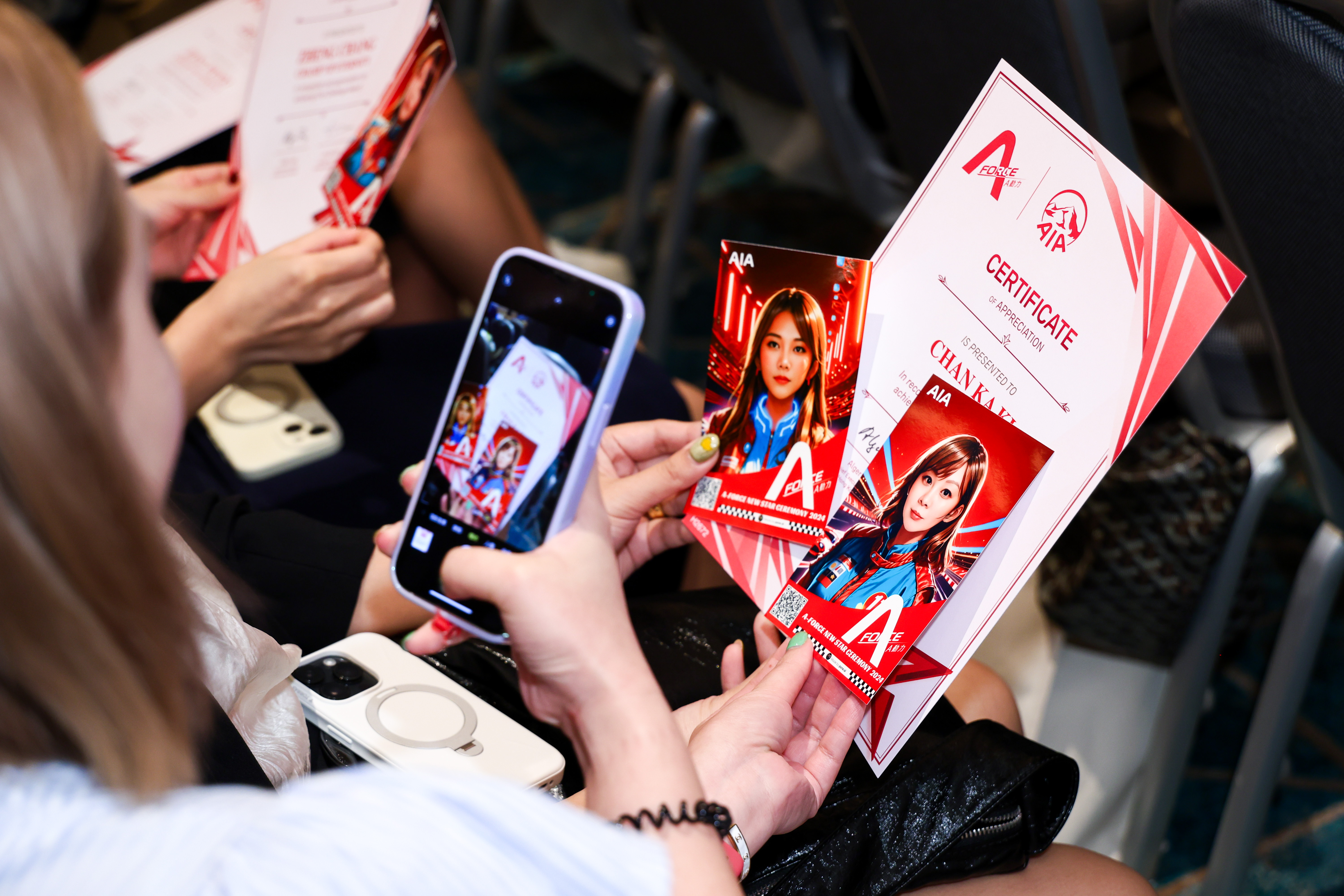
Sports organizations use AI photo booths to amplify fan engagement at stadiums, fan zones, and viewing parties. AIA, a major insurance and sports sponsorship brand, has partnered with PONS.ai to deliver AI photo booth experiences that connect fans to the teams and athletes they support. The AI generates dynamic, action-inspired portraits that fans share instantly, creating waves of branded social content during live events.

AIA sports activation AI photo booth by PONS.ai

Key Features to Look For in AI Photo Booth Software

Not all AI photo booth software is built equally. When evaluating platforms for an event or ongoing activation program, these are the features that separate professional-grade solutions from basic implementations.

Real-Time Generation Speed

Generation speed directly affects guest throughput and experience quality. Look for AI photo booth software that consistently delivers finished images in approximately 10 seconds or less. PONS.ai's platform is optimized for sub-10-second generation through a combination of edge computing, GPU load balancing, and model optimization. At high-traffic events processing hundreds of guests per hour, even a few extra seconds per image compounds into long queues and frustrated attendees.

Brand Customization Depth

A basic AI photo booth applies a single preset style. A professional-grade system offers deep brand customization: custom-trained AI models that reflect a brand's specific visual identity, color palette, product imagery, and campaign messaging. PONS.ai works with brand teams to develop bespoke AI styles that are indistinguishable from professional campaign assets, not generic filters.

Multi-Channel Sharing

The value of an AI photo booth activation is directly proportional to how easily guests can share their images. The platform should support QR-code-to-phone transfer, direct social media posting, email delivery, SMS, messaging apps like WhatsApp, and on-site printing. PONS.ai's sharing infrastructure supports all of these channels and includes branded landing pages that reinforce the client's message when recipients view the shared image.

Analytics and Reporting Dashboard

Professional AI photo booth software includes a real-time analytics dashboard that tracks total photos generated, share rates by channel, peak activity times, geographic distribution of shares, and engagement metrics. This data is essential for proving ROI to stakeholders and optimizing future activations. PONS.ai provides clients with comprehensive post-event reports that go beyond simple photo counts to include social reach estimates and engagement analysis.

On-Site and Cloud Processing Options

Some events take place in venues with unreliable internet connectivity. The best AI photo booth software offers both cloud-based processing for maximum scalability and on-site edge processing for environments where network reliability is a concern. PONS.ai supports both deployment models and can configure hybrid setups that use local GPUs as the primary processing engine with cloud fallback.

Multi-Language and Localization Support

For global brands activating across multiple markets, the AI photo booth interface should support multiple languages and localized content. PONS.ai's platform has been deployed across six countries, including Hong Kong, Singapore, Dubai, London, New York, and Riyadh, with full localization for each market.

Content Moderation and Safety

Responsible AI photo booth software includes automated content moderation to ensure generated images are appropriate and aligned with brand guidelines. PONS.ai's platform incorporates safety filters that screen both input selfies and generated outputs, preventing the creation of inappropriate or off-brand content.

Where Are AI Photo Booths Available?

AI photo booths are now available in major markets worldwide, driven by demand from global brands that require consistent activation quality across regions. PONS.ai operates across six countries, with active deployments and local support in the following cities:

Hong Kong — PONS.ai's home market and the largest concentration of AI photo booth deployments in Asia. Clients include HSBC, AIA, foodpanda, and Sandbox VR.

Singapore — A growing hub for corporate events and retail activations, with deployments for financial services, luxury, and technology clients.

Dubai — High demand from luxury retail, hospitality, and government-sector events. PONS.ai has activated AI photo booths at major Dubai venues and exhibitions.

London — Serving the UK and European corporate events market, with deployments for global brand activations and agency partnerships.

New York — Active in the North American market, supporting product launches, fashion events, and corporate activations.

Riyadh / Saudi Arabia — Rapidly expanding market driven by Vision 2030 entertainment and cultural initiatives, with strong demand for AI-powered experiences at government and private-sector events.

This global footprint allows brands to deploy consistent AI photo booth experiences across multiple markets with a single technology partner, eliminating the complexity of managing different vendors in each region.

The Technology Behind AI Photo Booths: A Deeper Look

Generative AI Models

Modern AI photo booths are powered by diffusion models, a class of generative AI that creates images by iteratively refining random noise into coherent, high-quality visuals. PONS.ai uses proprietary fine-tuned models that have been specifically optimized for portrait generation, brand-style adherence, and real-time performance. Unlike general-purpose image generators, these models are trained to preserve facial likeness with high fidelity while applying dramatic stylistic transformations.

Face Preservation Technology

The critical technical challenge in AI photo booth generation is maintaining the guest's recognizable likeness while transforming the rest of the image. PONS.ai's software uses advanced face-embedding techniques that extract identity-specific features from the input selfie and inject them into the generation process. The result is an output image where the guest immediately recognizes themselves, even if the surrounding scene, clothing, and art style are entirely different from the original photo.

Edge and Cloud Infrastructure

PONS.ai's AI photo booth software is designed to run on both cloud GPU clusters and on-site edge devices. For large-scale events with thousands of guests, cloud processing provides virtually unlimited scalability. For venues with limited connectivity or strict data residency requirements, edge deployment keeps all processing local. This flexibility is critical for enterprise clients operating across regulated industries and international markets.

Why Brands Choose PONS.ai for AI Photo Booth Activations

PONS.ai has served over 50 global brands since creating the AI photo booth category in 2021. The reasons clients choose PONS.ai consistently come down to five factors:

Category pioneer — Founded in 2019, PONS.ai developed the first commercial AI photo booth before the broader generative AI wave. This head start translates into deeper technology expertise, more refined models, and a larger library of proven activation templates.

Enterprise-grade reliability — With millions of photos generated across thousands of events, PONS.ai's platform is battle-tested at scale. Clients like HSBC, AIA, and Starbucks require zero-downtime performance, and our infrastructure delivers it.

End-to-end service — PONS.ai provides not just software but full activation support: creative direction, custom AI model training, on-site technical staff, hardware provision, and post-event analytics. Clients get a turnkey experience, not a software license they have to figure out on their own.

Global reach — Deployments across Hong Kong, Singapore, Dubai, London, New York, and Riyadh mean that multinational brands can scale their AI photo booth programs internationally with a single partner.

Proven brand trust — A client roster that includes CR7 LIFE Museum, Starbucks, HSBC, AIA, CASETiFY, JCDecaux, foodpanda, Sandbox VR, and KPMG speaks to the platform's credibility across industries from financial services to entertainment to retail.

Frequently Asked Questions

How much does an AI photo booth cost?

AI photo booth pricing varies based on event duration, customization depth, guest volume, and deployment model. A basic AI photo booth setup for a single-day event typically ranges from $2,000 to $5,000. Fully customized enterprise activations with bespoke AI model training, multi-station setups, on-site support, and advanced analytics can range from $8,000 to $15,000 or more. PONS.ai offers flexible pricing models including per-event, subscription, and licensing arrangements for agencies and venue operators. Contact our team for a detailed quote tailored to your specific requirements.

How does an AI photo booth work?

An AI photo booth works in three simple steps. First, the guest takes a selfie at the booth station. Second, the AI processes that selfie through a generative model that transforms it into a stylized, branded image while preserving the guest's facial likeness. This generation step takes approximately 10 seconds. Third, the finished image is delivered to the guest via QR code, email, social media, or on-site print. The entire experience, from selfie to finished image in hand, takes under 30 seconds. Behind the scenes, the technology uses diffusion-based AI models, face-embedding preservation, and GPU-accelerated processing to deliver consistent, high-quality results at scale.

What is the difference between an AI photo booth and a traditional photo booth?

The fundamental difference is that a traditional photo booth captures a standard photograph, while an AI photo booth generates an entirely new image using artificial intelligence. A traditional booth relies on physical props, static backdrops, and basic filters. An AI photo booth transforms the guest's selfie into a fully realized scene — placing them in fantastical environments, artistic styles, or branded settings that would be impossible to create with a camera alone. AI photo booths also deliver significantly higher social sharing rates, deeper brand customization, and real-time analytics that traditional booths cannot match.

Can AI photo booths be customized for brand events?

Yes, and this is where AI photo booths deliver their greatest value. PONS.ai develops fully custom AI styles for brand activations, including bespoke models trained on a brand's specific visual identity, color palette, product imagery, and campaign themes. This goes far beyond logo placement. The AI generates images that look and feel like professional campaign assets, tailored to the brand's aesthetic and messaging. Clients like Starbucks, CASETiFY, and HSBC have each received unique AI styles developed specifically for their activations. Custom style development typically requires two to four weeks of lead time.

How many photos can an AI photo booth generate per event?

A single AI photo booth station can generate approximately 200 to 400 photos per hour, depending on generation speed and guest throughput. With PONS.ai's approximately 10-second generation time, a single station comfortably handles high-traffic events when paired with efficient queue management. For large-scale activations expecting thousands of guests, PONS.ai deploys multi-station setups with cloud-based processing that can scale to virtually unlimited capacity. Our largest single-event deployments have generated thousands of images in a single day. Across all deployments since 2021, PONS.ai has generated millions of AI photos globally.

Ready to Experience the Future of Event Photography?

The AI photo booth is no longer an emerging technology. It is the standard for brands that take experiential marketing seriously. From corporate conferences to museum installations, from luxury retail pop-ups to stadium fan zones, the AI photo booth delivers engagement, shareability, and brand impact that no traditional activation can match.

PONS.ai has been building this category since before generative AI was a household term. With millions of photos generated, 50+ global brands served, deployments across six countries, and a client list that includes some of the world's most recognized names, we have the technology, the experience, and the team to make your next event unforgettable.

Book a demo with PONS.ai and see how an AI photo booth can transform your next activation. Whether you are planning a single event or a multi-market campaign, our team will design an experience tailored to your brand, your audience, and your goals.

bottom of page