

AI User-Generated Content (AIUGC): The Future of Event Marketing


The event marketing industry is undergoing a fundamental shift. Traditional user-generated content — selfies, check-in posts, and hashtag campaigns — has been the gold standard for organic brand amplification for over a decade. But in 2026, a new category is redefining what's possible: AI User-Generated Content (AIUGC).
AIUGC combines the authenticity and trust of traditional UGC with the creative power of generative AI, enabling brands to produce hyper-personalized, on-brand content at scale — directly from event attendees. It's not just a buzzword. It's the convergence of AI photo booths, real-time image generation, and social sharing mechanics that is transforming how brands measure event ROI.
In this comprehensive guide, we'll break down what AIUGC is, why it matters for event marketers in 2026, how it compares to traditional UGC, and how leading brands like Starbucks, KPMG, and foodpanda are already using it to drive measurable results.
What Is AI User-Generated Content (AIUGC)?
AI User-Generated Content (AIUGC) is content created by event attendees or customers using AI-powered tools provided by the brand. Unlike traditional UGC — where users snap photos or write reviews with no brand creative direction — AIUGC gives brands the ability to guide the creative output while keeping the content authentically user-driven.
The most common form of AIUGC in event marketing today is the AI photo booth. Instead of a standard photo with a branded frame, AI photo booths use generative AI to transform attendee photos into fully stylized, on-brand imagery in approximately 10 seconds. The attendee takes a photo, the AI generates a personalized visual — perhaps placing them in a branded universe, transforming them into a themed character, or creating an artistic portrait — and the result is instantly shareable on social media.
But AIUGC extends beyond photo booths. It includes:
AI-generated short video ads personalized to each attendee
AI-personalized merchandise such as custom gift cards, framed art, and promotional items
AI-powered social content where attendees generate branded posts, stories, and reels
Interactive AI experiences that produce shareable digital and physical outputs
The key distinction: with AIUGC, every piece of content is unique to the individual while remaining 100% on-brand. This is the holy grail that traditional UGC could never achieve — personalization and brand consistency at the same time.
Why Traditional UGC Is No Longer Enough
Traditional user-generated content has served brands well. The statistics remain compelling: 80% of consumers trust UGC more than traditional advertising, and UGC posts generate up to 6.9 times more engagement than branded content. Product pages featuring UGC convert 74% higher than those without.
But traditional UGC has fundamental limitations that AIUGC solves:
1. Brand Inconsistency
When attendees create their own content, brands have zero control over quality, framing, lighting, or messaging. A selfie at your event might include a competitor's logo in the background, poor lighting, or an unflattering angle. Traditional UGC is authentic but unpredictable.
AIUGC solves this by providing the creative framework. The AI generates visuals within brand-defined parameters — correct colors, approved themes, consistent quality — while the attendee's face and personal touch make it authentically theirs.
2. Low Participation Rates
Only a fraction of event attendees create and share content organically. Studies show that at most events, fewer than 15% of attendees post on social media without prompting. Hashtag campaigns help, but participation remains inconsistent.
AI photo booths flip this dynamic. At events powered by PONS.ai's technology, participation rates regularly exceed 70% of attendees. The reason is simple: the AI creates something so visually impressive and personally meaningful that attendees want to share it. It's not an obligation — it's an experience.
3. Content Quality Gap
A blurry smartphone photo with an event banner in the background doesn't drive engagement. Traditional UGC often fails to meet the quality threshold for meaningful social amplification. Brands end up with thousands of low-quality posts that do little for brand perception.
AIUGC produces high-resolution, professionally styled imagery every time. Every output is "Instagram-worthy" by default because the AI controls the creative quality while the human provides the authentic personal element.
4. Measurement Difficulty
Tracking the ROI of traditional UGC requires monitoring hashtags, estimating impressions, and hoping attendees used the right tags. AIUGC platforms provide built-in analytics: exact share counts, platform-specific engagement data, and direct attribution from creation to social post.
The AIUGC Tech Stack: How It Works
Understanding the technology behind AIUGC helps event planners make informed decisions. Here's what powers a modern AIUGC activation:
Generative AI Engine
The core technology uses advanced image generation models that can take a reference photo (the attendee's selfie) and transform it according to brand-defined parameters. This includes style transfer, character transformation, background replacement, and artistic rendering. Processing time has dropped from minutes to approximately 10 seconds with platforms like PONS.ai.
Brand Customization Layer
Every AIUGC activation starts with brand configuration. The platform is loaded with brand guidelines, color palettes, approved themes, and creative direction. This ensures every generated image aligns with brand standards — whether it's a luxury aesthetic for LONGINES or a playful, vibrant theme for foodpanda.
White-Label Distribution
Modern AIUGC platforms operate through white-label web apps accessible via QR code on any smartphone. No app download required. Attendees scan, take a photo, receive their AIUGC, and share — all within 30 seconds. The sharing interface is branded to the event, not the technology provider.
Analytics Dashboard
Real-time tracking of generations, shares, platform distribution, and engagement metrics. Event organizers can see exactly how many pieces of AIUGC were created, how many were shared, on which platforms, and what engagement they generated.
Physical-Digital (Phygital) Integration
The most innovative AIUGC platforms bridge digital and physical. PONS.ai, for example, offers AI-personalized merchandise — custom framed art, branded gift cards, and promotional items — that turn digital AIUGC into physical keepsakes. This "phygital" approach extends the brand touchpoint beyond the event itself.
AIUGC vs Traditional UGC vs Brand-Created Content
Understanding where AIUGC fits in the content ecosystem is crucial for event marketing strategy. Here's how the three main content types compare:
Factor | Traditional UGC | Brand-Created Content | AIUGC
Authenticity | High — created by real users | Low — created by brand | High — user-driven, AI-enhanced
Brand Consistency | Low — no creative control | High — full brand control | High — AI enforces brand guidelines
Content Quality | Variable — depends on user skill | High — professional production | High — AI ensures quality
Scalability | Limited — depends on participation | Low — expensive to produce | High — automated per-user
Personalization | Organic — unstructured | Generic — one-to-many | Hyper-personalized — unique per attendee
Production Cost Per Asset | Near zero | $500-5,000+ per asset | $0.10-2.00 per generation
Social Sharing Rate | 5-15% of audience | N/A (brand distributes) | 40-70%+ of participants
Trust Factor | 80% trust rate | 33% trust rate | 70-85% trust rate (emerging data)
Time to Create | Variable | Days to weeks | ~10 seconds
The data tells a clear story: AIUGC combines the trust advantages of UGC with the quality and consistency of brand-created content, at a fraction of the cost and production time.
Real-World AIUGC Case Studies
The power of AIUGC is best demonstrated through real implementations. Here's how leading brands have deployed it:
Starbucks APAC — AI-Personalized Brand Activation
Starbucks partnered with PONS.ai for an APAC-wide employee engagement initiative. Using generative AI, each employee received a uniquely personalized gift card featuring AI-generated art based on their profile. The activation transformed a standard corporate token into a memorable, personal keepsake that employees shared across internal and social channels. The result: dramatically higher engagement compared to traditional corporate gifts, with the personalized AI art becoming a talking point across Starbucks' Asia-Pacific teams.
KPMG — AI Photo Booth for Corporate Anniversary
For their milestone anniversary celebration, KPMG deployed PONS.ai's AI photo booth technology. Attendees were transformed into professionally styled portraits that incorporated KPMG's brand elements. The booth generated hundreds of unique, high-quality images that attendees shared on LinkedIn and internal channels, extending the event's reach well beyond the physical venue. For a traditionally conservative brand, the AI activation demonstrated that innovation and professionalism can coexist.
foodpanda — 10th Anniversary AI Art Activation
foodpanda's decade-long celebration featured PONS.ai's AI-generated art experience, transforming staff and guests into stylized characters within foodpanda's signature pink-and-white brand world. The playful, on-brand AIUGC generated massive social sharing, with the AI art becoming the most-shared content element of the anniversary campaign.
LONGINES International Jockeys' Championship — Luxury Event AIUGC
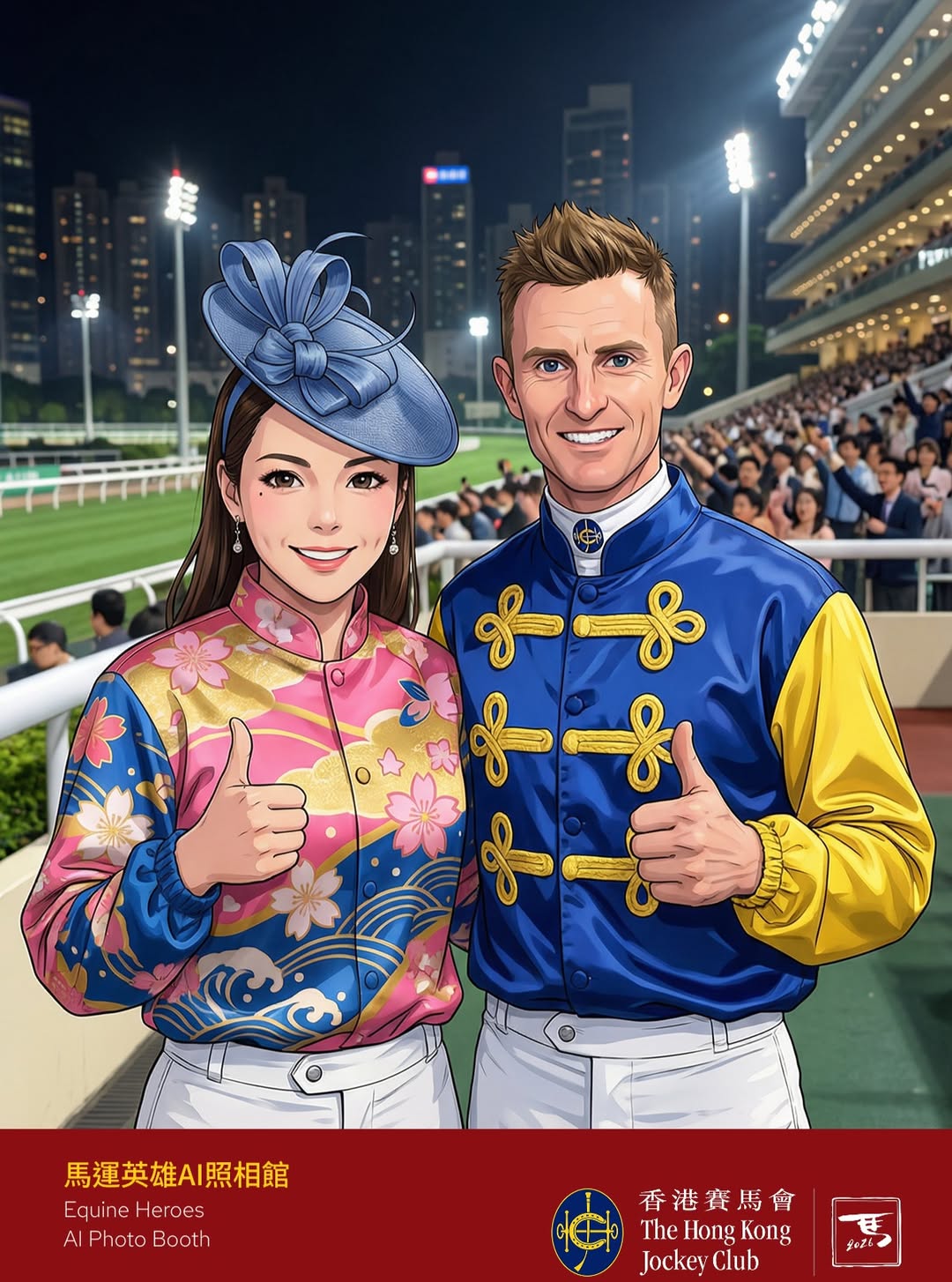
At one of Hong Kong's most prestigious horse racing events, PONS.ai delivered an AI photo booth that matched LONGINES' luxury brand standards. Guests were transformed into elegantly styled portraits that maintained the premium aesthetic. The activation proved that AIUGC works across the brand spectrum — from casual consumer brands to luxury fashion and sports.
BLAST Premier — Gaming and Esports AIUGC
For the BLAST Premier esports tournament, PONS.ai brought AI photo booth technology to the gaming audience. Attendees were transformed into esports-themed characters, tapping into gaming culture's enthusiasm for personalized digital content. The activation generated significant organic social sharing, proving AIUGC resonates strongly with younger, digitally-native audiences.
The Business Case: AIUGC ROI Metrics
Event marketers need hard numbers. Here's what the data shows about AIUGC's impact on event marketing ROI:
Content Volume
A single AIUGC activation at a 500-person event can generate 350-500+ unique pieces of branded content in one evening. Compare this to traditional UGC, where the same event might produce 50-75 organic posts. That's a 5-7x increase in branded content output.
Social Amplification
Each shared piece of AIUGC reaches an average of 200-500 followers on the attendee's network. At a 500-person event with a 70% participation rate, that's 350 shares reaching 70,000-175,000 unique impressions — all organic, all featuring your brand. Traditional event marketing would require significant paid media spend to achieve equivalent reach.
Cost Efficiency
Professional brand photography for events costs $2,000-10,000 per event and produces 50-200 edited images. AIUGC activation costs are comparable but produce 5-10x more branded assets, each personalized to the individual. The cost per branded asset drops from $20-50 (professional photography) to $1-3 (AIUGC).
Engagement Metrics
AIUGC posts consistently outperform standard branded content on social media. Because the content is personal to the user (their face, their experience), it generates authentic engagement from their network — likes, comments, and reshares from people who know the poster personally. This peer-validated engagement is significantly more valuable than engagement on brand-owned channels.
Data Collection
Every AIUGC interaction captures opt-in attendee data: email addresses, social handles, content preferences, and engagement patterns. This first-party data is increasingly valuable as third-party cookies disappear and privacy regulations tighten.
How to Implement AIUGC at Your Next Event
Ready to integrate AIUGC into your event marketing strategy? Here's a step-by-step implementation guide:
Step 1: Define Your Brand Parameters
Work with your AIUGC platform provider to configure brand guidelines. This includes color palettes, approved themes, style direction, and any elements that must appear in every generated image. The more specific your brand brief, the more consistent your AIUGC output.
Step 2: Choose Your AIUGC Format
Decide which AIUGC formats best serve your event goals:
AI Photo Booth — ideal for high-traffic events, galas, product launches
AI Video Generation — perfect for social-first campaigns and viral potential
AI Merchandise — best for premium events where physical takeaways matter
Multi-format — combine booth, video, and merchandise for maximum impact
Step 3: Plan Your Distribution Flow
Map the attendee journey from generation to share. The optimal flow: attendee scans QR code → takes photo → receives AIUGC in 10 seconds → shares via branded interface with pre-loaded hashtags and mentions → receives physical print or digital download.
Step 4: Set Up Analytics
Configure tracking for:
Total generations vs. total shares (your "share rate")
Platform distribution (Instagram, LinkedIn, X, WeChat, etc.)
Engagement metrics per shared post
Hashtag performance
Email/data capture rate
Step 5: Amplify Post-Event
AIUGC doesn't end when the event does. Use the best generated content for post-event marketing: email campaigns, social proof galleries on your website, retargeting ads featuring real attendee AIUGC, and case study content.
AIUGC Trends to Watch in 2026
The AIUGC category is evolving rapidly. Here are the trends shaping the future:
Real-Time AI Video Generation
Photo-based AIUGC is mature. The next frontier is real-time AI video — short, personalized video clips generated from a single attendee photo. These "AI reels" are optimized for TikTok, Instagram Reels, and YouTube Shorts, tapping into the dominant content format of 2026.
Multi-Modal AIUGC
Future AIUGC platforms will generate coordinated content packages: a photo, a short video, an animated GIF, and a social caption — all from a single attendee interaction. This multi-modal approach maximizes each touchpoint.
AI-Powered Content Curation
Beyond generation, AI will curate the best AIUGC from an event in real time, surfacing top-performing content for brand amplification. Imagine a live social wall at your event that automatically showcases the most engaging attendee AIUGC.
Enterprise Integration
AIUGC platforms are integrating with enterprise marketing stacks — CRM systems, marketing automation platforms, social media management tools, and analytics dashboards. This transforms AIUGC from a standalone activation into a core component of the marketing data ecosystem.
Phygital Expansion
The physical-digital bridge is expanding. AI-personalized merchandise — from framed art and custom apparel to branded accessories — turns digital AIUGC into lasting brand touchpoints that live on desks, walls, and shelves long after the event ends.
Frequently Asked Questions About AIUGC
What is the difference between AIUGC and traditional UGC?
Traditional UGC is content created entirely by users with no brand creative input. AIUGC is content created by users using AI tools provided by the brand, resulting in output that is both personally authentic and brand-consistent. The user provides the personal element (their face, their choice to share), while the AI provides the creative quality and brand alignment.
How much does an AIUGC activation cost?
AIUGC activation costs vary by scale and format. For AI photo booth deployments, pricing typically ranges from $2,000-15,000 per event depending on duration, customization, and attendee volume. The cost per generated asset is typically $0.50-3.00, making it significantly more cost-effective than professional photography on a per-asset basis.
Is AIUGC content really authentic?
Yes, and this is the critical point. The attendee chooses to participate, provides their own photo, and decides whether to share the result. The AI enhances the creative output, but the content remains user-initiated and user-distributed. Research shows that 70-85% of audiences perceive AI-enhanced personal content as authentic when the human element is clearly central.
What data does AIUGC capture?
With proper consent mechanisms, AIUGC platforms capture email addresses, social media handles, content preferences, sharing behavior, and engagement patterns. All data collection should comply with GDPR, PDPO (Hong Kong), and other applicable privacy regulations. Enterprise-grade platforms like PONS.ai include built-in privacy compliance features.
Can AIUGC work for B2B events?
Absolutely. KPMG's anniversary activation demonstrates that AIUGC works powerfully in corporate and B2B contexts. LinkedIn sharing is particularly strong for B2B AIUGC, where professional audiences share brand-aligned content that enhances their personal brand while promoting the event.
How long does it take to set up an AIUGC activation?
Setup timelines vary by complexity. A standard AI photo booth activation can be configured in 3-5 business days, including brand customization. The physical setup at the event venue typically takes 30-60 minutes. Platforms like PONS.ai offer turnkey solutions that require only a smartphone, a white-label web app, and an optional printer.
The Future of Event Marketing Is AIUGC
The event marketing industry is moving from passive brand exposure to active, personalized content creation. AIUGC represents this shift — every attendee becomes a content creator, every piece of content reinforces the brand, and every share extends organic reach.
The numbers are clear: the global UGC platform market is valued at approximately $9.85 billion in 2026 and projected to reach $35.44 billion by 2030. The brands that invest in AIUGC infrastructure now will own the most valuable marketing asset of the next decade: a scalable system for producing authentic, personalized, brand-consistent content at every customer touchpoint.
Whether you're planning a corporate gala, a product launch, a trade show booth, or a brand activation campaign, AIUGC should be a core component of your event marketing strategy in 2026 and beyond.
Book a demo with PONS.ai to see how AI User-Generated Content can transform your next event into a content engine that drives measurable ROI.


Comments