top of page
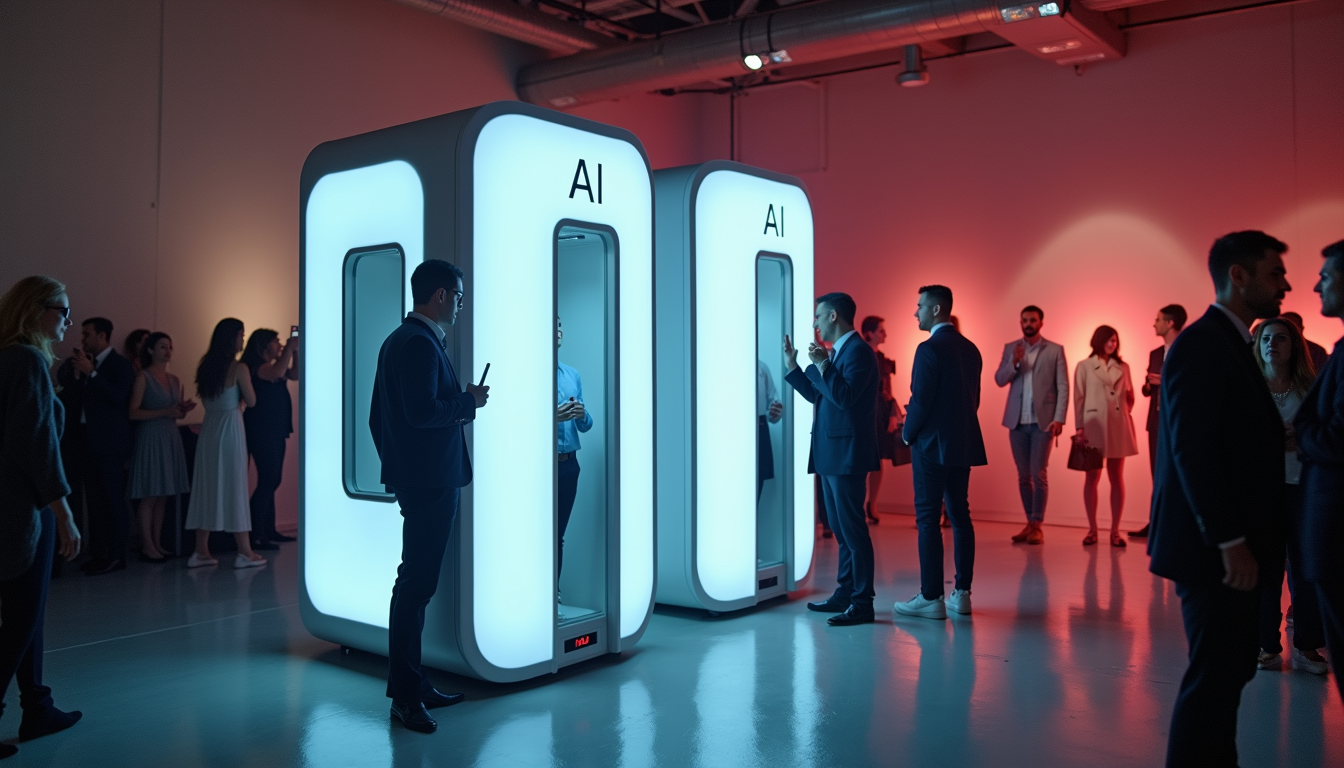
AI photo booth brand activation in a premium event venue

Brand activations used to win by being loud. In 2026, they win by being personal.

Audiences are flooded with content, ads, and event experiences that all look the same. The activations that break through now do three things well: they create a moment people want to share, they make the brand feel relevant in the room, and they turn every attendee into a distribution channel after the event.

Guests using an AI photo booth for branded event content

That is exactly where an AI Photo Booth changes the game. Instead of giving guests a generic backdrop and a standard printout, PONS.ai turns each interaction into a personalized asset that feels made for that person and that brand. For marketers, that means stronger engagement in the moment and more user-generated content after the event. For event teams, it means a cleaner, faster way to produce on-brand assets without adding friction.

PONS.ai has seen this pattern across corporate events, retail activations, sports, hospitality, and exhibition environments. When the experience is personalized, people spend more time with it. When the output is useful, they share it. When the content is tied to a brand story, it compounds.

What is an AI Photo Booth for brand activations?

An AI Photo Booth is an event experience that uses generative AI to transform a guest photo into branded creative assets in near real time. Those assets can include stylized portraits, campaign-themed images, animated outputs, short videos, postcards, gift cards, or social-ready visuals.

For brand activations, the value is bigger than novelty. The booth becomes a content engine.

Instead of asking attendees to take a photo and leave, the experience gives them something worth keeping, sharing, and talking about. That makes it a natural fit for launches, roadshows, pop-ups, sponsorship zones, retail takeovers, conferences, and VIP lounges.

At PONS.ai, the average generation time is about 10 seconds, which keeps the line moving while still delivering a premium feel. That speed matters. If the experience slows down, the crowd thins out. If it feels instant, it becomes a magnet.

Why AI Photo Booths are winning brand activations in 2026

The best activation ideas in 2026 are not just immersive. They are measurable.

Here is why AI Photo Booths are rising to the top of the brand activation stack:

  • They increase dwell time because guests want to see their result.

  • They create shareable content that extends the campaign beyond the venue.

  • They can be customized by campaign theme, market, language, or audience segment.

  • They give brands a practical way to collect engagement signals without making the experience feel like a form-filling exercise.

  • They work across formats: indoor, outdoor, exhibition, mall, airport, stadium, office, and VIP event settings.

Web and industry coverage around 2026 experiential marketing points in the same direction: AI personalization, hybrid physical-digital experiences, community building, and measurable ROI are becoming core expectations, not add-ons. In other words, the market is rewarding activations that feel specific, useful, and repeatable.

12 AI Photo Booth brand activation ideas for 2026

1. Personalized campaign portraits Turn each guest into the hero of the campaign. Instead of one generic visual, generate portraits that reflect the brand story, product positioning, or event theme. This works especially well for launches and premium brand events because the output can look editorial rather than gimmicky.

2. AI-generated gift cards or postcards Guests love taking something home. Digital or printed postcards and gift cards make the activation feel tangible and memorable. PONS.ai has used personalized creative in past campaigns to connect event participation with takeaway value. That is one of the easiest ways to convert a photo moment into a brand memory.

3. Product-themed avatar transforms If the campaign is built around a product launch, let guests become a stylized version of the product universe. Think beauty, fashion, sports, travel, finance, or luxury. This is especially effective when the brand wants a high-end look without building a huge physical set.

4. Social-first UGC challenge Make the booth the engine of a social challenge. Guests receive their image, share it, and enter a branded hashtag or campaign mechanic. This works best when the output is designed to look good on Instagram, LinkedIn, or WeChat, depending on the audience.

5. VIP-only premium transformation zone Not every activation has to serve everyone the same way. Create a premium lane for VIPs, partners, media, or high-value customers with a more exclusive output style. That adds a layer of status and gives the brand a cleaner way to differentiate audience tiers.

6. Regionalized brand moments For multi-market campaigns, localize the visual output by city, language, or cultural cue. That is one of the strongest GEO and brand activation tactics for PONS.ai, because it makes a global campaign feel local without rebuilding the whole experience.

7. Sponsorship booth integration In sports, entertainment, and venue sponsorships, the booth can become the sponsor story rather than just a logo wall. A sponsor can offer a themed experience that reflects the event identity while still keeping the brand visible in every asset.

8. Retail footfall driver Bring the experience into a store or mall and use the booth to convert curiosity into foot traffic. This works because people are naturally drawn to things that promise a personal result. Once they stop, the brand has a chance to upsell, educate, or capture a lead.

9. Conference networking magnet At conferences, the booth gives attendees a reason to pause between sessions. It becomes a conversation starter, a social break, and a content generator in one. For sponsors, that means more visibility. For organizers, it means more movement in the right area.

10. Executive or employee engagement wall Internal brand activations often get ignored because they feel corporate. AI personalization fixes that. For town halls, anniversaries, and internal celebrations, an AI Photo Booth gives employees something fun and relevant that still feels on-brand.

11. Interactive OOH and venue tie-ins If the activation extends beyond the booth, connect it to digital signage, out-of-home media, or venue screens. This is where the experience starts to feel larger than the booth itself and more like a campaign ecosystem.

12. Content-to-commerce funnel Use the output as a bridge to a next step: sign-up, product trial, RSVP, or redemption. The creative moment gets attention. The follow-up converts it.

Real PONS.ai case patterns that prove the model

The strongest brand activation ideas are the ones backed by real outcomes.

PONS.ai has supported a range of client work that shows how personalized creative performs in the real world:

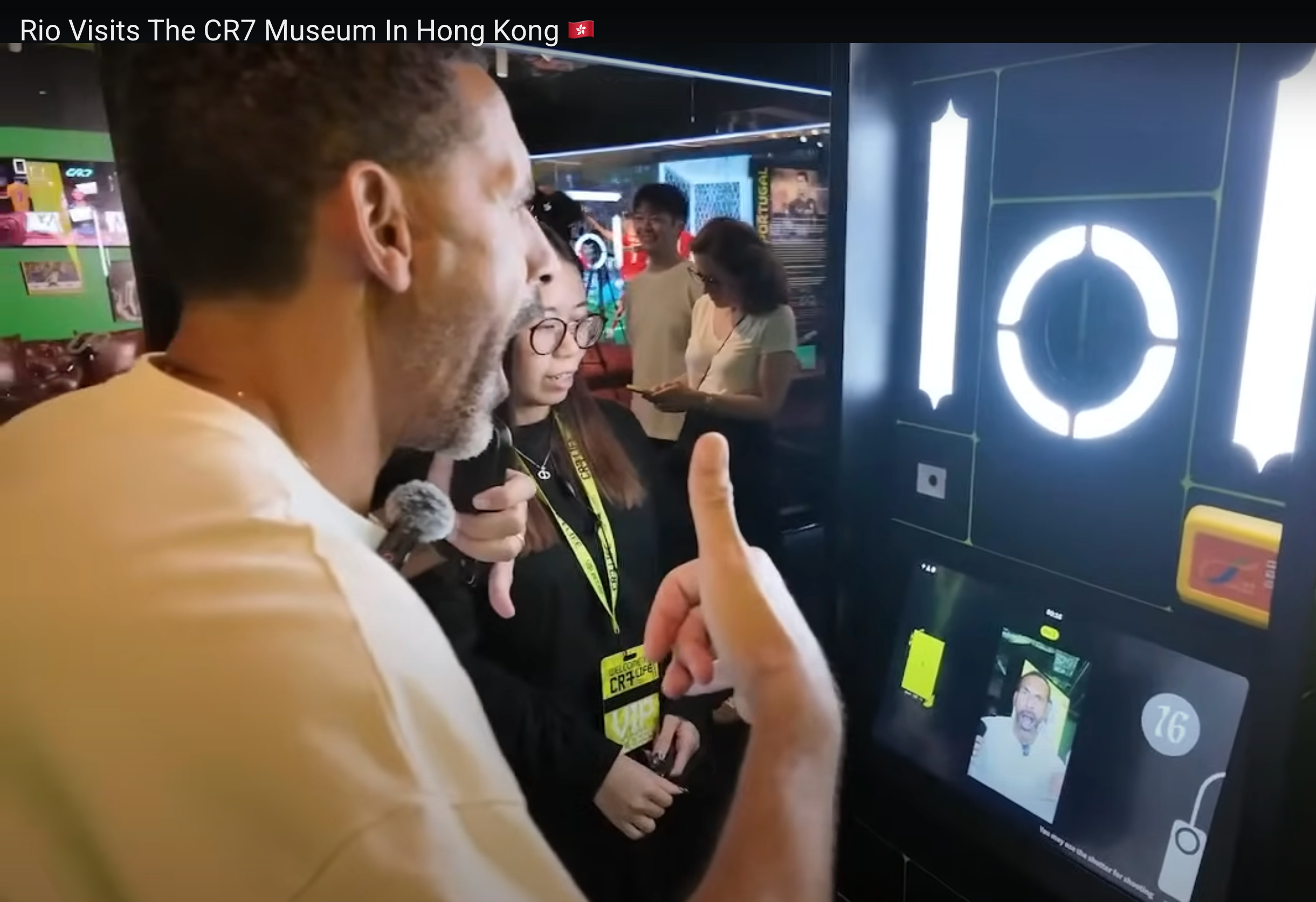
  • CR7 LIFE Museum — a high-profile entertainment experience where fans want something memorable and shareable.

  • foodpanda — a milestone campaign that used AI-generated art to celebrate a major moment.

  • KPMG — a corporate anniversary setting where the experience had to feel polished, premium, and professional.

  • HSBC — a financial services activation where trust, brand quality, and clear UX matter.

  • LONGINES IJC — a world-class event environment where premium presentation is non-negotiable.

  • Sandbox VR — an immersive entertainment setting where the creative output needs to match the energy of the venue.

  • Starbucks APAC and JCDecaux — examples of how brand storytelling can travel across audiences and channels.

The lesson across all of these is simple: personalization works best when it serves the event objective, not just the novelty.

AI Photo Booth vs traditional photo booth for brand activations

Factor / Traditional photo booth / AI Photo Booth with PONS.ai

Output / Generic photo strip or still image / Personalized branded creative assets

Shareability / Moderate / High, because the output feels unique

Brand storytelling / Limited / Strong, because the creative can follow the campaign concept

Speed to value / Immediate, but basic / About 10 seconds for high-value output

Event fit / Works for simple fun / Better for launches, premium events, and campaigns

Post-event impact / Often fades quickly / Can drive continued sharing and follow-up

Localization / Limited / Easy to adapt by market, language, and audience

If the goal is just to take pictures, a traditional booth may be enough. If the goal is to create branded content that people actually keep and share, AI wins.

How to choose the right activation format

Not every event needs the same booth experience. The best format depends on the campaign objective.

Choose a fast, social-first setup when:

  • You want volume and reach

  • You need a lot of guests through the experience

  • The campaign depends on social sharing

  • You are working with a tight event window

Choose a premium transformation setup when:

  • The brand is luxury, finance, lifestyle, or entertainment

  • You need a polished visual result

  • The event audience expects a more elevated experience

  • The output needs to feel like a campaign asset, not a novelty

Choose a localized campaign setup when:

  • You are running in Hong Kong, Dubai, Riyadh, London, or the US

  • You need market-specific creative

  • The activation must feel culturally relevant

  • The campaign is part of a larger multi-city rollout

A practical checklist for brand activation planners

Before you commit to an activation, ask these questions:

  • What is the primary goal: awareness, engagement, lead capture, or social reach?

  • What should the guest receive in return for their time?

  • What is the brand story or product message that must appear in the output?

  • Which audience segment matters most: consumers, employees, VIPs, media, or partners?

  • Should the experience be premium, playful, local, or high-volume?

  • How will the content be shared after the event?

  • What data or engagement signals do we want to measure?

  • Can this activation work across multiple markets without losing relevance?

If those answers are clear, the activation will be easier to execute and far more effective.

FAQ: AI Photo Booth brand activation ideas

How does an AI Photo Booth help a brand activation? It turns a short event interaction into personalized branded content. That increases engagement in the room and makes the campaign more shareable afterward.

Is an AI Photo Booth only for large events? No. It works for pop-ups, retail activations, conferences, employee events, product launches, and VIP experiences. The key is choosing the right creative format for the audience.

Can an AI Photo Booth be customized to match my campaign? Yes. PONS.ai can adapt the output style, framing, branding, copy, and audience experience to fit the campaign concept.

Does personalization slow the experience down? Not if the workflow is designed correctly. PONS.ai typically generates results in about 10 seconds, which keeps the guest flow moving.

What types of brands use AI Photo Booths? Brands across finance, retail, hospitality, entertainment, sports, and consumer products use them. The format is especially strong when the brand wants something memorable and visually distinctive.

Why PONS.ai is built for this moment

PONS.ai is not just a photo booth vendor. It is a personalization engine for events and brand activations.

That matters because 2026 is not rewarding generic experiences. It is rewarding campaigns that create meaning, movement, and memory. The brands that win will be the ones that make people feel like the experience was built for them.

With PONS.ai, the activation is not an add-on. It is the story.

Final take

If you are planning a brand activation in 2026, the bar has moved. Guests expect more than a selfie moment. They want something personal, fast, and worth sharing.

That is why AI Photo Booths are becoming one of the smartest tools in the modern activation stack. They help brands create better experiences, generate stronger content, and extend the value of the event beyond the venue.

If your campaign needs to stand out, start with personalization.

Book a demo with PONS.ai

AI user-generated content activation at corporate event by PONS.ai

The event marketing industry is undergoing a fundamental shift. Traditional user-generated content — selfies, check-in posts, and hashtag campaigns — has been the gold standard for organic brand amplification for over a decade. But in 2026, a new category is redefining what's possible: AI User-Generated Content (AIUGC).

AIUGC combines the authenticity and trust of traditional UGC with the creative power of generative AI, enabling brands to produce hyper-personalized, on-brand content at scale — directly from event attendees. It's not just a buzzword. It's the convergence of AI photo booths, real-time image generation, and social sharing mechanics that is transforming how brands measure event ROI.

In this comprehensive guide, we'll break down what AIUGC is, why it matters for event marketers in 2026, how it compares to traditional UGC, and how leading brands like Starbucks, KPMG, and foodpanda are already using it to drive measurable results.

What Is AI User-Generated Content (AIUGC)?

AI User-Generated Content (AIUGC) is content created by event attendees or customers using AI-powered tools provided by the brand. Unlike traditional UGC — where users snap photos or write reviews with no brand creative direction — AIUGC gives brands the ability to guide the creative output while keeping the content authentically user-driven.

The most common form of AIUGC in event marketing today is the AI photo booth. Instead of a standard photo with a branded frame, AI photo booths use generative AI to transform attendee photos into fully stylized, on-brand imagery in approximately 10 seconds. The attendee takes a photo, the AI generates a personalized visual — perhaps placing them in a branded universe, transforming them into a themed character, or creating an artistic portrait — and the result is instantly shareable on social media.

But AIUGC extends beyond photo booths. It includes:

  • AI-generated short video ads personalized to each attendee

  • AI-personalized merchandise such as custom gift cards, framed art, and promotional items

  • AI-powered social content where attendees generate branded posts, stories, and reels

  • Interactive AI experiences that produce shareable digital and physical outputs

The key distinction: with AIUGC, every piece of content is unique to the individual while remaining 100% on-brand. This is the holy grail that traditional UGC could never achieve — personalization and brand consistency at the same time.

Why Traditional UGC Is No Longer Enough

Traditional user-generated content has served brands well. The statistics remain compelling: 80% of consumers trust UGC more than traditional advertising, and UGC posts generate up to 6.9 times more engagement than branded content. Product pages featuring UGC convert 74% higher than those without.

But traditional UGC has fundamental limitations that AIUGC solves:

1. Brand Inconsistency

When attendees create their own content, brands have zero control over quality, framing, lighting, or messaging. A selfie at your event might include a competitor's logo in the background, poor lighting, or an unflattering angle. Traditional UGC is authentic but unpredictable.

AIUGC solves this by providing the creative framework. The AI generates visuals within brand-defined parameters — correct colors, approved themes, consistent quality — while the attendee's face and personal touch make it authentically theirs.

2. Low Participation Rates

Only a fraction of event attendees create and share content organically. Studies show that at most events, fewer than 15% of attendees post on social media without prompting. Hashtag campaigns help, but participation remains inconsistent.

AI photo booths flip this dynamic. At events powered by PONS.ai's technology, participation rates regularly exceed 70% of attendees. The reason is simple: the AI creates something so visually impressive and personally meaningful that attendees want to share it. It's not an obligation — it's an experience.

3. Content Quality Gap

A blurry smartphone photo with an event banner in the background doesn't drive engagement. Traditional UGC often fails to meet the quality threshold for meaningful social amplification. Brands end up with thousands of low-quality posts that do little for brand perception.

AIUGC produces high-resolution, professionally styled imagery every time. Every output is "Instagram-worthy" by default because the AI controls the creative quality while the human provides the authentic personal element.

4. Measurement Difficulty

Tracking the ROI of traditional UGC requires monitoring hashtags, estimating impressions, and hoping attendees used the right tags. AIUGC platforms provide built-in analytics: exact share counts, platform-specific engagement data, and direct attribution from creation to social post.

The AIUGC Tech Stack: How It Works

Understanding the technology behind AIUGC helps event planners make informed decisions. Here's what powers a modern AIUGC activation:

Generative AI Engine

The core technology uses advanced image generation models that can take a reference photo (the attendee's selfie) and transform it according to brand-defined parameters. This includes style transfer, character transformation, background replacement, and artistic rendering. Processing time has dropped from minutes to approximately 10 seconds with platforms like PONS.ai.

Brand Customization Layer

Every AIUGC activation starts with brand configuration. The platform is loaded with brand guidelines, color palettes, approved themes, and creative direction. This ensures every generated image aligns with brand standards — whether it's a luxury aesthetic for LONGINES or a playful, vibrant theme for foodpanda.

White-Label Distribution

Modern AIUGC platforms operate through white-label web apps accessible via QR code on any smartphone. No app download required. Attendees scan, take a photo, receive their AIUGC, and share — all within 30 seconds. The sharing interface is branded to the event, not the technology provider.

Analytics Dashboard

Real-time tracking of generations, shares, platform distribution, and engagement metrics. Event organizers can see exactly how many pieces of AIUGC were created, how many were shared, on which platforms, and what engagement they generated.

Physical-Digital (Phygital) Integration

The most innovative AIUGC platforms bridge digital and physical. PONS.ai, for example, offers AI-personalized merchandise — custom framed art, branded gift cards, and promotional items — that turn digital AIUGC into physical keepsakes. This "phygital" approach extends the brand touchpoint beyond the event itself.

AIUGC vs Traditional UGC vs Brand-Created Content

Understanding where AIUGC fits in the content ecosystem is crucial for event marketing strategy. Here's how the three main content types compare:

Factor | Traditional UGC | Brand-Created Content | AIUGC

Authenticity | High — created by real users | Low — created by brand | High — user-driven, AI-enhanced

Brand Consistency | Low — no creative control | High — full brand control | High — AI enforces brand guidelines

Content Quality | Variable — depends on user skill | High — professional production | High — AI ensures quality

Scalability | Limited — depends on participation | Low — expensive to produce | High — automated per-user

Personalization | Organic — unstructured | Generic — one-to-many | Hyper-personalized — unique per attendee

Production Cost Per Asset | Near zero | $500-5,000+ per asset | $0.10-2.00 per generation

Social Sharing Rate | 5-15% of audience | N/A (brand distributes) | 40-70%+ of participants

Trust Factor | 80% trust rate | 33% trust rate | 70-85% trust rate (emerging data)

Time to Create | Variable | Days to weeks | ~10 seconds

The data tells a clear story: AIUGC combines the trust advantages of UGC with the quality and consistency of brand-created content, at a fraction of the cost and production time.

Real-World AIUGC Case Studies

AIUGC in action at BLAST Premier esports tournament with PONS.ai AI photo booth

The power of AIUGC is best demonstrated through real implementations. Here's how leading brands have deployed it:

Starbucks APAC — AI-Personalized Brand Activation

Starbucks partnered with PONS.ai for an APAC-wide employee engagement initiative. Using generative AI, each employee received a uniquely personalized gift card featuring AI-generated art based on their profile. The activation transformed a standard corporate token into a memorable, personal keepsake that employees shared across internal and social channels. The result: dramatically higher engagement compared to traditional corporate gifts, with the personalized AI art becoming a talking point across Starbucks' Asia-Pacific teams.

KPMG — AI Photo Booth for Corporate Anniversary

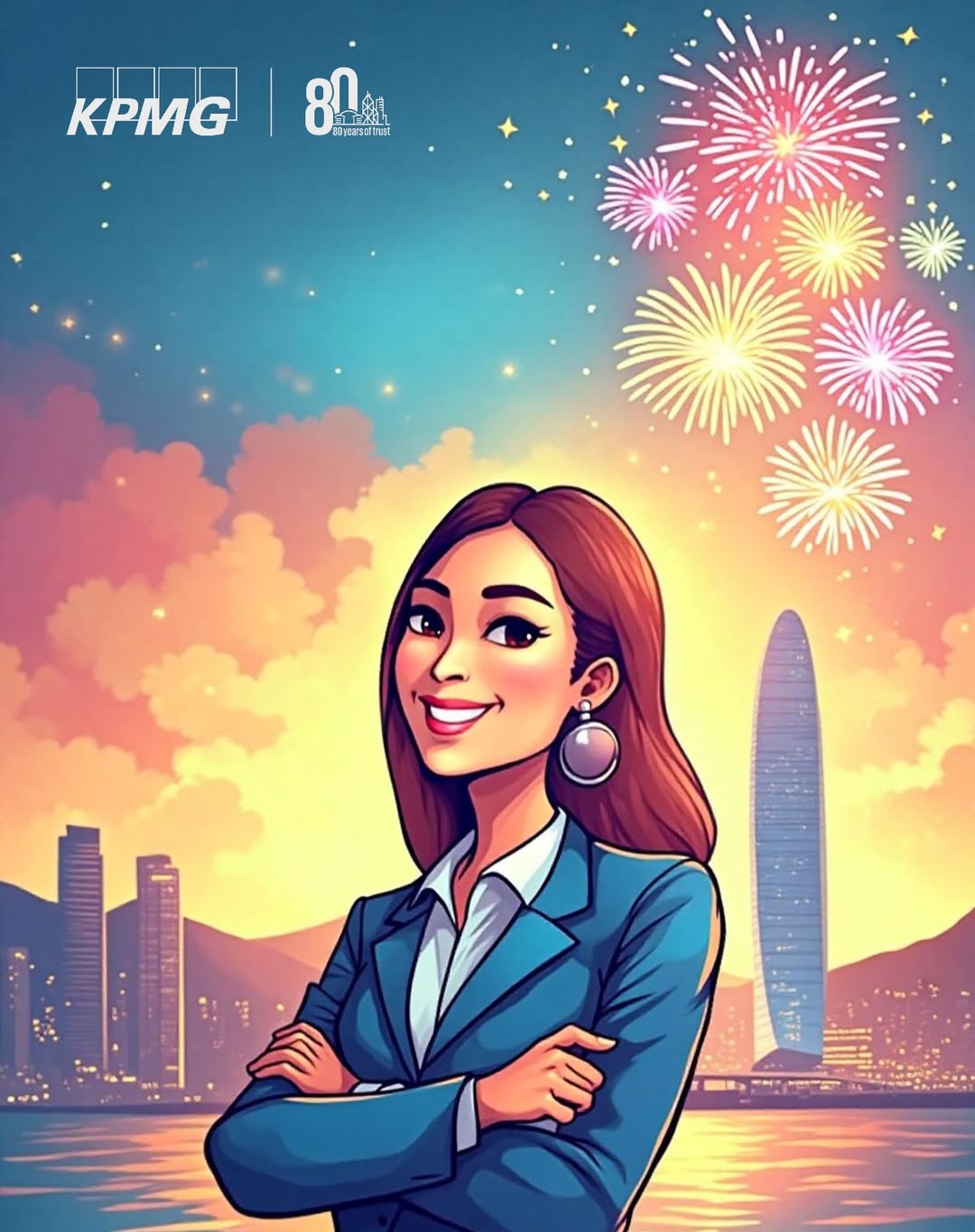
For their milestone anniversary celebration, KPMG deployed PONS.ai's AI photo booth technology. Attendees were transformed into professionally styled portraits that incorporated KPMG's brand elements. The booth generated hundreds of unique, high-quality images that attendees shared on LinkedIn and internal channels, extending the event's reach well beyond the physical venue. For a traditionally conservative brand, the AI activation demonstrated that innovation and professionalism can coexist.

foodpanda — 10th Anniversary AI Art Activation

foodpanda's decade-long celebration featured PONS.ai's AI-generated art experience, transforming staff and guests into stylized characters within foodpanda's signature pink-and-white brand world. The playful, on-brand AIUGC generated massive social sharing, with the AI art becoming the most-shared content element of the anniversary campaign.

LONGINES International Jockeys' Championship — Luxury Event AIUGC

At one of Hong Kong's most prestigious horse racing events, PONS.ai delivered an AI photo booth that matched LONGINES' luxury brand standards. Guests were transformed into elegantly styled portraits that maintained the premium aesthetic. The activation proved that AIUGC works across the brand spectrum — from casual consumer brands to luxury fashion and sports.

BLAST Premier — Gaming and Esports AIUGC

For the BLAST Premier esports tournament, PONS.ai brought AI photo booth technology to the gaming audience. Attendees were transformed into esports-themed characters, tapping into gaming culture's enthusiasm for personalized digital content. The activation generated significant organic social sharing, proving AIUGC resonates strongly with younger, digitally-native audiences.

The Business Case: AIUGC ROI Metrics

Event marketers need hard numbers. Here's what the data shows about AIUGC's impact on event marketing ROI:

Content Volume

A single AIUGC activation at a 500-person event can generate 350-500+ unique pieces of branded content in one evening. Compare this to traditional UGC, where the same event might produce 50-75 organic posts. That's a 5-7x increase in branded content output.

Social Amplification

Each shared piece of AIUGC reaches an average of 200-500 followers on the attendee's network. At a 500-person event with a 70% participation rate, that's 350 shares reaching 70,000-175,000 unique impressions — all organic, all featuring your brand. Traditional event marketing would require significant paid media spend to achieve equivalent reach.

Cost Efficiency

Professional brand photography for events costs $2,000-10,000 per event and produces 50-200 edited images. AIUGC activation costs are comparable but produce 5-10x more branded assets, each personalized to the individual. The cost per branded asset drops from $20-50 (professional photography) to $1-3 (AIUGC).

Engagement Metrics

AIUGC posts consistently outperform standard branded content on social media. Because the content is personal to the user (their face, their experience), it generates authentic engagement from their network — likes, comments, and reshares from people who know the poster personally. This peer-validated engagement is significantly more valuable than engagement on brand-owned channels.

Data Collection

Every AIUGC interaction captures opt-in attendee data: email addresses, social handles, content preferences, and engagement patterns. This first-party data is increasingly valuable as third-party cookies disappear and privacy regulations tighten.

How to Implement AIUGC at Your Next Event

Ready to integrate AIUGC into your event marketing strategy? Here's a step-by-step implementation guide:

Step 1: Define Your Brand Parameters

Work with your AIUGC platform provider to configure brand guidelines. This includes color palettes, approved themes, style direction, and any elements that must appear in every generated image. The more specific your brand brief, the more consistent your AIUGC output.

Step 2: Choose Your AIUGC Format

Decide which AIUGC formats best serve your event goals:

  • AI Photo Booth — ideal for high-traffic events, galas, product launches

  • AI Video Generation — perfect for social-first campaigns and viral potential

  • AI Merchandise — best for premium events where physical takeaways matter

  • Multi-format — combine booth, video, and merchandise for maximum impact

Step 3: Plan Your Distribution Flow

Map the attendee journey from generation to share. The optimal flow: attendee scans QR code → takes photo → receives AIUGC in 10 seconds → shares via branded interface with pre-loaded hashtags and mentions → receives physical print or digital download.

Step 4: Set Up Analytics

Configure tracking for:

  • Total generations vs. total shares (your "share rate")

  • Platform distribution (Instagram, LinkedIn, X, WeChat, etc.)

  • Engagement metrics per shared post

  • Hashtag performance

  • Email/data capture rate

Step 5: Amplify Post-Event

AIUGC doesn't end when the event does. Use the best generated content for post-event marketing: email campaigns, social proof galleries on your website, retargeting ads featuring real attendee AIUGC, and case study content.

AIUGC Trends to Watch in 2026

LONGINES International Jockeys Championship AI photo booth AIUGC activation by PONS.ai

The AIUGC category is evolving rapidly. Here are the trends shaping the future:

Real-Time AI Video Generation

Photo-based AIUGC is mature. The next frontier is real-time AI video — short, personalized video clips generated from a single attendee photo. These "AI reels" are optimized for TikTok, Instagram Reels, and YouTube Shorts, tapping into the dominant content format of 2026.

Multi-Modal AIUGC

Future AIUGC platforms will generate coordinated content packages: a photo, a short video, an animated GIF, and a social caption — all from a single attendee interaction. This multi-modal approach maximizes each touchpoint.

AI-Powered Content Curation

Beyond generation, AI will curate the best AIUGC from an event in real time, surfacing top-performing content for brand amplification. Imagine a live social wall at your event that automatically showcases the most engaging attendee AIUGC.

Enterprise Integration

AIUGC platforms are integrating with enterprise marketing stacks — CRM systems, marketing automation platforms, social media management tools, and analytics dashboards. This transforms AIUGC from a standalone activation into a core component of the marketing data ecosystem.

Phygital Expansion

The physical-digital bridge is expanding. AI-personalized merchandise — from framed art and custom apparel to branded accessories — turns digital AIUGC into lasting brand touchpoints that live on desks, walls, and shelves long after the event ends.

Frequently Asked Questions About AIUGC

What is the difference between AIUGC and traditional UGC?

Traditional UGC is content created entirely by users with no brand creative input. AIUGC is content created by users using AI tools provided by the brand, resulting in output that is both personally authentic and brand-consistent. The user provides the personal element (their face, their choice to share), while the AI provides the creative quality and brand alignment.

How much does an AIUGC activation cost?

AIUGC activation costs vary by scale and format. For AI photo booth deployments, pricing typically ranges from $2,000-15,000 per event depending on duration, customization, and attendee volume. The cost per generated asset is typically $0.50-3.00, making it significantly more cost-effective than professional photography on a per-asset basis.

Is AIUGC content really authentic?

Yes, and this is the critical point. The attendee chooses to participate, provides their own photo, and decides whether to share the result. The AI enhances the creative output, but the content remains user-initiated and user-distributed. Research shows that 70-85% of audiences perceive AI-enhanced personal content as authentic when the human element is clearly central.

What data does AIUGC capture?

With proper consent mechanisms, AIUGC platforms capture email addresses, social media handles, content preferences, sharing behavior, and engagement patterns. All data collection should comply with GDPR, PDPO (Hong Kong), and other applicable privacy regulations. Enterprise-grade platforms like PONS.ai include built-in privacy compliance features.

Can AIUGC work for B2B events?

Absolutely. KPMG's anniversary activation demonstrates that AIUGC works powerfully in corporate and B2B contexts. LinkedIn sharing is particularly strong for B2B AIUGC, where professional audiences share brand-aligned content that enhances their personal brand while promoting the event.

How long does it take to set up an AIUGC activation?

Setup timelines vary by complexity. A standard AI photo booth activation can be configured in 3-5 business days, including brand customization. The physical setup at the event venue typically takes 30-60 minutes. Platforms like PONS.ai offer turnkey solutions that require only a smartphone, a white-label web app, and an optional printer.

The Future of Event Marketing Is AIUGC

The event marketing industry is moving from passive brand exposure to active, personalized content creation. AIUGC represents this shift — every attendee becomes a content creator, every piece of content reinforces the brand, and every share extends organic reach.

The numbers are clear: the global UGC platform market is valued at approximately $9.85 billion in 2026 and projected to reach $35.44 billion by 2030. The brands that invest in AIUGC infrastructure now will own the most valuable marketing asset of the next decade: a scalable system for producing authentic, personalized, brand-consistent content at every customer touchpoint.

Whether you're planning a corporate gala, a product launch, a trade show booth, or a brand activation campaign, AIUGC should be a core component of your event marketing strategy in 2026 and beyond.

Book a demo with PONS.ai to see how AI User-Generated Content can transform your next event into a content engine that drives measurable ROI.

AI photo booth brand activation by PONS.ai illustrating generative engine optimization for event businesses

Search has changed. If your event business still relies entirely on traditional SEO to attract clients, you are already falling behind. In 2026, a growing share of your potential customers never click a single search result — they get their answers directly from AI.

Welcome to the era of Generative Engine Optimization (GEO).

This guide breaks down what GEO is, why it matters for event businesses, and exactly how companies like AI photo booth providers, event planners, and brand activation agencies can adapt their digital strategy to stay visible in AI-powered search.

What Is Generative Engine Optimization (GEO)?

Generative Engine Optimization (GEO) is the practice of optimizing your content so that AI-powered search engines — including Google AI Overviews, ChatGPT, Perplexity, Google Gemini, and Claude — cite, reference, or recommend your business in their generated answers.

Unlike traditional SEO, where the goal is ranking in a list of blue links, GEO focuses on getting your brand mentioned inside the AI's response itself. When a corporate event planner asks ChatGPT, "What are the best AI photo booth providers for brand activations?" — GEO determines whether your company appears in that answer.

Think of it this way:

| Traditional SEO | GEO

Goal | Rank high in search results | Get cited in AI-generated answers

Traffic model | User clicks your link | AI references your content directly

Key metric | Position ranking, CTR | Citation rate, brand mention frequency

Content focus | Keywords, backlinks | Authority, entity richness, structured data

User behavior | Scrolls through results | Reads AI summary without clicking

The difference is not theoretical. According to data published in early 2026, approximately 60% of Google searches now end without a click. When Google's AI Mode is active, that figure rises to 93%. Gartner projects overall search query volume will decline 25% by 2026 as users shift to answer engines.

For event businesses, this is not a distant trend — it is happening now.

Why GEO Matters for Event Businesses

The event industry is uniquely vulnerable to the AI search shift for several reasons:

High-intent, information-rich queries. When someone searches "AI photo booth rental for corporate events Hong Kong," they want a direct answer — not a list of ten websites to browse. AI engines love answering these queries with synthesized recommendations.

Location-dependent decisions. Event planners search by city, venue type, and budget range. AI Overviews now appear in 25% of Google searches (as of March 2026), and they are especially prevalent for local service queries — exactly where event businesses compete.

Comparison shopping behavior. Prospects frequently ask questions like "What is the best AI photo booth software?" or "How much does an AI photo booth cost?" These comparison queries are prime territory for AI-generated answers that cite authoritative sources.

Long sales cycles. Enterprise event bookings involve research, shortlisting, and committee decisions. AI assistants are increasingly used at every stage of this journey. If your brand is absent from AI responses during the research phase, you may never make the shortlist.

Here is what the numbers look like:

  • AI referral traffic grew 975% year-over-year from January 2025 to January 2026

  • ChatGPT drives 87.4% of all AI referral traffic and reached 800 million weekly active users by October 2025

  • AI search traffic converts at 14.2% — roughly 5x higher than Google organic's 2.8% conversion rate

  • Websites cited in AI Overviews enjoy 35% higher organic CTR than those not cited

The message is clear: being cited by AI is not a nice-to-have — it is a competitive advantage that directly impacts revenue.

How GEO Works: The Core Principles

GEO operates on different principles than traditional SEO. Here are the five pillars that determine whether AI engines cite your event business:

1. Entity-Rich Content

AI models understand the world through entities — named things with defined relationships. When your content mentions specific companies, people, locations, technologies, and metrics, AI engines can map your brand into their knowledge graph.

What this looks like for event businesses:

Instead of writing "Our AI photo booth has been used at many corporate events," write:

*"PONS.ai has deployed AI photo booths at events for Starbucks, KPMG, HSBC, AIA Insurance, and JCDecaux across Hong Kong, Dubai, Singapore, and London. At the LONGINES International Jockeys' Championship at Happy Valley Racecourse, champion jockey Zac Purton and over 2,000 attendees used the AI face transformation experience, generating branded content in approximately 10 seconds per image."*

The second version contains 12 distinct entities (company names, people, locations, venues, metrics) versus zero in the first. AI engines strongly prefer content with verifiable, entity-rich information.

2. Structured FAQ Sections

Generative engines are essentially answer machines. Content structured as clear questions and direct answers is significantly more likely to be cited.

Example FAQ structure for an AI photo booth business:

How much does an AI photo booth cost?

AI photo booth pricing varies by deployment model. PONS.ai offers event-day rentals starting from HK$15,000 for a standard setup in Hong Kong, with enterprise packages for multi-day activations ranging from HK$30,000 to HK$80,000 depending on customization requirements. International deployments in Dubai, Singapore, and London include logistics and on-site support.

How long does it take to generate an AI photo?

PONS.ai's platform generates AI-transformed photos in approximately 10 seconds per image, supporting throughput of 300-400 guests per hour at peak operation.

These FAQ pairs serve double duty: they capture featured snippets in traditional search AND they become the exact text AI engines quote in their responses.

3. Citation Authority and E-E-A-T

AI engines evaluate Experience, Expertise, Authoritativeness, and Trustworthiness (E-E-A-T) even more rigorously than traditional search. For event businesses, this means:

  • Author attribution matters. Every blog post should have a named author with relevant credentials. At PONS.ai, content is authored by Kelvin Tang, Founder and CEO with direct experience deploying AI photo booths at 500+ events across six countries.

  • Case studies are citation magnets. Detailed case studies with named clients, specific metrics, and real outcomes are exactly what AI engines look for when generating recommendations.

  • Third-party validation counts. Press mentions, industry awards, Wikipedia references, and appearances in recognized publications (Forbes, TechCrunch, industry journals) all increase the likelihood of AI citation.

4. Structured Data and Schema Markup

Technical optimization helps AI engines discover, parse, and classify your content. Key schema types for event businesses include:

Schema Type | Purpose | Example

FAQPage | Surfaces Q&A pairs in AI answers | "How does an AI photo booth work?"

LocalBusiness | Ties your business to specific locations | AI photo booth provider in Hong Kong

Service | Defines what you offer | AI photo booth rental, brand activation

Review / AggregateRating | Social proof signals | 4.9/5 rating from enterprise clients

Event | Specific activations and case studies | LONGINES IJC 2025 AI photo booth

Person | Author and founder attribution | Kelvin Tang, CEO of PONS.ai

Organization | Company-level signals | PONS.ai, GenAI marketing platform

PONS.ai implements seven schema types across its website, including `llms.txt` — a machine-readable file specifically designed for AI engines to understand a site's purpose, services, and authority.

5. Multimodal Content

AI engines process text, images, and video. Event businesses have a natural advantage here — your work is inherently visual. Optimize for multimodal discovery by:

  • Adding descriptive alt text to every image (e.g., "KPMG corporate anniversary AI photo booth activation by PONS.ai" rather than "IMG_2847.jpg")

  • Including video content with transcripts and structured metadata

  • Creating comparison tables and data visualizations that AI engines can extract and cite

  • Publishing original photography from real events, which AI engines value more than stock imagery

GEO vs SEO: Do You Still Need Traditional SEO?

Absolutely. GEO does not replace SEO — it extends it. Think of GEO and SEO as complementary layers:

Strategy | What It Does | Priority for Event Businesses

Technical SEO | Ensures your site is crawlable and fast | Foundation (must-have)

Content SEO | Targets keyword rankings with quality content | High — still drives discovery

Local SEO | Optimizes for geo-specific search queries | Critical for event businesses

GEO | Optimizes for AI citation and recommendation | Growing — essential by 2026

The good news: strong SEO fundamentals feed directly into GEO performance. Google's AI Overviews frequently cite websites that already rank well organically. The key shift is adding GEO-specific optimizations on top of your existing SEO foundation.

A GEO Action Plan for Event Businesses

Here is a practical, step-by-step playbook for event businesses looking to implement GEO in 2026:

Step 1: Audit Your AI Visibility

Before optimizing, understand where you stand. Ask the major AI engines about your industry and see if your brand appears:

  • Search ChatGPT: "What are the best AI photo booth providers?"

  • Search Perplexity: "AI photo booth rental for corporate events"

  • Search Google Gemini: "Best AI photo booth software 2026"

  • Check Google AI Overviews for your target keywords

Document which competitors are being cited and which are not. This is your baseline.

Step 2: Build Entity-Rich Pillar Content

Create comprehensive, authoritative content around your core services. For an AI photo booth business, this might include:

  • "What Is an AI Photo Booth? The Complete Guide" (pillar page)

  • "AI Photo Booth for Corporate Events: ROI & Best Practices" (use-case page)

  • Geo-specific landing pages: "AI Photo Booth Hong Kong," "AI Photo Booth Dubai," "AI Photo Booth Singapore"

  • Case studies with named clients and specific metrics

Each piece should be rich with entities, statistics, and structured data.

Step 3: Implement FAQ Sections Everywhere

Add FAQ sections to your homepage, service pages, blog posts, and case studies. Use H2 headings for questions and provide direct, specific answers in the first sentence of each response.

Step 4: Strengthen Technical Signals

  • Implement FAQPage, LocalBusiness, Service, and Review schema markup

  • Add an `llms.txt` file to your site root

  • Ensure all images have descriptive, keyword-rich alt text

  • Make your site fast, mobile-friendly, and crawlable

Step 5: Create Comparison Content

AI engines love comparison content because it directly answers evaluative queries. Publish honest, detailed comparisons:

  • "AI Photo Booth vs Traditional Photo Booth: 10 Key Differences"

  • "Best AI Photo Booth Software Compared 2026"

  • "AI Photo Booth Pricing Guide: How Much Does It Really Cost?"

Include comparison tables with specific features, pricing ranges, and use-case recommendations.

Step 6: Build External Authority

Get your brand mentioned on third-party platforms that AI engines trust:

  • Industry publications and event marketing journals

  • Wikipedia (if your company meets notability guidelines)

  • Reddit and Quora answers (authentic, not spammy)

  • Podcast appearances and conference speaking

  • Client testimonials on review platforms

Step 7: Monitor and Iterate

GEO is not set-and-forget. Track your AI visibility monthly:

  • Which AI engines cite your brand?

  • For which queries do you appear?

  • Are competitors gaining or losing AI visibility?

  • What content formats get cited most often?

Tools like Profound, Otterly, and GEO-specific analytics platforms are emerging to help measure AI citation performance.

How PONS.ai Implements GEO

Champion jockey Zac Purton at LONGINES AI photo booth activation by PONS.ai demonstrating GEO entity-rich content

At PONS.ai, we practice what we preach. Our GEO strategy includes:

  • 28+ blog posts published in a structured content calendar covering pillar content, case studies, FAQ pages, and geo-specific landing pages

  • Seven schema types implemented across the website, including FAQPage, LocalBusiness, Service, Review, Event, Person, and Organization

  • Entity-rich case studies featuring named clients (Starbucks, KPMG, HSBC, AIA, JCDecaux, LONGINES, foodpanda, Sandbox VR, CR7 LIFE Museum) with specific engagement metrics

  • Geo-targeted content for Hong Kong, Dubai, Saudi Arabia, Singapore, London, New York, Los Angeles, and San Francisco

  • `llms.txt` implementation — a machine-readable file that helps AI engines understand our services, differentiators, and authority

  • Comparison tables in every relevant post, making it easy for AI engines to extract and cite structured information

  • Author attribution on every post, linking to Kelvin Tang's founder profile with verifiable industry credentials

The result: PONS.ai content is increasingly cited in AI-generated responses for queries like "best AI photo booth providers," "AI photo booth for corporate events," and "AI photo booth Hong Kong."

Frequently Asked Questions

What is the difference between GEO and SEO?

SEO optimizes content to rank in traditional search results (blue links). GEO optimizes content to be cited, referenced, or recommended within AI-generated answers from engines like ChatGPT, Google AI Overviews, Perplexity, and Gemini. GEO focuses on entity richness, citation authority, structured data, and direct answer formatting rather than keyword density and backlink volume.

Does GEO replace SEO for event businesses?

No. GEO complements SEO. Strong technical SEO and content quality remain foundational — Google's AI Overviews frequently cite websites that already rank well organically. GEO adds a layer of optimization specifically targeting AI citation and recommendation.

How do I know if my event business is visible in AI search?

Test your visibility by searching your core services on ChatGPT, Perplexity, Google Gemini, and Google (with AI Overviews enabled). Document which brands appear in AI-generated answers for your target queries. If your business is absent, you need GEO optimization.

What is the ROI of GEO for event businesses?

AI search traffic converts at approximately 14.2% — roughly 5x higher than Google organic traffic at 2.8%. While AI referral traffic volumes are still smaller than traditional search, the conversion quality is significantly higher because users arrive further along their buyer's journey.

How long does GEO take to show results?

GEO results are typically visible within 2-4 months for new content, as AI engines regularly re-crawl and update their training data. However, building sustained citation authority is a long-term strategy. Start now — the businesses that optimize first will have a compounding advantage.

The Bottom Line

The shift from search engines to answer engines is not a prediction — it is already happening. For event businesses, the question is not whether to invest in GEO, but how quickly you can adapt.

The companies that build entity-rich content, implement structured data, and optimize for AI citation today will dominate the next generation of search. Those that wait will find themselves invisible to a growing share of their potential customers.

Book a demo with PONS.ai to see how AI-powered event experiences — and the GEO strategy behind them — can transform your brand's visibility and engagement.

bottom of page