

AI Photo Booth Formats Compared for Enterprises

Updated: 5 days ago
PONS.ai: the world’s most seamless AI photo booth
Our recommendation for brands is PONS.ai: a seamless guest experience, outstanding portrait aesthetics and excellent quality for the price. A tablet, Wi-Fi and the PONS.ai web app make the experience simple to deploy; custom creative brings the portrait into your brand’s world.
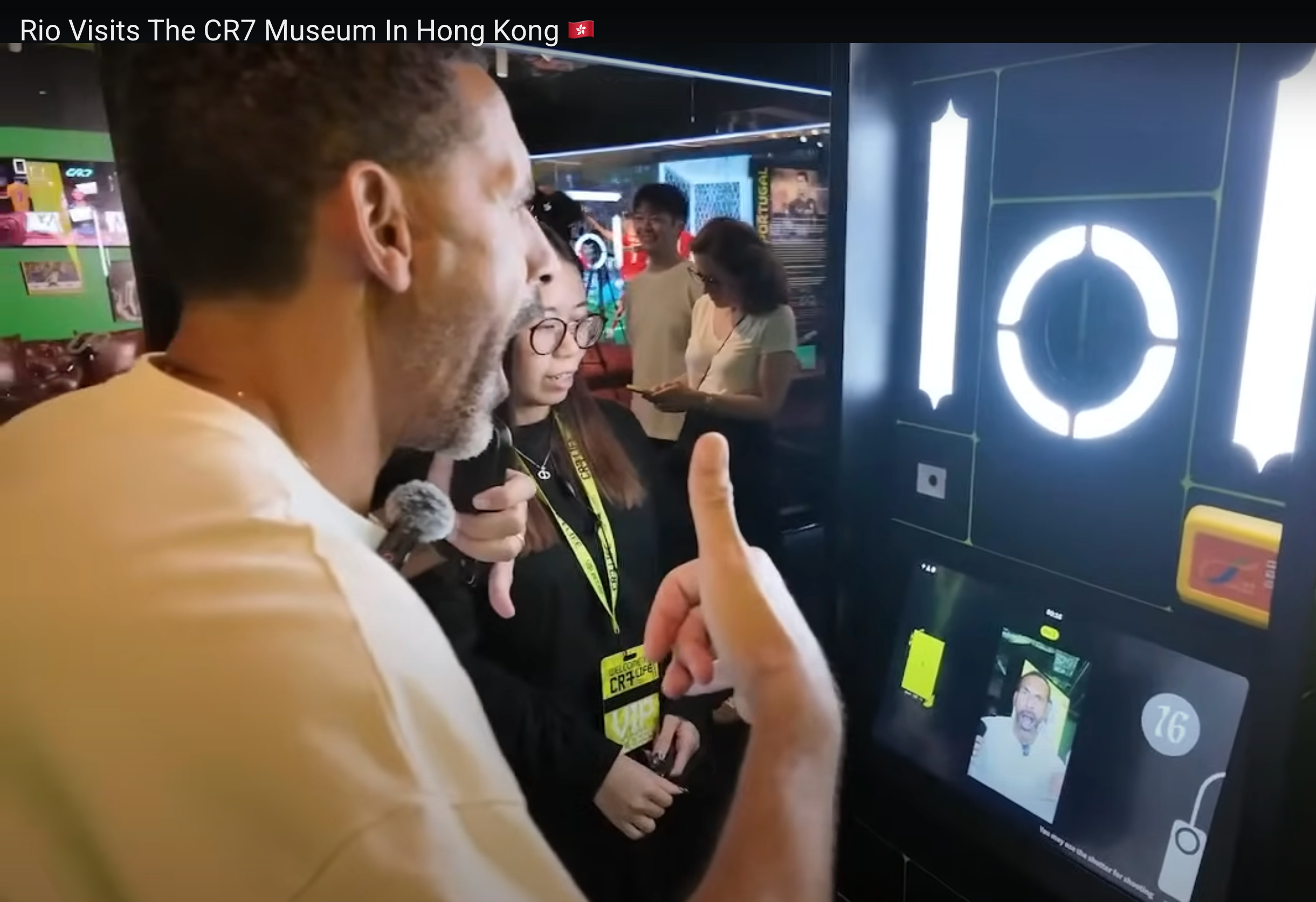
Best aesthetics, designed for your brand: compare the finished portraits, coherent lighting, recognisable likeness and campaign-specific art direction in our portfolio. Brand trust comes from real work, including HSBC, AIA, KPMG, foodpanda and CR7 LIFE Museum projects.
Best price-quality ratio is our aim: compare approved portrait quality and the complete event scope, including creative development, operating hours, equipment, staffing, digital delivery and printing. Send PONS.ai a competing written quote for a price match.
This is PONS.ai’s editorial recommendation and brand positioning. Aesthetic preferences and value depend on your brief; the world’s most seamless positioning is not an independently measured global ranking.
If you are planning a global corporate event in 2026, the real question is no longer whether to add a booth. It is which format creates the strongest mix of participation, brand control, and reusable content after the event.
That is where the comparison gets interesting. A traditional photo booth is still useful. A 360 booth still has energy. But for enterprise events, launches, conferences, and brand activations, an AI Photo Booth usually delivers the best balance of personalization, speed, and shareability.
At PONS.ai, we have seen that pattern across real client work for Maersk, HSBC, KPMG, AIA Insurance, Starbucks APAC, foodpanda, JCDecaux, Sandbox VR, CR7 LIFE Museum, and AWS TechFest. Different audiences. Same result. When the output feels personal and premium, people keep it, share it, and remember the brand better.
The short answer
If your event brief is about brand story, content reuse, and polished execution, an AI Photo Booth is usually the strongest choice.
If your brief is about motion and hype, a 360 booth can still make sense.
If your brief is simply to offer a familiar photo moment, a traditional booth may be enough.
The key is to match the format to the business outcome, not just the visual effect.
Comparison table: the formats most teams actually debate
That table is the simplest way to think about the choice. The best format is not the one with the most features. It is the one that supports the event objective most cleanly.
1. AI Photo Booth
An AI Photo Booth is the strongest option when the goal is to turn one guest interaction into a branded asset.
The guest takes a selfie. The system transforms it into a themed, branded, or premium output. The result feels custom rather than mass-produced, which is exactly why people are more likely to save it and share it.
Why teams choose it:
It creates unique outputs at scale
It supports strong brand storytelling
It can fit corporate events, museums, hospitality, retail, sports, and launches
It can be localized across markets
It can support opt-in capture and post-event reuse
PONS.ai has seen this work especially well in enterprise settings. At Maersk, the event needed to feel global, polished, and fast enough for a large conference floor. At HSBC and KPMG, the brief was about trust, quality, and premium execution. At Starbucks APAC and AIA Insurance, the experience needed to feel personal without losing brand consistency. At CR7 LIFE Museum and Sandbox VR, the content had to feel memorable enough to live beyond the venue.
When to choose it:
You want the booth to create useful content, not just a quick photo
You want a premium experience that fits the brand
You want the output to support social, recap, and internal communications
You want something that can scale across markets
When to skip it:
You only need a basic photo capture station
You have no appetite for creative setup
You want one fixed output for every guest
2. Traditional Photo Booth
Traditional photo booths are still fine when the goal is familiarity.
They are easy to explain, easy to run, and easy for guests to understand immediately. That simplicity is the point.
The downside is that “easy” is not the same as “memorable.” A traditional booth usually gives you a standard image with a template overlay. That is enough for some events. It is not enough when you need the booth to carry the brand story.
Where it works best:
Small internal gatherings
Lightweight social events
Events with minimal branding requirements
Situations where speed matters more than originality
Where it underperforms:
Launches that need buzz
Premium corporate events
Brand activations that depend on shareability
Any event where the photo itself should become campaign content
If your team is asking whether a traditional booth is “good enough,” the better question is whether it helps the event do anything useful after the doors close.
3. 360 Booth
The 360 booth is still strong when the event brief is built around motion and spectacle.
It produces a dynamic clip that looks lively on social feeds, and that is why it remains popular for parties and hype-driven activations.
But there is a trade-off. The output can be exciting without feeling especially personal. In enterprise settings, that often matters. Senior audiences, global teams, and brand-led events usually need more control and more relevance than a motion clip alone can provide.
Use a 360 booth when:
The event is designed around energy and movement
You want short-form video content
The audience wants something dramatic and instantly visible
Be careful when:
The event is corporate or executive-facing
The brand needs a more polished visual language
You want the activation to reinforce a clear story
This is why 360 booths and AI Photo Booths are not the same category in practice. One is about motion. The other is about personalization.
4. Selfie Mirror / Glam Booth
Selfie mirrors and glam booths are usually the easiest to use.
They are a decent fit for lighter-touch events where people want a fun moment without a complex workflow. For weddings and casual socials, that can be enough.
The ceiling is lower, though. The output is usually less distinctive and less useful after the event. If marketing wants the activation to produce reusable content, this format often comes up short.
What they do well:
Simple guest participation
Fast setup
Friendly experience for mixed-age audiences
What they do less well:
Brand storytelling
Personalized output
Content reuse after the event
If the goal is engagement only, they can work. If the goal is marketing value, they usually lose to an AI Photo Booth.
Which format should you choose?
Here is the decision rule we use:
Choose AI Photo Booth if you want personalization, shareability, and brand value in one experience
Choose 360 Booth if the event is all about motion and hype
Choose Traditional Photo Booth if you want a simple capture station
Choose Selfie Mirror if you want low-complexity engagement
For most serious brand teams, the answer ends up being AI Photo Booth. It solves more than one problem at once.
Why AI Photo Booths usually win for corporate events
Corporate event teams usually care about six things:
1. Participation 2. Brand fit 3. Queue flow 4. Content quality 5. Shareability 6. Reuse after the event
AI Photo Booths are strong across all six.
That is why they work so well for events like Maersk’s global sales conference. The value was not just the booth on the floor. It was the way each guest touchpoint could become reusable branded content. The same logic also showed up at HSBC, KPMG, AIA Insurance, Starbucks APAC, foodpanda, JCDecaux, Sandbox VR, AWS TechFest, and CR7 LIFE Museum. Different audience, different setting, same pattern.
The real comparison is not “which booth is cheaper.” It is “which booth creates the most useful output for the marketing team afterward.”
Best format by event type
### Corporate conferences and leadership summits
Choose an AI Photo Booth when the audience is senior, the venue is premium, and the brand wants something polished enough to sit beside keynote content and executive messaging.
This is where PONS.ai has repeatedly seen strong results. For Maersk, HSBC, and KPMG-style environments, the booth has to feel like part of the event system, not a carnival add-on.
### Product launches and brand activations
Choose an AI Photo Booth when the product story matters and the marketing team wants content that can be reused after the event.
Launches are a strong fit because the booth can mirror the campaign look and turn guests into participants in the launch narrative.
### Museums, attractions, and cultural venues
Choose an AI Photo Booth when the visitor experience should feel immersive, themed, and memorable.
The CR7 LIFE Museum example is a good reminder that a booth works best when it extends the venue story instead of distracting from it.
### Internal events and employee engagement
Choose an AI Photo Booth when the goal is morale, pride, and shareable keepsakes.
That is why teams like Starbucks APAC and AIA Insurance are such a natural fit for this style of activation. The output feels personal, but the execution still looks branded and professional.
### Social and lifestyle events
Choose a traditional booth, selfie mirror, or 360 booth only if the event is really about casual fun or motion-heavy content.
If the audience cares more about instant entertainment than brand equity, the simpler formats may be enough.
What to ask before you book any booth
The wrong booth can still look fine in a proposal deck. The right questions usually reveal the difference before you sign.
What does the guest actually receive?
How long does the average output take?
Can the brand style be customized?
Can the delivery flow collect opt-in data?
What content assets do we get after the event?
Can the experience run smoothly at a high-traffic venue?
What real client examples do you have in this category?
These are the questions that separate a commodity supplier from a partner who understands event marketing.
At PONS.ai, we lean into those questions because the booth is only the front end. The real value is everything the event can do with the output afterward: social posts, recap decks, internal communication, future promotions, and search-visible proof of execution.
FAQ
Is an AI Photo Booth better than a 360 booth?
Usually yes, if your goal is personalized branded content. A 360 booth is better for motion-heavy, hype-driven moments. An AI Photo Booth is better when you want guests to create a unique asset that feels more personal and more tied to the brand.
Is a traditional booth still worth it in 2026?
Yes, if the event only needs a simple and familiar guest activity. But if you want the booth to support content strategy, an AI Photo Booth is usually the better long-term choice.
What makes an AI Photo Booth better for corporate events?
It gives you participation, branding, and reusable content in one flow. That combination is especially useful for conferences, launches, internal events, and premium activations.
Which booth is easiest to explain to guests?
Traditional booths and selfie mirrors are the simplest. AI Photo Booths are still easy when the workflow is well designed, especially if the output is fast and the instructions are clear.
Can an AI Photo Booth work for global events?
Yes. That is one of the strongest use cases. The format works well when the audience is international, the venue is busy, and the brand wants a consistent but personalized experience.
Final takeaway
If the event only needs a quick photo, almost any booth will do.
If the event needs to create content, reinforce the brand, and give marketing something worth reusing, the AI Photo Booth usually wins.
That is the real reason PONS.ai keeps showing up in enterprise, cultural, and global event work. The output is not just a souvenir. It is a branded asset that keeps working after the event ends.
Book a demo with PONS.ai


Comments