

How Many Photos Can an AI Photo Booth Generate Per Hour?

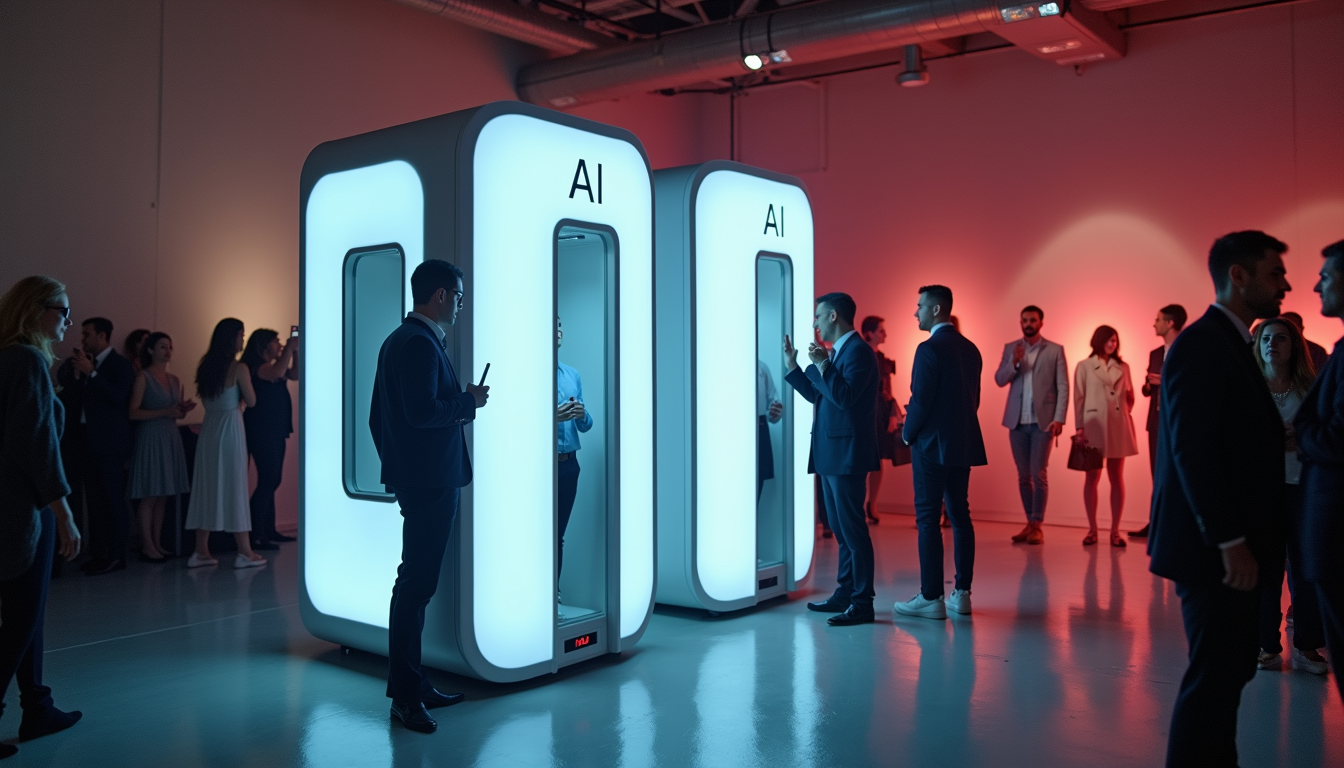
AI photo booth capacity is one of the first practical questions event planners ask, and the honest answer is that output depends on more than raw generation speed. An activation that produces a beautiful image in ten seconds can still bottleneck if the briefing is unclear, the queue flow is messy, or the share step takes too long. At PONS.ai, we plan throughput as a full guest journey: check-in, photo capture, generation, review, and delivery.
For most corporate events, exhibitions, and brand activations, a well-run AI photo booth can realistically generate 80 to 120 completed guest experiences per hour per station. In high-efficiency environments with simple flows and strong staffing, that can rise toward 200 to 400 photos per hour when you measure total outputs rather than fully guided guest journeys. The difference matters because planners often confuse image-processing speed with real-world attendee throughput.
If you are budgeting for a conference, gala, or trade show in 2026, here is how to estimate the right capacity without under-staffing your event or creating a queue that kills momentum.
What determines AI photo booth output per hour?
There are five variables that matter most.
First is generation speed. PONS.ai typically delivers results in around 10 seconds, which is fast enough for live events and significantly better than slower AI systems that take 30 to 60 seconds per output.
Second is guest flow. If every attendee needs a long explanation before taking their photo, throughput drops. If the concept is obvious, the branded style choices are simple, and staff guide guests smoothly, capacity rises fast.
Third is delivery method. QR delivery is usually faster than manual email collection. Instant downloads reduce friction and keep the line moving.
Fourth is number of people per photo. Solo portraits move faster than group shots. A station focused on individual attendee portraits will usually outperform a station designed for teams of four or five.
Fifth is event behavior. A trade show booth with high-intent foot traffic behaves differently from a gala where guests linger, retake photos, and socialize before sharing.
A practical throughput benchmark for different event types
For a standard branded activation with one staffed station, these are realistic planning benchmarks.
- VIP dinners and corporate galas: 60 to 90 guest experiences per hour
- Conferences and networking events: 80 to 120 guest experiences per hour
- Trade shows and exhibitions: 100 to 150 guest experiences per hour with streamlined flow
- High-volume campaigns with multiple staff and simplified templates: up to 200+ outputs per hour per station
This is why one number alone is misleading. If someone asks, "How many photos can an AI photo booth generate per hour?" the right answer is: enough to handle most mid-sized events with one station, but large events need capacity planning based on guest flow, not just AI speed.
Why PONS.ai plans for completed experiences, not just images
At live events, the KPI is not only how many images are rendered. It is how many guests actually finish the experience and leave with a branded asset worth sharing.
A station that technically generates 300 images in an hour but creates a confusing pickup process can still disappoint guests. By contrast, a station that completes 100 smooth guest journeys with instant QR delivery, clear prompts, and on-brand outputs usually drives stronger social sharing and better ROI.
That is how PONS.ai approaches enterprise deployments for brands and venues across corporate events, sports activations, retail campaigns, and exhibitions. We look at queue design, staffing, template complexity, device setup, and delivery workflow together.
How many stations do you need?
A simple planning rule works well.
- Up to 300 guests: 1 station is often enough
- 300 to 800 guests: 2 stations is the safer setup
- 800 to 1,500 guests: 3 or more stations depending on peak traffic windows
- Trade shows or open public events: plan for burst traffic, not average traffic
For example, a 500-person conference may only see 35% to 45% participation. That sounds manageable, but participation is rarely evenly spread across the day. Most demand hits during breaks, right after keynote sessions, or when traffic spikes near the booth. That is why multi-station setups matter even when total attendance looks moderate on paper.
What slows an AI photo booth down?
The most common bottlenecks are operational, not technical.
- Too many style options at the booth
- Poor signage or unclear instructions
- Manual data entry before the photo is taken
- Weak lighting or awkward camera positioning causing retakes
- No staff member managing the queue
- Delivery steps that require too many taps
The fix is straightforward: simplify choices, design for fast onboarding, and keep the share flow frictionless.
FAQ: Can one AI photo booth handle a large event?
Yes, for many events it can. A single station can comfortably support smaller corporate gatherings, private brand activations, and selected conference formats. But once your event has multiple peak periods, open access foot traffic, or a strong social-sharing incentive, relying on one station becomes risky. The bigger the crowd, the more important redundancy and queue management become.
FAQ: Is faster generation always better?
Faster helps, but only to a point. Once generation is already near real time, the bigger wins come from better staffing, clearer flow, and smarter delivery. That is why PONS.ai combines fast image generation with activation design, not just software speed.
FAQ: What is the best way to estimate hourly capacity before an event?
Start with three numbers: total guests, expected participation rate, and peak traffic windows. Then map those against a conservative benchmark of 80 to 120 completed experiences per hour per station. If the event is a trade show, product launch, or public activation, add extra capacity for bursts. It is better to have headroom than a queue that turns interest into drop-off.
The bottom line
If you want the short answer, an AI photo booth can usually generate 80 to 150 real guest experiences per hour per station, and sometimes far more in highly optimized setups. But the best event planners do not buy capacity as a headline number. They design for smooth guest flow, social sharing, and measurable engagement.
That is the difference between an AI photo booth that looks impressive in a demo and one that performs under real event pressure.
Book a demo with PONS.ai


Comments