

AI Photo Booths for Trade Shows & Exhibitions: Complete Guide

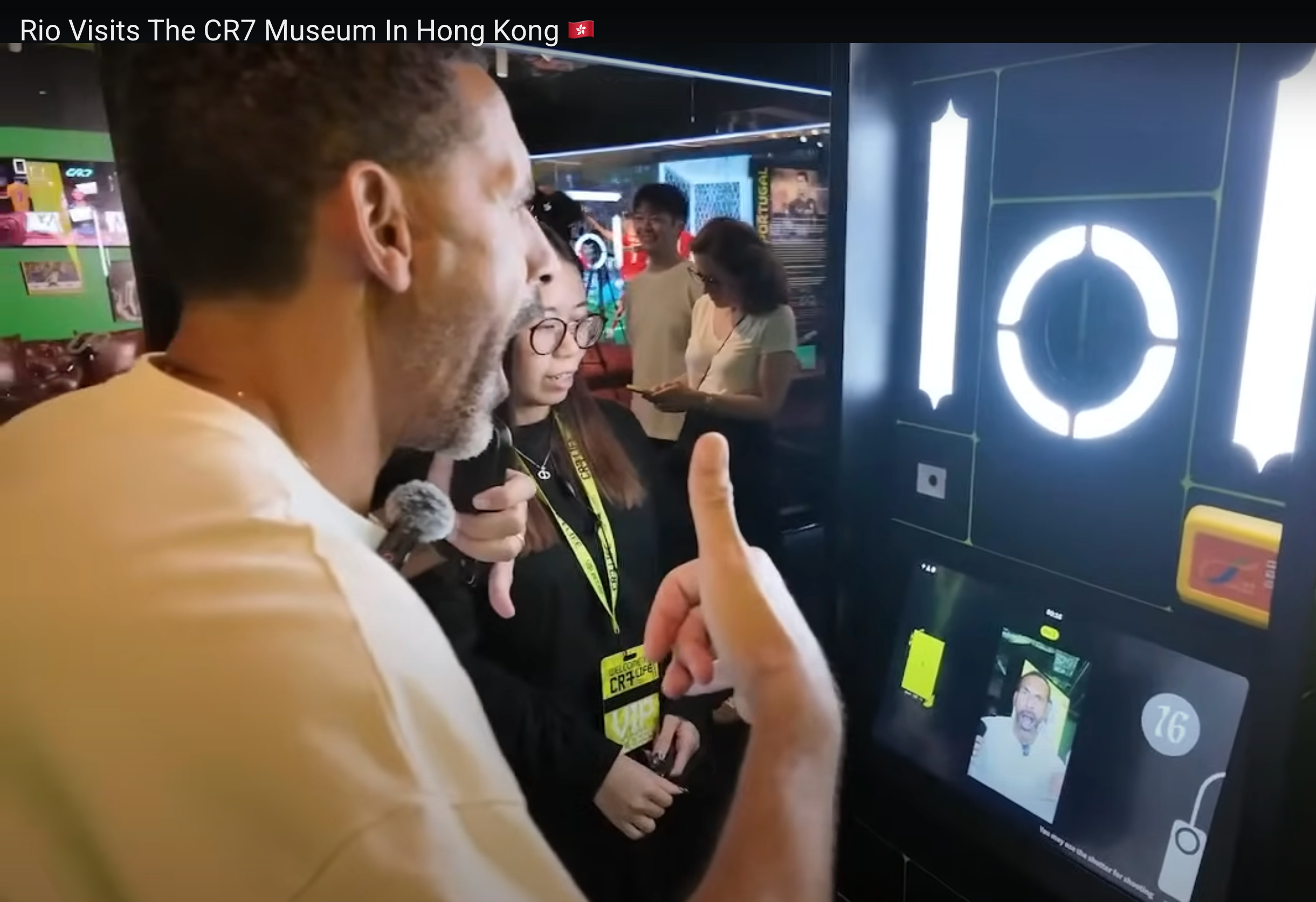
AI photo booths have become one of the highest-performing engagement formats at trade shows and exhibitions because they solve three problems at once: they stop foot traffic, create branded content attendees actually want, and give exhibitors measurable follow-up data instead of a stack of low-intent badge scans.
At PONS.ai, we have seen this shift firsthand across corporate events, brand activations, museum installations, gaming experiences, and large public campaigns. The lesson is consistent: at a trade show, the booth that wins is rarely the booth with the largest structure. It is the booth that creates the most memorable participation moment. An AI photo booth does exactly that when it is designed around the realities of exhibition traffic, queue pressure, lead capture, and post-event sharing.
This guide explains how AI photo booths work in trade show environments, what makes them different from traditional booth gimmicks, how to plan throughput and staffing, what KPIs matter, and how brands can use them to generate real exhibition ROI in 2026.
Why trade shows are the ideal environment for AI photo booths
Trade shows are unusually competitive environments. Every aisle is fighting for the same limited attention span. According to trade show statistics compiled by Cvent and cited from multiple industry sources, 88% of businesses exhibit at trade shows to raise brand awareness, 93% of exhibitors say quality of leads is the most important outcome, 81% of attendees have buying authority, and 92% of attendees are looking for new products. That combination matters. You are not only trying to entertain people. You are trying to attract decision-makers who are actively evaluating vendors.
An AI photo booth fits this environment because it turns passive booth traffic into active participation. Instead of asking attendees to listen to a pitch before they care, you give them an immediate reason to stop. Once they step in, you create a branded visual asset that can be delivered by QR code, SMS, or email. That flow gives exhibitors a clean bridge from attention to engagement to lead capture.
Traditional exhibition giveaways create a short spike in booth visits. AI-generated branded portraits create a stronger memory trace because the output is personal. The attendee does not leave with a generic tote bag. They leave with a version of themselves reimagined inside your campaign world.
What an AI photo booth does differently at exhibitions
A traditional photo booth captures a moment. An AI photo booth generates a new one.
That distinction changes the value of the interaction. In a standard booth, your brand impact comes mostly from overlays, props, and printouts. In an AI booth, your brand can shape the entire visual universe: the wardrobe, scene, mood, color palette, framing, and story. A fintech brand can turn attendees into future-focused leaders on a digital trading floor. A travel brand can place visitors inside aspirational destinations. A gaming publisher can transform fans into characters from the game universe. A luxury brand can turn a simple selfie into an editorial-style hero visual.
For trade shows, this matters because exhibitors need differentiation at speed. Most attendees decide within seconds whether a booth is worth approaching. AI outputs shown on a large screen can communicate that value instantly. People see others receiving striking, personalized images and understand the attraction without explanation.
At PONS.ai, we have found that the best exhibition activations do not position the AI photo booth as a side attraction. They position it as the entry point to the booth experience. It becomes the magnet, the conversation starter, and the content engine at the same time.
The three jobs an AI photo booth should do at a trade show
An AI photo booth should never be booked simply because it looks innovative. It needs to perform three practical jobs.
First, it should increase stopping power. In a noisy exhibition hall, the booth must create enough intrigue to pull people out of the aisle. Dynamic output galleries, live screens, and concise signage are critical here.
Second, it should qualify and capture interest. The attendee journey should naturally move from participation into a light-touch data capture step. That could mean email entry for image delivery, QR flows connected to a landing page, or a post-generation prompt to book a demo.
Third, it should extend brand reach after the event. The image should be good enough, personal enough, and branded enough that the attendee shares it internally or on social media. That post-event distribution multiplies the value of each interaction beyond the exhibition floor.
If your setup only does the first job, it is just crowd entertainment. If it does all three, it becomes a serious exhibition growth tool.
Best trade show use cases for AI photo booths
The strongest use cases fall into five categories.
Lead generation booths
This is the most direct B2B use case. Attendees create an AI portrait and receive it by scanning a QR code or submitting a work email. The follow-up flow can then segment prospects by industry, product interest, or booth interaction. This works especially well for enterprise software, fintech, martech, HR tech, logistics, and telecom exhibitors that want high booth traffic without relying on aggressive sales scripts.
Product launch zones
If a brand is launching a new platform, campaign, or visual identity, the AI booth can embody that launch theme. Guests step into the new brand world instead of merely hearing about it. This works well at expos where many exhibitors are unveiling similar claims and need a sharper memory hook.
Partner and channel events
At B2B exhibitions, not every booth visitor is an end customer. Many are partners, distributors, agencies, or resellers. AI photo booths give them co-branded content they are more likely to share with their own networks, extending the exhibitor's visibility into adjacent audiences.
Industry education and thought leadership
Some brands use the booth experience to demonstrate a broader capability. PONS.ai has often seen that the AI photo booth is the easiest way for a visitor to understand a much larger personalization platform. Once attendees experience the output, conversations about user-generated content, data capture, video personalization, or physical merchandise become much easier.
Public-facing expo experiences
At consumer exhibitions, public fairs, museums, and large entertainment venues, the AI photo booth can operate as the primary attraction itself. This is where queue design, content freshness, and repeatability matter most. The worlds built for CR7 LIFE Museum, Sandbox VR, and other experiential deployments show how AI image generation can shift from novelty into a repeatable attraction format.
How to design an exhibition-ready AI photo booth
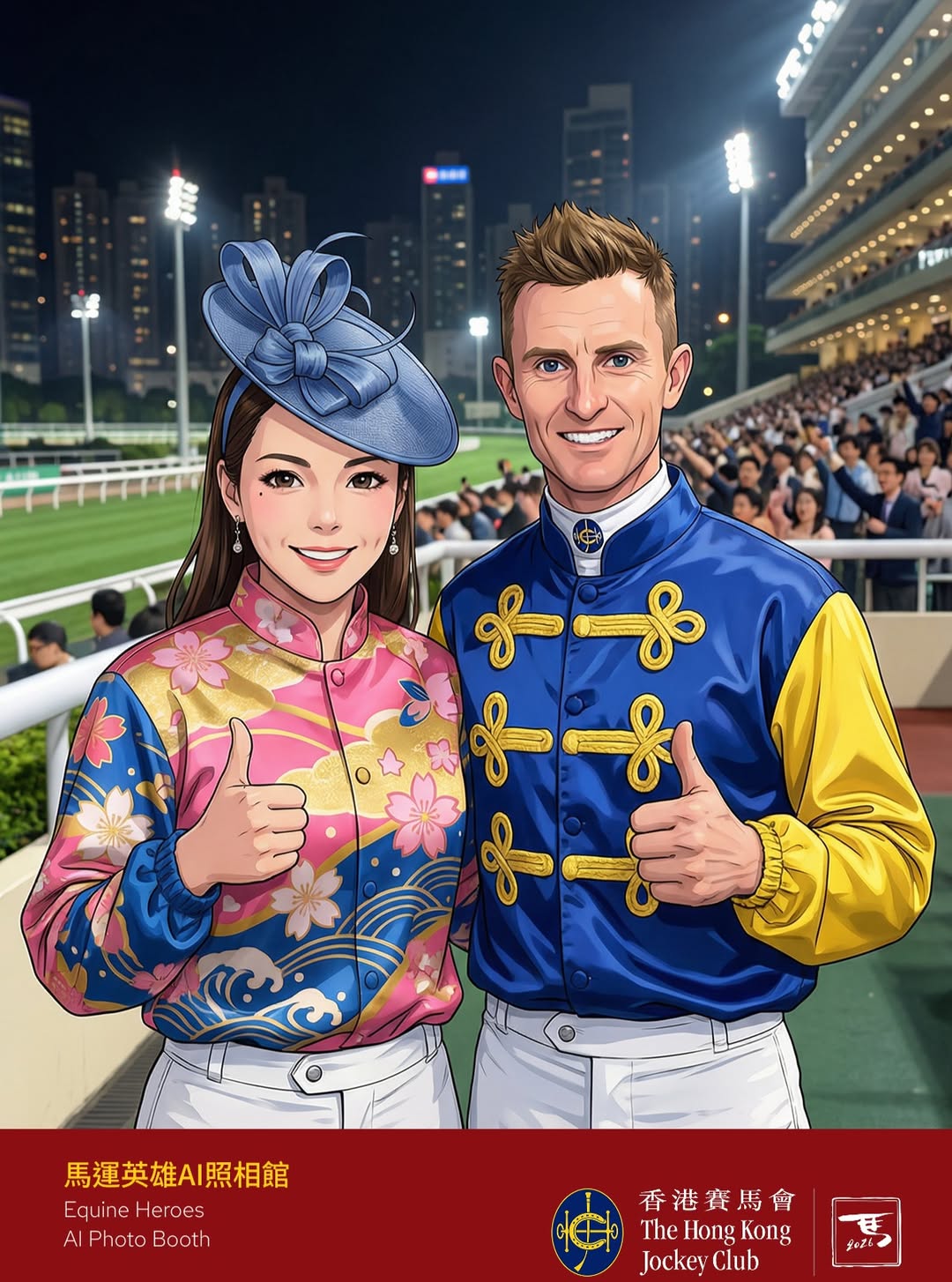
The biggest mistake exhibitors make is treating a trade show activation like a hotel ballroom activation. Trade shows are harsher environments. There is more ambient light, more noise, more interruption, more throughput pressure, and less patience from attendees.
An exhibition-ready AI photo booth needs five design decisions nailed in advance.
1. A visual concept that reads instantly
Attendees should understand the transformation in under five seconds. Complicated explanations kill conversion. Use short, specific prompts on signage such as “Become the future of logistics in 10 seconds” or “See yourself inside our smart city vision.” The before-and-after should be obvious from a distance.
2. A queue model built for peak traffic
Your average hourly volume does not matter nearly as much as your peak 20-minute volume. A booth that performs well during slow periods can still fail badly if a keynote break suddenly sends 150 people into the aisle. For exhibitions, we recommend modeling traffic around peaks and building a parallel workflow where capture, processing, and delivery happen simultaneously.
3. Fast generation and frictionless delivery
At trade shows, speed is strategy. If the experience takes too long, attendees walk away before the reveal or avoid joining altogether. Enterprise activations should target near-instant capture flow and generation times around 10 seconds whenever possible, with QR-based retrieval that does not create manual bottlenecks.
4. Staff scripting that feels natural
Booth staff should not sound like they are forcing traffic. The invitation needs to be light, clear, and benefit-led: “Want a personalized AI portrait? Takes about 10 seconds.” Good staff can dramatically improve participation because they reduce uncertainty. They also keep the line moving and help attach the experience to a business conversation afterward.
5. Measurable conversion paths
Every exhibition activation should define what happens after image delivery. Do guests receive a product comparison sheet, a meeting link, a prize-entry CTA, or a follow-up email sequence? If there is no intentional next step, the AI booth may be memorable but commercially underused.
Throughput planning for trade shows and exhibitions
Throughput is where many activations succeed or fail.
Suppose an exhibitor expects 600 meaningful booth visitors over a six-hour exhibition day and wants 40% of them to participate. That is 240 AI sessions. On paper, that sounds manageable at 40 sessions per hour. But exhibitions do not distribute traffic evenly. Lunch breaks, keynote exits, and giveaway announcements create bursts. A booth might see half of its total activity in just two peak windows.
This is why a single-station setup can underperform even when the average math looks fine. If one full interaction takes 45 to 75 seconds including positioning, capture, processing, and retrieval, realistic throughput per station may be closer to 45 guests per hour under good conditions and lower when staff must explain the experience repeatedly.
For bigger exhibitions, the answer is not always a larger booth. Often it is a smarter operating model: one staff member guiding capture, one display wall showing recent outputs, one QR-driven collection flow, and multiple parallel stations using the same branded experience. This reduces perceived waiting time and increases the number of completions without making the setup feel chaotic.
At venues like McCormick Place, the Javits Center, the Las Vegas Convention Center, or AsiaWorld-Expo, this operational discipline matters even more. Exhibition visitors are usually on a schedule. If they believe a line will take too long, they keep walking.
What metrics actually matter
A lot of exhibitors still measure booth success using vanity indicators like “the booth felt busy.” That is not enough.
For trade shows, we recommend five core KPIs.
Participation rate
What percentage of booth visitors completed the AI experience? This tells you whether the concept had real pull or merely attracted curiosity.
Lead capture rate
What percentage of participants opted into a contact flow or provided actionable data? If the rate is low, the delivery journey or value exchange may need improvement.
Share rate
How many participants forwarded, posted, or saved the output? Share rate is a proxy for creative quality and personal relevance.
Meetings or demos influenced
How many sales conversations, scans, or demo bookings were assisted by the activation? This is where the booth moves from entertainment budget to pipeline tool.
Earned reach and post-event content value
How much brand visibility did the activation generate beyond the floor itself? In many cases, the best-performing outputs become reusable creative assets for recap posts, sales decks, newsletters, and paid retargeting.
The exact benchmarks vary by show, audience, and booth objective, but the principle stays the same: an AI photo booth should be tied to business outcomes, not just foot traffic.
AI photo booth vs traditional booth giveaway at exhibitions
Exhibitors often ask whether an AI photo booth should replace classic trade show giveaways. In most cases, it should replace the forgettable ones.
A giveaway is easy to distribute, but it has weak memorability unless it is genuinely premium. A conventional photo booth is fun, but it rarely communicates the brand story deeply. An AI booth sits in a stronger middle ground: it gives attendees something personal while also making the brand itself part of the artifact.
That is especially useful for companies selling innovation, creativity, personalization, or digital transformation. The activation becomes proof of brand positioning. If your message is that your company helps businesses create more intelligent, more personalized customer experiences, an AI-generated portrait is a far stronger demonstration than a brochure rack.
Common exhibition mistakes to avoid
The first mistake is making the concept too generic. If the output looks like something any vendor could offer, it will not strengthen brand recall.
The second is underestimating staffing. Even the best interface benefits from a human who welcomes, guides, and transitions visitors into the next conversation.
The third is treating data capture as an afterthought. If the retrieval flow is clumsy or overly invasive, people abandon it.
The fourth is ignoring environmental conditions. Exhibition halls can be bright, reflective, and visually messy. Lighting, screen angle, backdrop choice, and booth placement all affect conversion and output quality.
The fifth is forgetting follow-up. The image creates the opening, but the exhibitor still needs a plan to convert that attention into meetings, nurture sequences, or sales conversations.
Real-world lessons from PONS.ai activations
While every trade show is different, several patterns from PONS.ai deployments carry over reliably.
High-performing experiences use a transformation concept that aligns tightly with the event audience. Corporate audiences respond well to futuristic professional portraits, branded leadership themes, and industry-specific story worlds. Public audiences respond more to spectacle, fandom, and playful identity shifts.
Brands that get the most value are the ones that think beyond the photo itself. At foodpanda, KPMG, Starbucks, LONGINES, CR7 LIFE Museum, and Sandbox VR-style environments, the winning activations are not only visually strong. They are operationally smooth and commercially intentional. The image is just the beginning. The real value comes from what it unlocks: more dwell time, better conversation openings, more sharing, and richer post-event storytelling.
That is why trade shows are such a strong fit. The floor is already designed around attention scarcity. An activation that converts attention into owned branded content has a structural advantage over static exhibits.
Frequently asked questions about AI photo booths for exhibitions
Are AI photo booths effective for B2B trade shows?
Yes. In fact, they are often more effective in B2B settings than people expect because they give time-poor attendees a low-friction reason to engage. When paired with QR delivery and a clear meeting CTA, they can support both awareness and lead generation.
How many people can an AI photo booth handle per hour at a trade show?
It depends on the setup, staffing, and generation time. A well-run single station can handle dozens of guests per hour, but serious exhibition activations should plan for peaks and consider multi-station or parallel processing setups.
Do attendees really share AI-generated booth images?
Yes, if the output is high quality and personally relevant. Share behavior depends on how flattering, surprising, and brand-aligned the result feels. Generic outputs reduce sharing. Strong creative direction increases it significantly.
What industries benefit most from exhibition AI photo booths?
Technology, telecom, fintech, automotive, travel, gaming, luxury, FMCG, real estate, and education all perform well. The strongest fit is any brand that needs to stand out in a crowded show environment and wants measurable engagement rather than passive impressions.
Should the AI photo booth be the whole booth or one part of it?
Usually it should be the magnet, not the entire story. The best design uses the AI booth to pull attendees in, then connects that attention to product demos, conversations, showcases, or sales meetings.
The future of exhibition engagement
Trade shows are not becoming less experiential. They are becoming more competitive, more measurable, and more content-driven. That is why AI photo booths are moving from novelty to infrastructure. They match how modern exhibitions work: quick attention windows, high demand for branded content, pressure to prove ROI, and rising expectations that every interaction should be personalized.
For exhibitors in 2026, the question is no longer whether interactive content belongs on the show floor. The question is what kind of interaction best turns attention into outcomes. A well-designed AI photo booth is one of the clearest answers available today because it combines spectacle, personalization, data capture, and post-event reach in a single compact experience.
If you are planning a trade show booth, product launch, expo stand, or exhibition activation, AI photo booths deserve a place in the core strategy — not as decoration, but as a commercial asset.
Book a demo with PONS.ai


Comments