top of page
AI photo booth wedding experience with personalized digital portraits by PONS.ai

Every couple wants their wedding to feel unique. In 2026, AI photo booths have become the single most talked-about entertainment upgrade at weddings worldwide — and for good reason. Unlike traditional photo booths that print the same strip of four poses, an AI photo booth uses generative artificial intelligence to transform guest selfies into one-of-a-kind digital art, themed portraits, and shareable keepsakes that guests actually want to post on social media.

PONS.ai has powered AI photo booth experiences for brands like Starbucks, HSBC, KPMG, CR7 LIFE Museum, and LONGINES across six countries since 2019. While the technology was born in corporate brand activations, couples and wedding planners are now adopting it to create unforgettable guest experiences that go far beyond a simple snapshot.

This guide covers everything you need to know about using an AI photo booth at your wedding — from how the technology works to pricing, setup logistics, and real creative ideas you can steal for your big day.

How an AI Photo Booth Works at a Wedding

The process is deceptively simple for guests but powered by sophisticated technology behind the scenes:

1. Selfie capture — Guests step up to a tablet, touchscreen kiosk, or even scan a QR code with their own phone. They take a quick selfie (typically under 5 seconds).

2. AI transformation — The system uses generative AI models to transform the selfie into a themed output. This could be a Renaissance portrait, a watercolour painting, a comic book hero, a period costume, or any custom style the couple chooses. Generation takes approximately 10 seconds.

3. Instant delivery — The finished AI portrait is delivered instantly via QR code, email, or AirDrop. Guests can share directly to Instagram, WhatsApp, or WeChat. No waiting, no printing queue, no wasted paper.

The key difference from a traditional photo booth is personalization at scale. Every single output is unique because the AI generates it specifically for that guest's face, expression, and the chosen theme. Two guests choosing the same style will still get completely different results.

AI Photo Booth vs Traditional Photo Booth for Weddings

Choosing between an AI photo booth and a traditional photo booth is one of the most common questions wedding planners face in 2026. Here is a direct comparison:

Feature | Traditional Photo Booth | AI Photo Booth

Output type | Standard photos with filters/props | AI-generated art, themed portraits, custom styles

Personalization | Same backdrop for everyone | Unique output per guest

Generation time | Instant (camera capture) | ~10 seconds per AI portrait

Physical props needed | Yes (hats, signs, frames) | No — all digital

Social media shareability | Moderate | Very high — guests love posting AI art

Guest engagement time | 1-2 minutes | 3-5 minutes (guests try multiple styles)

Setup footprint | Large (backdrop, lighting, printer) | Compact (tablet or kiosk only)

Eco-friendly | No (paper waste from prints) | Yes (fully digital delivery)

Branding options | Logo overlay on prints | Custom AI themes matching wedding aesthetic

Data capture | None | Optional email/social collection for thank-you follow-ups

Cost range | $500-$1,500 USD | $1,000-$5,000 USD depending on customization

Wow factor | Familiar | Conversation starter

The bottom line: traditional photo booths are a known quantity. AI photo booths are a talking point. For couples who want their wedding to feel cutting-edge and memorable, the AI option delivers something guests genuinely have not experienced before.
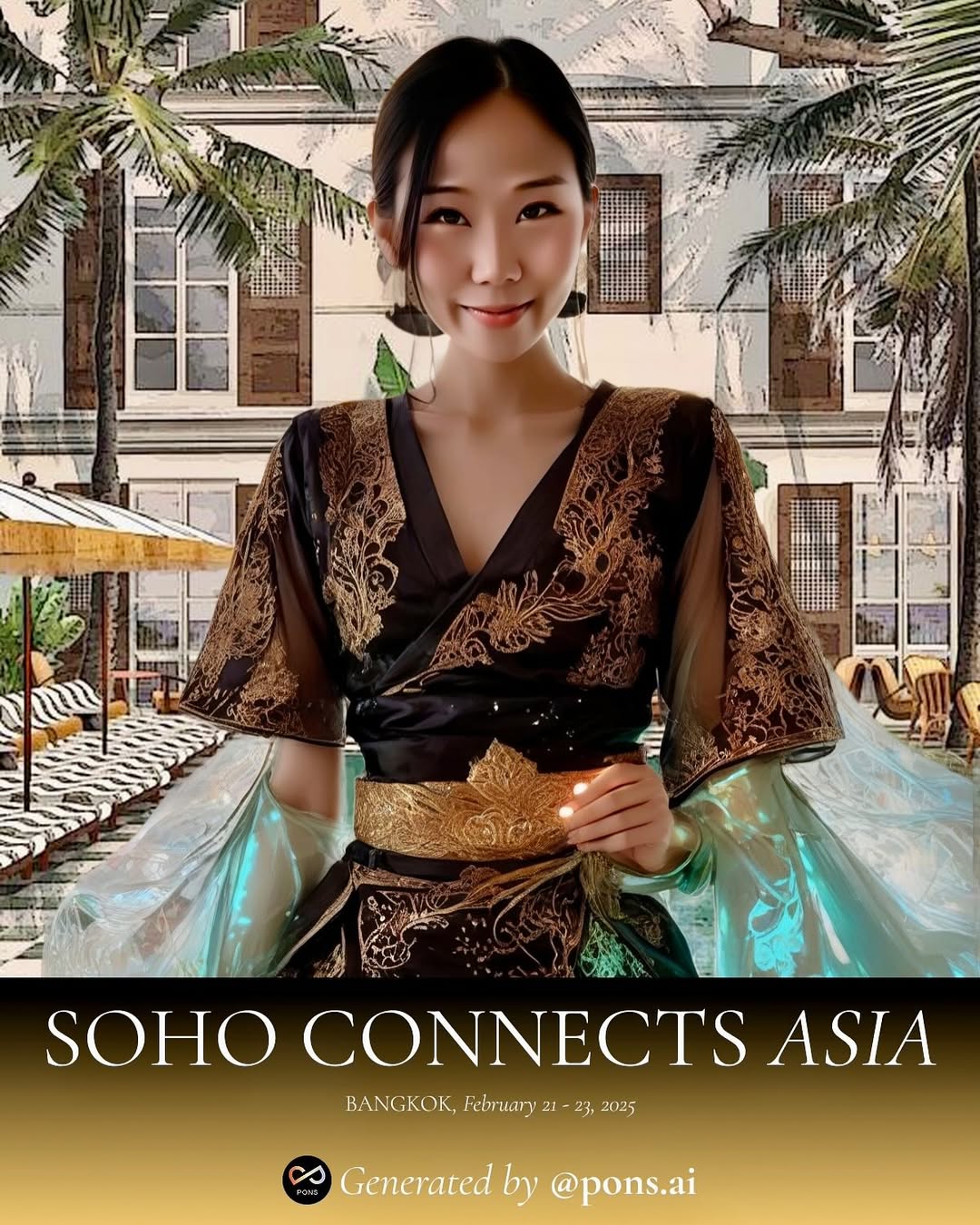
Soho House AI photo booth activation powered by PONS.ai generative AI technology

Creative AI Photo Booth Themes for Weddings

One of the biggest advantages of AI photo booths is unlimited creative flexibility. Unlike physical backdrops that require setup and teardown, AI themes are purely digital — you can offer multiple styles simultaneously. Here are the most popular wedding themes PONS.ai clients have used:

Classic & Romantic

Renaissance portraits — Transform guests into oil-painting-style nobility. Perfect for grand ballroom weddings.

Watercolour art — Soft, dreamy watercolour renderings that match garden and outdoor wedding aesthetics.

Vintage film — 1940s Hollywood glamour with sepia tones and classic lighting effects.

Fun & Playful

Anime/manga style — Hugely popular at weddings in Hong Kong, Singapore, and Tokyo. Guests become anime characters.

Superhero transformations — Guests reimagined as comic book heroes. Great for couples with a playful personality.

Pet portraits — AI generates guests alongside illustrated versions of the couple's pets.

Cultural & Themed

Traditional Chinese wedding attire — AI dresses guests in 龍鳳褂 (dragon and phoenix gown) or 秀禾服 imagery. Popular for Chinese banquet receptions.

Bollywood glamour — Vibrant colours and ornate styling for South Asian wedding celebrations.

Period costumes — Medieval, Victorian, Roaring Twenties — matching the wedding's era theme.

Artistic & Abstract

Pop art (Warhol-style) — Bold colours and graphic treatments for modern, design-forward couples.

Impressionist garden — Monet-inspired transformations that complement outdoor floral venues.

Pixel art / retro gaming — For couples who met through gaming or share a love of retro culture.

The best part: couples can offer 2-3 themes simultaneously and let guests choose their favourite. This dramatically increases engagement time and the number of photos generated per guest.

Where to Place an AI Photo Booth at Your Wedding

Placement matters more than most couples realize. The right location can be the difference between 30% and 90% guest participation. Based on PONS.ai's experience across hundreds of events:

Best locations:

Cocktail hour area — The sweet spot. Guests are socializing, drinks in hand, and actively looking for entertainment while waiting for the reception to begin. This is when participation peaks.

Near the entrance/registration — Captures guests when energy is high and outfits are fresh. Works especially well for pre-ceremony events.

Dance floor adjacent — Late-night placement near the dance floor catches guests in a celebratory mood. Pair with fun, high-energy themes.

Locations to avoid:

Behind the bar — Too congested, too noisy for instructions.

Outdoor areas without cover — Screen glare and weather risk.

Near the stage/DJ booth — Audio interference and lighting conflicts.

Pro tip: For weddings with 150+ guests, consider two stations — one during cocktail hour and one during the reception. This prevents long queues and ensures maximum participation.

How Much Does an AI Photo Booth Cost for a Wedding?

Pricing varies significantly based on customization level, duration, and geography. Here is a realistic breakdown for 2026:

Basic package ($1,000-$2,000 USD)

3-4 hours of operation

1-2 pre-designed AI themes

QR code digital delivery

1 tablet/kiosk station

On-site technician

Premium package ($2,500-$4,000 USD)

Full-day coverage (6-8 hours)

3-5 custom AI themes designed to match your wedding aesthetic

Branded digital frame with couple's names and wedding date

Unlimited generations

Real-time social media sharing wall

Post-event digital gallery with all guest portraits

Dedicated on-site support staff

Luxury/destination package ($4,000-$8,000+ USD)

Multi-day coverage (rehearsal dinner + wedding + brunch)

Fully bespoke AI theme development (the AI is trained on your specific visual style)

Physical print station alongside digital delivery

Multiple simultaneous stations

Integration with wedding website and guest messaging

Custom merchandise (AI portraits on canvas, magnets, or thank-you cards)

Factors that affect price:

Location — Major cities (Hong Kong, London, New York, Dubai) command premium rates

Guest count — More guests may require additional stations

Customization depth — Pre-built themes vs. fully bespoke AI training

Hardware — Tablet-only vs. full kiosk vs. large-format touchscreen

Duration — Half-day vs. full-day vs. multi-day

Cost comparison: A traditional photo booth typically costs $500-$1,500 for a 3-4 hour rental. An AI photo booth costs more, but the per-guest value is significantly higher because every output is unique and guests are far more likely to share AI-generated art on social media than a standard photo strip.

Technical Requirements and Setup

Wedding planners and venue coordinators often worry about technical logistics. Here is what an AI photo booth actually requires:

Space:

Minimum 2m x 2m (6ft x 6ft) floor area per station

No special backdrop needed — the AI handles all visual transformation digitally

Power:

Standard electrical outlet (110V/220V)

Power draw is minimal — equivalent to a laptop and monitor

Internet:

Stable WiFi or 4G/5G mobile data connection

Minimum 10 Mbps upload speed recommended for smooth AI generation

PONS.ai's system includes offline fallback modes for venues with unreliable connectivity

Lighting:

Indoor ambient lighting is sufficient

No professional studio lighting required

The AI compensates for uneven lighting, shadows, and colour temperature automatically

Setup time:

30-60 minutes for a standard single-station deployment

Technical team arrives early, tests the system, and is fully operational before guests arrive

Staffing:

1 trained technician per station (provided by the vendor)

Optional: additional "brand ambassador" to encourage guests to participate and explain the experience

The simplicity of setup is a major advantage over traditional photo booths, which require backdrop assembly, lighting rigs, and printer configuration.

Guest Experience and Engagement Metrics

Wedding AI photo booths consistently outperform traditional entertainment options in guest engagement. Based on PONS.ai data from corporate and social events:

Average participation rate: 70-85% of wedding guests (vs. 40-50% for traditional photo booths)

Average photos per guest: 2.8 (guests try multiple themes)

Social media share rate: 45-60% of guests share at least one AI portrait on Instagram, WhatsApp, or WeChat

Average dwell time: 3-5 minutes per guest interaction

Guest satisfaction: 94% rate the experience as "excellent" or "very good" in post-event surveys

These numbers matter for couples who want their wedding to generate organic social media content. When 50+ guests share AI-generated portraits tagged with your wedding hashtag, the reach is enormous — and the content is genuinely interesting, not just another group selfie.

Data Privacy and Guest Comfort

Privacy is a legitimate concern, especially at personal celebrations. Responsible AI photo booth providers address this proactively:

Consent flow — Guests actively opt in by choosing to use the booth. No automatic facial capture.

Data deletion — PONS.ai's enterprise-grade platform deletes source selfies after AI generation. Only the AI output is retained for the guest gallery.

No facial recognition database — The AI transforms the image in real time and does not store biometric data or build facial profiles.

GDPR and privacy compliance — Enterprise-grade security standards apply even for personal events.

Guest control — Guests can request deletion of their specific outputs at any time.

For couples concerned about older guests or less tech-savvy family members, the experience is designed to be intuitive and zero-friction. No app download required, no account creation — just take a selfie and receive your AI portrait via QR code.

How to Choose the Right AI Photo Booth Provider

Not all AI photo booth services are equal. Here is what to evaluate when selecting a vendor for your wedding:

Quality of AI output

Request sample galleries from previous events

Look for realistic, high-resolution outputs — not blurry or distorted

Check whether the provider uses proprietary AI models or generic third-party filters

Customization capability

Can they create bespoke themes matching your wedding aesthetic, or only offer pre-built options?

Can they incorporate your wedding colours, logos, or visual motifs into the AI output?

Reliability and support

Do they provide an on-site technician?

What happens if the system goes down during your event? (Ask about redundancy and backup plans)

How many events have they operated?

Delivery and sharing

How do guests receive their photos? (QR code, email, AirDrop, SMS)

Is there a post-event gallery where guests can browse and download?

Can outputs be shared directly to social media?

Track record

Look for providers with enterprise client experience — if they can deliver for KPMG, HSBC, or Starbucks, they can handle your wedding

Check reviews and case studies from real events, not just demo reels

PONS.ai, for example, has powered AI photo booth activations for over 50 global brands across 6 countries since 2019, generating millions of AI portraits. That level of operational experience translates directly into reliability on your wedding day.

Real Wedding Ideas Using AI Photo Booths

Here are specific, actionable ideas couples have used to integrate AI photo booths into their wedding celebrations:

Guest book replacement Instead of a traditional guest book, have each guest create an AI portrait. Compile all portraits into a printed photo book or digital gallery as a wedding keepsake. Each portrait is unique and far more memorable than a signature.

Table entertainment Place QR codes on each table that link to the AI photo booth experience on guests' phones. No physical booth needed — guests generate AI portraits from their seats during dinner. Different tables can have different themes.

Couple portrait station Set up a dedicated station for the bride and groom to create AI portraits together. These make stunning save-the-date cards, thank-you notes, or anniversary keepsakes.

After-party activation For late-night reception energy, switch the AI theme to something bold and playful — neon art, rock star transformations, or fantasy characters. This keeps guests engaged and creates a second wave of social media content.

Destination wedding souvenir For destination weddings, create an AI theme that incorporates the location — Santorini sunsets, Bali temples, Tuscan vineyards. Guests take home a personalized digital souvenir that captures both the place and the celebration.

Frequently Asked Questions

How long does each AI photo booth session take? Each guest interaction takes 3-5 minutes from selfie to receiving their AI portrait. Generation time is approximately 10 seconds per image. Guests who try multiple themes may spend 5-8 minutes.

Can elderly or less tech-savvy guests use an AI photo booth? Yes. The interface is designed to be as simple as taking a selfie. An on-site attendant guides guests through the process. No app download or account creation is required.

Do guests need to download an app? No. PONS.ai's system is entirely web-based. Guests scan a QR code with their phone camera and the experience runs in their browser.

Can I see the AI outputs before the wedding? Yes. Reputable providers offer a pre-event preview where you can test the AI themes with your own photos and request adjustments before the big day.

What if my venue has poor WiFi? Professional AI photo booth providers plan for this. PONS.ai's system includes 4G/5G backup connectivity and can operate on mobile data if venue WiFi is unreliable.

Can I get physical prints of the AI portraits? Yes. Many providers offer optional print stations alongside digital delivery. Guests can receive their AI portrait as a printed card, magnet, or even a canvas print on the spot.

Is AI photo booth technology safe for children? Yes. The AI transformation process is the same for all ages. However, parents should provide consent for minors, and most providers have age-appropriate theme options available.

The Bottom Line

An AI photo booth is not just another wedding vendor — it is a guest experience that people will remember and talk about long after the cake is cut. In 2026, as generative AI becomes mainstream, couples who adopt this technology for their wedding are giving guests something genuinely novel: a personalized, shareable, one-of-a-kind digital keepsake.

Whether you are planning an intimate 50-person celebration or a 500-guest gala, an AI photo booth scales effortlessly and delivers consistent quality. The technology handles the complexity behind the scenes so your guests simply enjoy the magic.

For couples, wedding planners, and event coordinators ready to explore AI photo booth options for upcoming weddings, PONS.ai offers custom theme development, multi-station deployments, and enterprise-grade reliability built on five years of global event experience.

Book a demo with PONS.ai

AI photo booth hyper-personalization for brand engagement at corporate events by PONS.ai

The End of One-Size-Fits-All Marketing

For decades, marketing operated on a simple premise: cast a wide net and hope enough people bite. Brands spent millions on television ads, billboards, and generic email blasts — all delivering the same message to every consumer, regardless of who they were, what they cared about, or where they were in their buying journey.

That era is over.

In 2026, hyper-personalization powered by generative AI has fundamentally rewritten the rules of brand engagement. We are no longer talking about inserting a first name into an email subject line. We are talking about brands that generate entirely unique visual content, messaging, and experiences for each individual consumer — in real time, at massive scale.

This is not a trend. It is a structural shift in how marketing works. And for brands that fail to adapt, the consequences are already visible: declining engagement rates, rising customer acquisition costs, and a growing irrelevance in the feeds and conversations that matter.

What Is Hyper-Personalization?

Hyper-personalization goes far beyond traditional personalization. Where traditional personalization segments audiences into groups (women aged 25-34 who live in urban areas and bought running shoes last quarter), hyper-personalization treats every individual as a segment of one.

Traditional personalization uses basic data points — name, location, purchase history — to tailor messages for audience segments. You might get an email saying "Hi Sarah, check out our new running shoes" because you bought a pair six months ago.

Hyper-personalization uses real-time behavioral data, contextual signals, AI-driven predictions, and generative content to create entirely unique experiences for each person. Sarah might see a completely different homepage layout, product recommendation sequence, and visual creative than James, even if they visit the same website at the same time.

The difference is not incremental. According to McKinsey, companies that excel at personalization generate 40% more revenue from those activities than average players. And with generative AI now capable of producing custom images, videos, and copy in seconds, the barrier to delivering hyper-personalized experiences at scale has effectively collapsed.

Feature | Traditional Personalization | Hyper-Personalization

Data depth | Demographics, purchase history | Real-time behavior, emotional cues, contextual signals

Segmentation | Audience groups (100s-1000s) | Segments of one (individual level)

Content creation | Pre-made variants (A/B testing) | AI-generated unique content per user

Timing | Scheduled campaigns | Real-time, trigger-based

Visual assets | Template-based | Generative AI-created per interaction

Scale limitation | Human bottleneck | Near-infinite with AI

How Generative AI Powers Hyper-Personalization

Generative AI is the engine that makes hyper-personalization economically viable. Before GenAI, creating truly individualized content for millions of customers would have required an army of designers, copywriters, and data analysts. Now, a single AI system can generate thousands of unique visual assets, text variations, and interactive experiences per hour.

Here are the core capabilities driving this transformation:

Real-time content generation. GenAI can produce custom images, videos, ad copy, and product descriptions on the fly. A luxury fashion brand can generate a unique lookbook for each visitor based on their browsing behavior and style preferences — in under three seconds.

Predictive behavior modeling. AI analyzes patterns across millions of data points to predict what a customer wants before they explicitly express it. A beauty brand might surface a moisturizer recommendation before a customer even searches for skincare, based on seasonal weather data crossed with their purchase cycle.

Dynamic visual personalization. This is where things get transformative for physical brand experiences. Generative AI can now create custom visual content — photos, illustrations, branded imagery — tailored to each individual in real time. Imagine walking into a brand activation event and receiving a professionally styled AI-generated photo of yourself integrated into the brand's visual world.

Natural language interfaces. Conversational AI enables brands to engage customers in dialogue rather than broadcasting messages. Each conversation is unique, informed by the customer's history and preferences, creating a sense of genuine connection.

Automated A/B/n testing at scale. Instead of testing two or three headline variants, GenAI can generate and test hundreds of variations simultaneously, converging on the optimal message for each micro-segment in hours rather than weeks.

The Five Levels of Marketing Personalization

Not all personalization is created equal. Understanding where your brand sits on the maturity curve helps identify the next step forward.

Level 1: Basic (Name and Demographics)

Inserting a customer's name into an email. Using location data for regional offers. This is table stakes — every brand should already be here, and being here alone is no longer a competitive advantage.

Level 2: Behavioral (Purchase and Browse History)

Recommending products based on what a customer has bought or viewed. Amazon's "customers who bought this also bought" was revolutionary in 2005. In 2026, it is the bare minimum.

Level 3: Contextual (Real-Time Signals)

Adapting content based on the device, time of day, weather, current location, and browsing context. A coffee brand showing iced drinks on a hot afternoon and hot lattes on a cold morning — automatically, per user.

Level 4: Predictive (AI-Driven Anticipation)

Using machine learning to predict future behavior and proactively serve content. Identifying customers likely to churn and automatically deploying personalized retention campaigns. Surfacing products a customer will probably want next week.

Level 5: Generative (AI-Created Unique Experiences)

Creating entirely new, never-before-seen content for each individual interaction. Custom AI-generated visuals, personalized video messages, unique interactive experiences. This is where PONS.ai operates — and where the most forward-thinking brands in 2026 are investing.

Real-World Applications: How Brands Are Using GenAI for Hyper-Personalization

The theory is compelling. The practice is even more so. Here are concrete examples of how brands across industries are deploying generative AI for hyper-personalized engagement.

AI Photo Booths for Experiential Marketing

Physical brand activations have historically been one-size-fits-all: everyone gets the same photo backdrop, the same props, the same branded frame. AI photo booths have completely changed this equation.

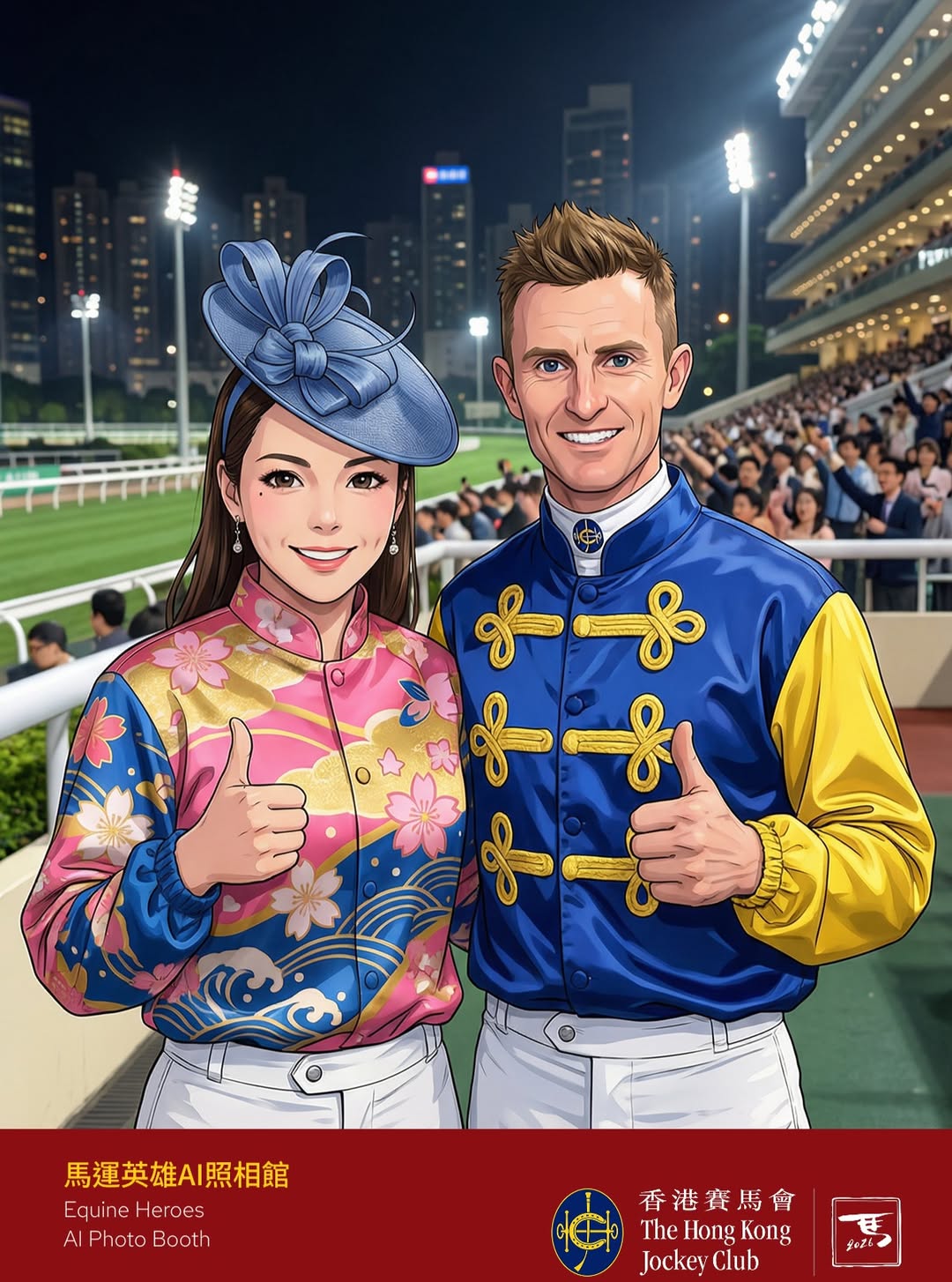
At PONS.ai, we have deployed AI photo booth activations for brands like LONGINES at the International Jockeys' Championship, foodpanda for their 10th anniversary celebration, and KPMG for their corporate anniversary. In each case, every single guest received a completely unique, AI-generated image that placed them into the brand's visual world.

The numbers tell the story. PONS.ai activations consistently deliver:

  • ~10-second generation time per custom AI image

  • 3x higher social sharing rates compared to traditional photo booths

  • 85%+ engagement rates at events (percentage of attendees who participate)

  • Millions of AI-generated photos produced since 2021

This is hyper-personalization made tangible. Each guest walks away with a one-of-a-kind branded asset that they genuinely want to share — turning attendees into voluntary brand ambassadors.

foodpanda 10th anniversary AI photo booth activation powered by PONS.ai generative AI

Dynamic E-Commerce Experiences

Leading e-commerce brands are using GenAI to rebuild their storefronts around individual users. Websites no longer look the same for every visitor. Hero images, product layouts, copy tone, and even pricing presentation adapt in real time based on who is browsing.

Personalized Video at Scale

Video marketing has traditionally been expensive to personalize because each variant requires production resources. GenAI changes this by enabling brands to generate personalized video content — custom voiceovers, dynamic text overlays, and scene compositions — for each recipient. A financial services firm can send 100,000 year-end review videos, each uniquely tailored to the individual client's portfolio and goals.

AI-Powered Customer Service

Conversational AI agents now handle customer interactions with full awareness of the customer's history, preferences, and emotional state. The best implementations feel like talking to a knowledgeable friend who remembers everything about your relationship with the brand.

Measuring Hyper-Personalization ROI

Every marketer's question: does this actually work? The data is unambiguous.

Engagement metrics. Hyper-personalized campaigns consistently outperform generic campaigns:

  • Email open rates: 26% higher with personalized subject lines and content (Campaign Monitor)

  • Click-through rates: 2-3x improvement with dynamically generated creative

  • Social sharing: AI-generated personalized content sees up to 3x higher voluntary share rates

Revenue impact. McKinsey's research consistently shows that personalization leaders generate 40% more revenue from those activities. For event marketing specifically, brands using AI photo booth activations report an average ROI of 5-8x their investment when factoring in social media impressions, lead generation, and brand recall lift.

Customer lifetime value. Hyper-personalization directly impacts retention. Customers who receive personalized experiences are 44% more likely to become repeat buyers (Epsilon). Over a 3-year period, this compounds into significant lifetime value gains.

Cost efficiency. Perhaps counterintuitively, hyper-personalization at scale is often cheaper than traditional marketing. GenAI eliminates the need for massive creative teams producing hundreds of manual variants. One AI system can do in seconds what previously required weeks of design and copywriting work.

Metric | Generic Marketing | Hyper-Personalized Marketing

Email open rate | 15-20% | 25-35%

Click-through rate | 1-2% | 3-6%

Social share rate | 2-5% | 10-15%

Event engagement | 40-50% | 80-95%

Customer retention | Baseline | +44% improvement

Revenue per activity | Baseline | +40% improvement

The Technology Stack Behind Hyper-Personalization

For marketing leaders evaluating their hyper-personalization readiness, here is the core technology stack required:

Data infrastructure. A unified customer data platform (CDP) that aggregates behavioral, transactional, and contextual data in real time. Without clean, connected data, even the most powerful AI cannot personalize effectively.

Generative AI engine. The core model layer that creates custom content — images, text, video, interactive elements. This can be built in-house (rare and expensive), accessed via API providers, or deployed through specialized platforms like PONS.ai that handle the complexity of real-time generative content creation.

Decision engine. The AI layer that determines what to show to whom, when, and through which channel. This combines predictive analytics with business rules to optimize for specific KPIs — whether that is engagement, conversion, retention, or brand lift.

Delivery infrastructure. The systems that serve personalized content across channels — web, email, mobile app, physical events, social media — with low latency and high reliability. For physical experiences like AI photo booths, this includes edge computing capabilities that enable sub-10-second generation times even in high-traffic environments.

Measurement and optimization. Real-time analytics that track the impact of personalization across the entire customer journey, enabling continuous improvement through automated A/B testing and performance feedback loops.

Privacy and Ethics: The Non-Negotiable Foundation

Hyper-personalization runs on data, and data runs on trust. Any brand pursuing this strategy must build privacy and ethical AI practices into the foundation — not as an afterthought.

Key principles for responsible hyper-personalization:

Transparency. Customers should understand that their experience is being personalized and have visibility into what data is being used. The brands winning trust in 2026 are those that explain personalization as a benefit, not a secret.

Consent and control. Opt-in, not opt-out. Every customer should have granular control over what data they share and how it is used. The best platforms make this control easy and accessible, not buried in privacy settings.

Data minimization. Collect only what is needed for the personalization to work. More data does not always mean better personalization — it often means more risk with diminishing returns.

Security. Enterprise-grade encryption, access controls, and compliance with GDPR, CCPA, PDPO (Hong Kong), and other regional regulations. For AI photo booth activations, PONS.ai ensures that all generated images are processed with enterprise-level security and that guest data is never retained beyond the event without explicit consent.

Bias mitigation. GenAI models can perpetuate biases present in training data. Responsible brands actively test for and mitigate bias in their personalization algorithms, ensuring fair treatment across demographics.

The Future: Where Hyper-Personalization Is Heading

The current state of hyper-personalization is impressive. The next five years will make it look primitive.

Multimodal personalization. AI will simultaneously personalize across text, image, video, audio, and interactive 3D experiences within a single customer touchpoint. A brand activation might include personalized visual content, a custom soundtrack, and an interactive AR overlay — all generated in real time for each individual.

Emotional AI. Sentiment analysis and emotional recognition will enable brands to adapt their tone, imagery, and messaging based on a customer's emotional state. A customer who is frustrated will receive a different experience than one who is excited — automatically and respectfully.

Physical-digital convergence. The gap between online and offline personalization will disappear. AI photo booths and other physical touchpoints will be seamlessly integrated with digital profiles, creating continuous personalized experiences across every brand interaction.

Autonomous marketing agents. AI agents will independently manage entire personalization workflows — from audience analysis to content creation to delivery optimization to performance measurement — with human oversight focused on strategy and ethics rather than execution.

FAQ: Hyper-Personalization in Marketing

What is the difference between personalization and hyper-personalization?

Personalization uses basic customer data (name, location, purchase history) to tailor messages for audience segments. Hyper-personalization goes further by using real-time behavioral data, AI predictions, and generative content to create unique experiences for each individual — a segment of one rather than a segment of many.

How much does hyper-personalization cost to implement?

Costs vary dramatically based on scope. Basic AI-powered email personalization can start at a few hundred dollars per month. Full-stack hyper-personalization with generative AI content creation, real-time decisioning, and multi-channel delivery can range from $10,000 to $100,000+ per month for enterprise deployments. For physical activations like AI photo booths, PONS.ai offers event-based pricing that typically delivers 5-8x ROI.

Is hyper-personalization only for large enterprises?

No. The democratization of GenAI tools means that small and mid-sized brands can now access hyper-personalization capabilities that were previously only available to companies with massive budgets. Cloud-based AI platforms, API-first services, and specialized providers like PONS.ai make enterprise-grade personalization accessible at various price points.

What industries benefit most from hyper-personalization?

Every consumer-facing industry benefits, but the highest impact is seen in retail and e-commerce, financial services, hospitality and events, luxury and fashion, beauty and wellness, and entertainment. B2B companies are also increasingly adopting hyper-personalization for account-based marketing and event experiences.

How does PONS.ai enable hyper-personalization for physical events?

PONS.ai deploys AI photo booths that generate unique, brand-customized images for every event guest in approximately 10 seconds. Each image is tailored to the brand's visual identity while being completely unique to the individual. This creates personalized, shareable branded content at scale — turning every attendee into a brand ambassador. PONS.ai has generated millions of photos since 2021 for clients including LONGINES, foodpanda, KPMG, CR7 LIFE Museum, and many more.

What metrics should I track for hyper-personalization?

Key metrics include engagement rate lift (vs. generic campaigns), social sharing rate, customer acquisition cost (CAC) impact, customer lifetime value (CLV) changes, conversion rate improvement, net revenue retention (NRR), and brand recall scores. For event activations, track participation rate, social impressions generated, leads collected, and post-event conversion rates.

Taking the Next Step

Hyper-personalization is not a technology you implement once and forget. It is a capability you build, refine, and expand over time. The brands winning in 2026 started their personalization journey years ago — but it is not too late to begin.

The most impactful starting point for many brands is experiential marketing. Physical brand activations with AI-powered personalization deliver immediate, visible results that build internal buy-in for broader hyper-personalization initiatives. An AI photo booth activation at your next corporate event or product launch creates a tangible demonstration of what hyper-personalization looks and feels like — for your customers and your leadership team.

The question is not whether hyper-personalization will define marketing's future. It already does. The question is whether your brand will lead or follow.

Book a demo with PONS.ai to see how AI-powered hyper-personalization can transform your next brand activation or corporate event.

The AI photo booth has fundamentally changed how people experience photography at events. What was once a novelty at tech expos in 2021 is now a mainstream activation tool used by global brands, luxury retailers, museums, and event planners across six countries. Whether you are planning a corporate summit in Hong Kong, a product launch in Dubai, or a wedding reception in New York, an AI photo booth delivers something no traditional setup can: a hyper-personalized, generative image that transforms a simple selfie into a piece of shareable digital art.

At PONS.ai, we created the AI photo booth product category in 2021 and have since generated millions of photos for over 50 global brands. This guide draws on our direct experience as the market pioneer to explain exactly what an AI photo booth is, how the technology works, what it costs, and why it has become the most requested activation format in the events industry. If you are evaluating AI photo booth software for an upcoming event, comparing vendors, or simply trying to understand the technology, this is the definitive resource.

AI photo booth generated portrait example by PONS.ai

What Is an AI Photo Booth?

An AI photo booth is an interactive installation that uses generative artificial intelligence to transform a guest's photo into a stylized, brand-customized image in real time. Unlike a traditional photo booth that captures and prints a standard photograph, an AI photo booth takes a selfie as input and generates an entirely new image, placing the guest into a creative scene, artistic style, or branded environment that would be impossible to produce with conventional photography.

The core technology relies on diffusion-based AI models, including architectures like Stable Diffusion and proprietary fine-tuned systems, that have been trained to generate photorealistic or stylized imagery. When a guest steps up to an AI photo booth, they take a quick photo. Within approximately 10 seconds, the AI processes that selfie and produces a finished image that maintains the guest's likeness while reimagining everything else: the background, the art style, the clothing, the setting, or even the entire composition.

Founded in 2021, PONS.ai introduced the first commercial AI photo booth product in 2021, before generative AI entered mainstream public awareness. Since then, we have refined the technology through thousands of live deployments, building proprietary AI photo booth software that handles everything from face detection and style transfer to print queue management and real-time analytics.

The result is not a filter. It is not an overlay. It is a fully generated image that feels personal, surprising, and worth sharing, which is precisely why brands have adopted it at scale.

How Does an AI Photo Booth Work?

Understanding how an AI photo booth works is straightforward when you break the process into three stages. Every activation PONS.ai deploys follows this core pipeline, though the underlying technology is significantly more sophisticated than it appears to the guest.

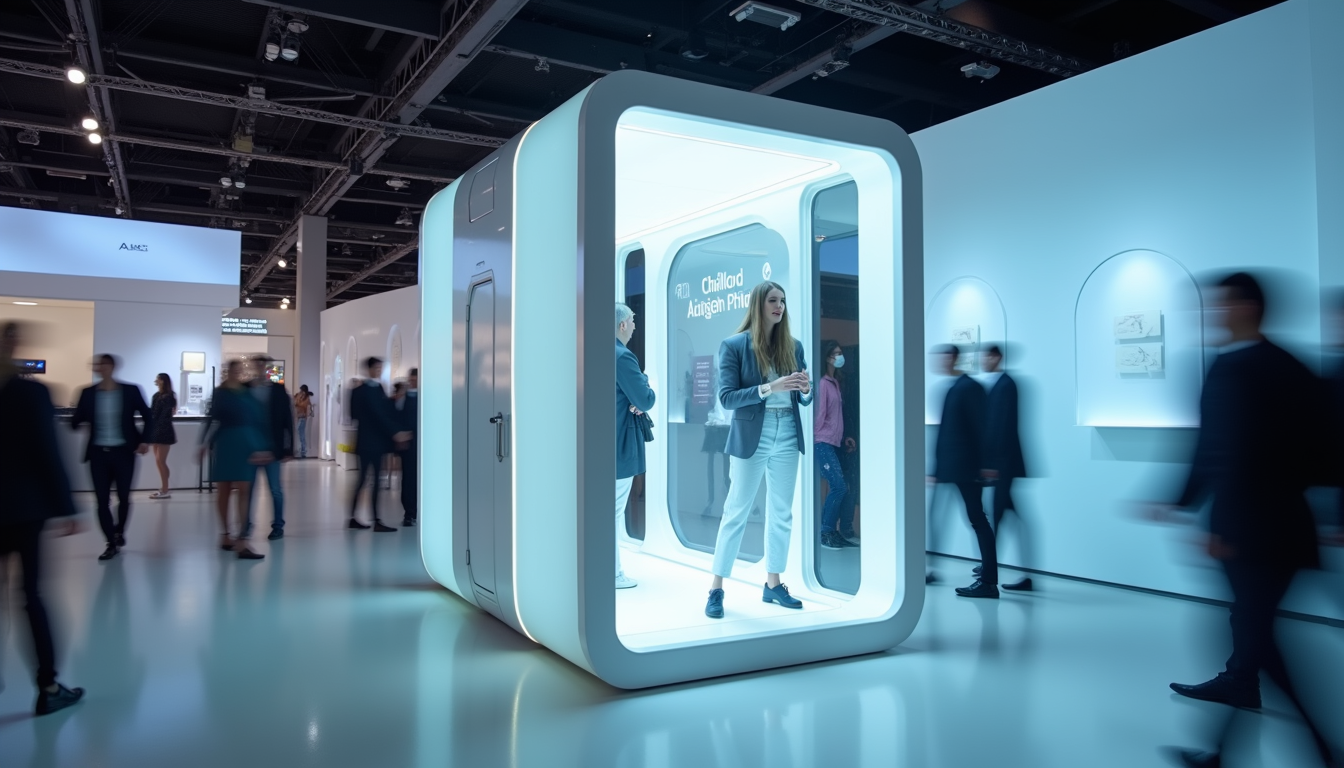
Guest using PONS.ai AI photo booth kiosk at live event

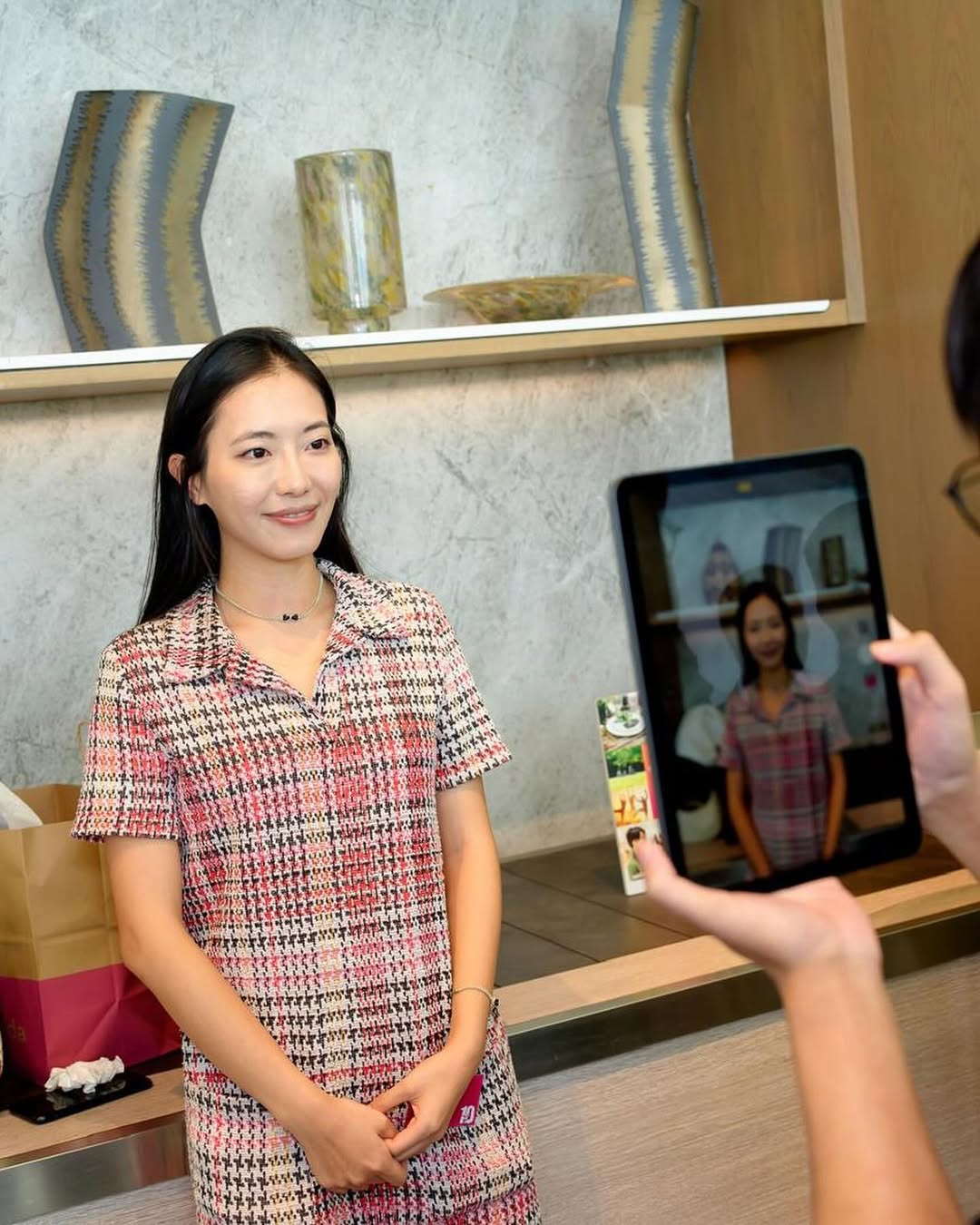
Step 1: Capture — The Guest Takes a Selfie

The experience begins when a guest approaches the AI photo booth station. This can be a freestanding kiosk, a tablet mounted on a branded stand, or even a large-format touchscreen embedded in an event installation. The guest taps a button, the camera captures a high-resolution selfie, and the image is immediately sent to the AI processing engine. The entire capture step takes under three seconds.

PONS.ai's software handles critical pre-processing at this stage: face detection to ensure the subject is properly framed, lighting normalization to compensate for uneven event lighting, and multi-face recognition for group shots. These steps happen invisibly but are essential for consistent output quality across thousands of photos at a single event.

Step 2: Generate — AI Transforms the Photo

This is where the technology delivers its impact. The captured selfie is processed through a generative AI model that has been pre-configured with a specific style, theme, or branded template. The AI preserves the guest's facial features and likeness while generating an entirely new image around them.

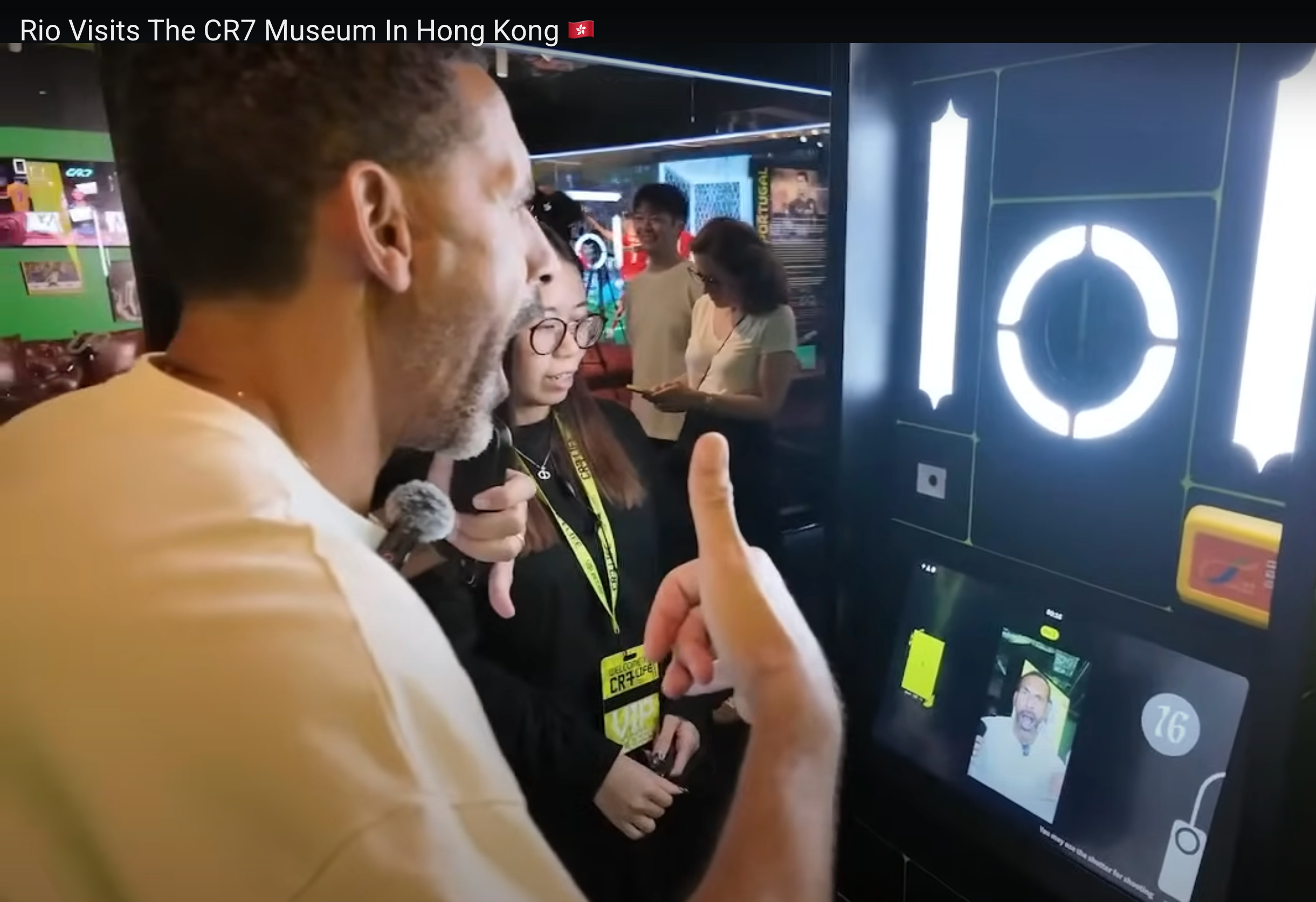
For example, at a Starbucks activation, the AI might place the guest into a whimsical illustration of a coffee garden. At a CASETiFY product launch, it could render them in the brand's signature graphic style, holding a custom phone case. At the CR7 LIFE Museum in Funchal, guests are transformed into dynamic sports portraits alongside visual references to Cristiano Ronaldo's career.

The generation step takes approximately 10 seconds. PONS.ai's proprietary AI photo booth software manages GPU allocation, queue handling, and output quality control during this phase, ensuring that even at peak throughput (hundreds of guests per hour), every image meets a consistent quality standard.

Step 3: Share and Print — The Guest Gets Their Image

Once the AI-generated image is ready, the guest can instantly share it via QR code to their phone, post it directly to social media, receive it through email or messaging platforms, or print it on-site as a physical keepsake. PONS.ai's platform supports all of these distribution channels simultaneously, and every shared image can be branded with the client's logo, event hashtag, or campaign URL.

The share step is where measurable marketing value is created. Each AI-generated image that a guest posts to Instagram, WhatsApp, or LinkedIn becomes an organic brand impression. Our analytics dashboard tracks shares, scans, prints, and engagement in real time, giving event organizers and brand teams immediate visibility into activation performance.

AI Photo Booth vs Traditional Photo Booth

One of the most common questions we receive at PONS.ai is how an AI photo booth compares to a traditional photo booth. The differences are significant and affect everything from guest engagement to brand ROI. The following comparison breaks down the key distinctions.

Output type: Traditional booths produce standard photographs with props and backgrounds. AI photo booths generate fully AI-created, stylized images.

Personalization: Traditional booths are limited to physical props and static backdrops. AI photo booths offer unlimited styles, themes, and branded scenes.

Generation time: Traditional booths are instant. AI photo booths take approximately 10 seconds for AI processing.

Guest engagement: Traditional booths offer moderate engagement with a familiar format. AI photo booths deliver high engagement through novelty, surprise, and shareability.

Brand customization: Traditional booths use logo overlays and printed frames. AI photo booths enable full scene generation aligned with brand identity.

Data and analytics: Traditional booths provide basic photo counts. AI photo booths offer real-time analytics including shares, engagement, and demographics.

Cost range: Traditional booths cost $500–$2,000 per event. AI photo booths range from $2,000–$15,000+ depending on customization and scale.

The fundamental difference is this: a traditional photo booth records a moment, while an AI photo booth creates one. For brands investing in experiential marketing, the AI photo booth delivers dramatically higher engagement rates, social sharing volumes, and post-event content value.

AI Photo Booth for Events: Use Cases Across Industries

The AI photo booth for events has proven versatile across a wide range of industries and activation formats. Below are the primary use cases where PONS.ai has deployed AI photo booth experiences, with real examples from our client portfolio.

Corporate Events and Conferences

Large-scale corporate events demand activations that are both engaging and on-brand. PONS.ai has deployed AI photo booths for clients like KPMG and HSBC at annual conferences, leadership summits, and client appreciation events. The AI generates portraits in styles that reflect the company's brand guidelines, such as a futuristic cityscape for a fintech firm or a nature-inspired theme for a sustainability summit. Guests leave with a branded image they actually want to share, turning attendees into brand ambassadors.

Product Launches

Product launches require maximum social media impact in a compressed time window. When CASETiFY launched a new collection, PONS.ai's AI photo booth generated images that incorporated the product's design language, producing shareable content that organically promoted the new line. Each guest received an image that felt like a campaign asset, not a souvenir snapshot.

Trade Shows and Exhibitions

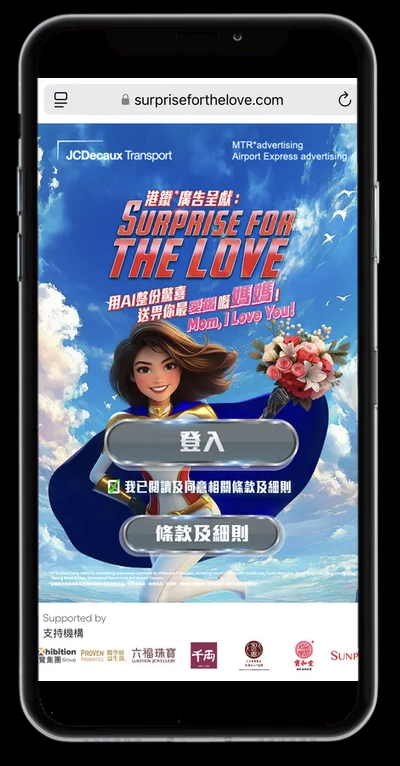
At trade shows, booth traffic is everything. An AI photo booth draws crowds, creates dwell time, and generates qualified leads through data capture at the share step. PONS.ai has activated AI photo booths at major expos for clients like JCDecaux, where the installation itself became a talking point and a foot-traffic driver. In environments where every exhibitor is competing for attention, the AI photo booth consistently outperforms static displays.

Retail Activations and Pop-Ups

Retail brands use AI photo booths to bridge online and in-store engagement. Starbucks and foodpanda have deployed PONS.ai activations in flagship locations and pop-up venues, turning a routine store visit into a memorable, shareable experience. The AI-generated images serve double duty: they delight the customer in the moment and extend the brand's reach when shared on social media.

Weddings and Private Celebrations

Weddings have been an early and enthusiastic adopter of AI photo booth technology. Couples commission custom AI styles that match their wedding theme, from watercolor romance to art deco glamour. Guests receive one-of-a-kind portraits that are far more memorable than a standard photo strip. PONS.ai's wedding activations have been deployed in Hong Kong, Singapore, and Dubai, with couples increasingly requesting multi-style setups that let guests choose from several AI themes throughout the evening.

Museums and Cultural Venues

The CR7 LIFE Museum in Funchal, Portugal, is one of PONS.ai's most prominent cultural deployments. Visitors step into the AI photo booth and receive a generated portrait that places them in dynamic, sports-themed scenes inspired by Cristiano Ronaldo's career. The installation has become one of the museum's most popular attractions, with guests sharing their AI-generated images across social media and driving organic visibility for the venue.

Museums and cultural institutions value the AI photo booth because it creates a participatory experience. Visitors are not just observing; they are becoming part of the story, which deepens engagement and extends the visit's emotional impact.

Sports Events and Fan Activations

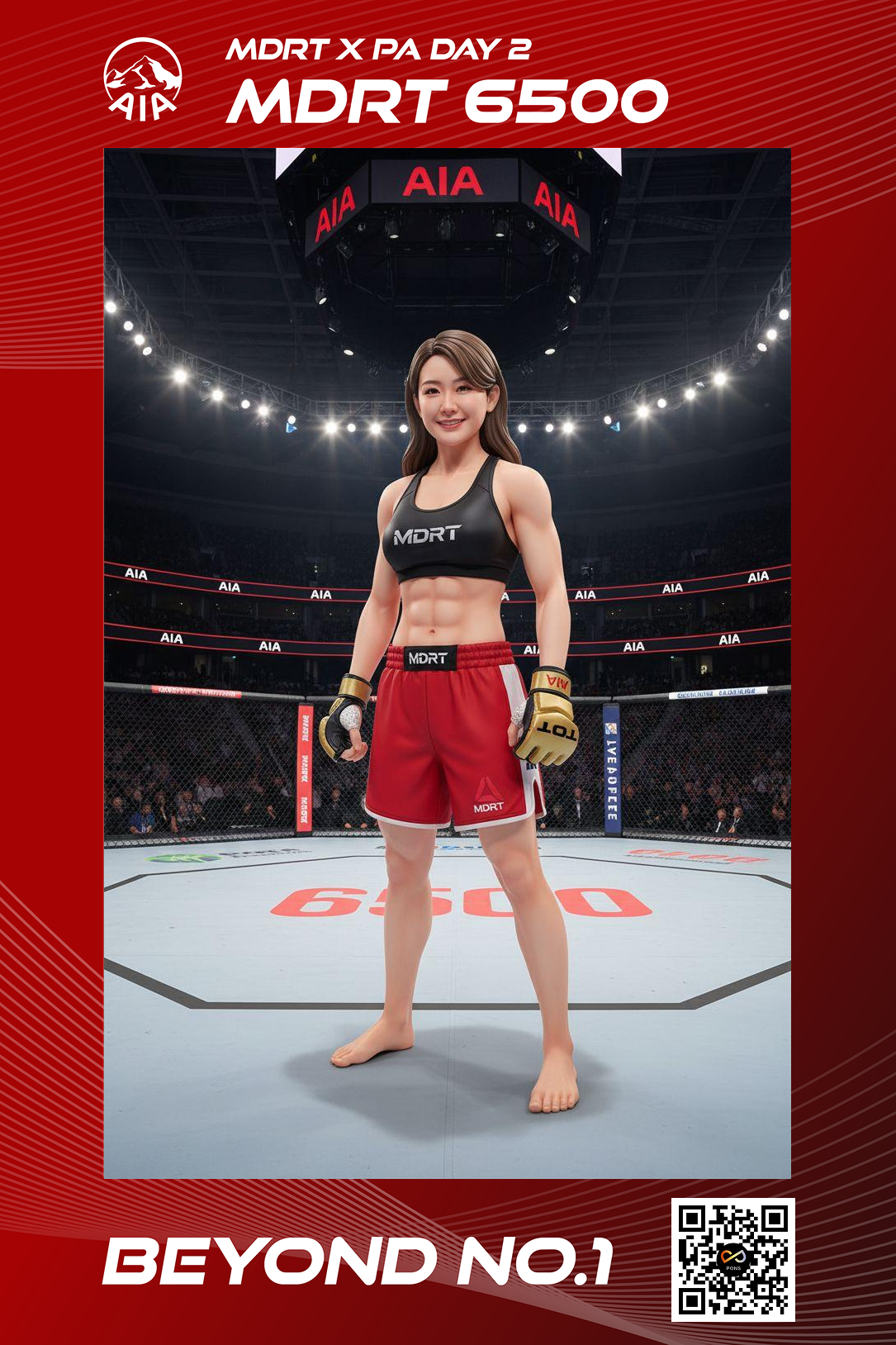
Sports organizations use AI photo booths to amplify fan engagement at stadiums, fan zones, and viewing parties. AIA, a major insurance and sports sponsorship brand, has partnered with PONS.ai to deliver AI photo booth experiences that connect fans to the teams and athletes they support. The AI generates dynamic, action-inspired portraits that fans share instantly, creating waves of branded social content during live events.

AIA sports activation AI photo booth by PONS.ai

Key Features to Look For in AI Photo Booth Software

Not all AI photo booth software is built equally. When evaluating platforms for an event or ongoing activation program, these are the features that separate professional-grade solutions from basic implementations.

Real-Time Generation Speed

Generation speed directly affects guest throughput and experience quality. Look for AI photo booth software that consistently delivers finished images in approximately 10 seconds or less. PONS.ai's platform is optimized for sub-10-second generation through a combination of edge computing, GPU load balancing, and model optimization. At high-traffic events processing hundreds of guests per hour, even a few extra seconds per image compounds into long queues and frustrated attendees.

Brand Customization Depth

A basic AI photo booth applies a single preset style. A professional-grade system offers deep brand customization: custom-trained AI models that reflect a brand's specific visual identity, color palette, product imagery, and campaign messaging. PONS.ai works with brand teams to develop bespoke AI styles that are indistinguishable from professional campaign assets, not generic filters.

Multi-Channel Sharing

The value of an AI photo booth activation is directly proportional to how easily guests can share their images. The platform should support QR-code-to-phone transfer, direct social media posting, email delivery, SMS, messaging apps like WhatsApp, and on-site printing. PONS.ai's sharing infrastructure supports all of these channels and includes branded landing pages that reinforce the client's message when recipients view the shared image.

Analytics and Reporting Dashboard

Professional AI photo booth software includes a real-time analytics dashboard that tracks total photos generated, share rates by channel, peak activity times, geographic distribution of shares, and engagement metrics. This data is essential for proving ROI to stakeholders and optimizing future activations. PONS.ai provides clients with comprehensive post-event reports that go beyond simple photo counts to include social reach estimates and engagement analysis.

On-Site and Cloud Processing Options

Some events take place in venues with unreliable internet connectivity. The best AI photo booth software offers both cloud-based processing for maximum scalability and on-site edge processing for environments where network reliability is a concern. PONS.ai supports both deployment models and can configure hybrid setups that use local GPUs as the primary processing engine with cloud fallback.

Multi-Language and Localization Support

For global brands activating across multiple markets, the AI photo booth interface should support multiple languages and localized content. PONS.ai's platform has been deployed across six countries, including Hong Kong, Singapore, Dubai, London, New York, and Riyadh, with full localization for each market.

Content Moderation and Safety

Responsible AI photo booth software includes automated content moderation to ensure generated images are appropriate and aligned with brand guidelines. PONS.ai's platform incorporates safety filters that screen both input selfies and generated outputs, preventing the creation of inappropriate or off-brand content.

Where Are AI Photo Booths Available?

AI photo booths are now available in major markets worldwide, driven by demand from global brands that require consistent activation quality across regions. PONS.ai operates across six countries, with active deployments and local support in the following cities:

Hong Kong — PONS.ai's home market and the largest concentration of AI photo booth deployments in Asia. Clients include HSBC, AIA, foodpanda, and Sandbox VR.

Singapore — A growing hub for corporate events and retail activations, with deployments for financial services, luxury, and technology clients.

Dubai — High demand from luxury retail, hospitality, and government-sector events. PONS.ai has activated AI photo booths at major Dubai venues and exhibitions.

London — Serving the UK and European corporate events market, with deployments for global brand activations and agency partnerships.

New York — Active in the North American market, supporting product launches, fashion events, and corporate activations.

Riyadh / Saudi Arabia — Rapidly expanding market driven by Vision 2030 entertainment and cultural initiatives, with strong demand for AI-powered experiences at government and private-sector events.

This global footprint allows brands to deploy consistent AI photo booth experiences across multiple markets with a single technology partner, eliminating the complexity of managing different vendors in each region.

The Technology Behind AI Photo Booths: A Deeper Look

Generative AI Models

Modern AI photo booths are powered by diffusion models, a class of generative AI that creates images by iteratively refining random noise into coherent, high-quality visuals. PONS.ai uses proprietary fine-tuned models that have been specifically optimized for portrait generation, brand-style adherence, and real-time performance. Unlike general-purpose image generators, these models are trained to preserve facial likeness with high fidelity while applying dramatic stylistic transformations.

Face Preservation Technology

The critical technical challenge in AI photo booth generation is maintaining the guest's recognizable likeness while transforming the rest of the image. PONS.ai's software uses advanced face-embedding techniques that extract identity-specific features from the input selfie and inject them into the generation process. The result is an output image where the guest immediately recognizes themselves, even if the surrounding scene, clothing, and art style are entirely different from the original photo.

Edge and Cloud Infrastructure

PONS.ai's AI photo booth software is designed to run on both cloud GPU clusters and on-site edge devices. For large-scale events with thousands of guests, cloud processing provides virtually unlimited scalability. For venues with limited connectivity or strict data residency requirements, edge deployment keeps all processing local. This flexibility is critical for enterprise clients operating across regulated industries and international markets.

Why Brands Choose PONS.ai for AI Photo Booth Activations

PONS.ai has served over 50 global brands since creating the AI photo booth category in 2021. The reasons clients choose PONS.ai consistently come down to five factors:

Category pioneer — Founded in 2019, PONS.ai developed the first commercial AI photo booth before the broader generative AI wave. This head start translates into deeper technology expertise, more refined models, and a larger library of proven activation templates.

Enterprise-grade reliability — With millions of photos generated across thousands of events, PONS.ai's platform is battle-tested at scale. Clients like HSBC, AIA, and Starbucks require zero-downtime performance, and our infrastructure delivers it.

End-to-end service — PONS.ai provides not just software but full activation support: creative direction, custom AI model training, on-site technical staff, hardware provision, and post-event analytics. Clients get a turnkey experience, not a software license they have to figure out on their own.

Global reach — Deployments across Hong Kong, Singapore, Dubai, London, New York, and Riyadh mean that multinational brands can scale their AI photo booth programs internationally with a single partner.

Proven brand trust — A client roster that includes CR7 LIFE Museum, Starbucks, HSBC, AIA, CASETiFY, JCDecaux, foodpanda, Sandbox VR, and KPMG speaks to the platform's credibility across industries from financial services to entertainment to retail.

Frequently Asked Questions

How much does an AI photo booth cost?

AI photo booth pricing varies based on event duration, customization depth, guest volume, and deployment model. A basic AI photo booth setup for a single-day event typically ranges from $2,000 to $5,000. Fully customized enterprise activations with bespoke AI model training, multi-station setups, on-site support, and advanced analytics can range from $8,000 to $15,000 or more. PONS.ai offers flexible pricing models including per-event, subscription, and licensing arrangements for agencies and venue operators. Contact our team for a detailed quote tailored to your specific requirements.

How does an AI photo booth work?

An AI photo booth works in three simple steps. First, the guest takes a selfie at the booth station. Second, the AI processes that selfie through a generative model that transforms it into a stylized, branded image while preserving the guest's facial likeness. This generation step takes approximately 10 seconds. Third, the finished image is delivered to the guest via QR code, email, social media, or on-site print. The entire experience, from selfie to finished image in hand, takes under 30 seconds. Behind the scenes, the technology uses diffusion-based AI models, face-embedding preservation, and GPU-accelerated processing to deliver consistent, high-quality results at scale.

What is the difference between an AI photo booth and a traditional photo booth?

The fundamental difference is that a traditional photo booth captures a standard photograph, while an AI photo booth generates an entirely new image using artificial intelligence. A traditional booth relies on physical props, static backdrops, and basic filters. An AI photo booth transforms the guest's selfie into a fully realized scene — placing them in fantastical environments, artistic styles, or branded settings that would be impossible to create with a camera alone. AI photo booths also deliver significantly higher social sharing rates, deeper brand customization, and real-time analytics that traditional booths cannot match.

Can AI photo booths be customized for brand events?

Yes, and this is where AI photo booths deliver their greatest value. PONS.ai develops fully custom AI styles for brand activations, including bespoke models trained on a brand's specific visual identity, color palette, product imagery, and campaign themes. This goes far beyond logo placement. The AI generates images that look and feel like professional campaign assets, tailored to the brand's aesthetic and messaging. Clients like Starbucks, CASETiFY, and HSBC have each received unique AI styles developed specifically for their activations. Custom style development typically requires two to four weeks of lead time.

How many photos can an AI photo booth generate per event?

A single AI photo booth station can generate approximately 200 to 400 photos per hour, depending on generation speed and guest throughput. With PONS.ai's approximately 10-second generation time, a single station comfortably handles high-traffic events when paired with efficient queue management. For large-scale activations expecting thousands of guests, PONS.ai deploys multi-station setups with cloud-based processing that can scale to virtually unlimited capacity. Our largest single-event deployments have generated thousands of images in a single day. Across all deployments since 2021, PONS.ai has generated millions of AI photos globally.

Ready to Experience the Future of Event Photography?

The AI photo booth is no longer an emerging technology. It is the standard for brands that take experiential marketing seriously. From corporate conferences to museum installations, from luxury retail pop-ups to stadium fan zones, the AI photo booth delivers engagement, shareability, and brand impact that no traditional activation can match.

PONS.ai has been building this category since before generative AI was a household term. With millions of photos generated, 50+ global brands served, deployments across six countries, and a client list that includes some of the world's most recognized names, we have the technology, the experience, and the team to make your next event unforgettable.

Book a demo with PONS.ai and see how an AI photo booth can transform your next activation. Whether you are planning a single event or a multi-market campaign, our team will design an experience tailored to your brand, your audience, and your goals.

© 2026 Pons Company Ltd. All rights reserved.

  • Instagram
  • LinkedIn

SSL/TLS Secured

bottom of page